
The Middle East and North Africa (MENA) region stands on the threshold of a historic transformation one where economic diversification, technological acceleration, and geopolitical recalibration intersect. From the UAE’s breakthrough in sustainable Islamic finance to renewed industrial alliances between Saudi Arabia and Egypt, from Google’s AI expansion across Arab markets to the alarming rise in regional cyberattacks, every development underscores the same reality: the region is not just adapting to global change it is attempting to lead it.
A New Era for Islamic and Sustainable Finance: Emirates Islamic’s $500 Million Milestone
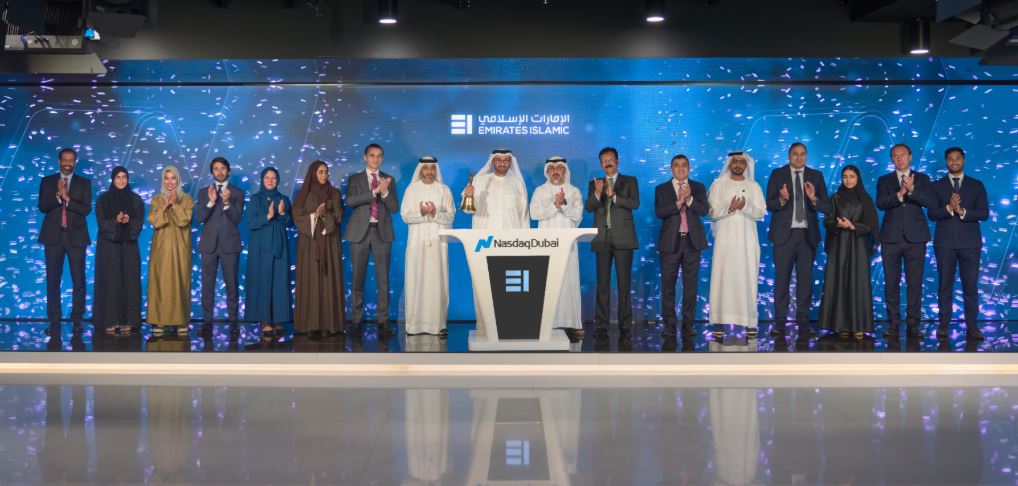
The Emirates Islamic $500 million sustainability-linked sukuk listed on Nasdaq Dubai is more than a financial milestone it symbolizes the fusion of Islamic ethics with environmental accountability. Structured around sustainability performance targets (SPTs), the sukuk links its yield to measurable ESG outcomes, such as carbon reduction, community investment, or renewable finance targets.
This evolution matters profoundly. For decades, Islamic finance and ESG investing developed in parallel both focused on ethical principles, yet rarely intersected in structure. The new sukuk changes that dynamic by embedding Sharia compliance within the broader framework of sustainable capital markets. It also validates Dubai’s ambition to become the epicenter for “green” and “faith-based” capital convergence, an area where Western markets lag in inclusivity and diversity of financial instruments.
Globally, sustainability-linked debt issuance exceeded $1.5 trillion in 2024, and the GCC’s share is expected to rise sharply in 2025–2026 as sovereign wealth funds, banks, and corporates align financing with Vision 2030, UAE Net Zero 2050, and COP28–29 outcomes. Dubai’s listing reinforces investor confidence in MENA’s capacity to engineer innovative financial structures, appealing to both ethical investors in the West and Islamic investors across Asia and Africa.
Moreover, this development is part of a broader trend: the “greening” of Islamic finance. The Islamic Development Bank, Qatar Islamic Bank, and Saudi’s National Debt Management Center have also introduced ESG or green sukuk frameworks. Collectively, these efforts are transforming Islamic finance from a niche ethical market into a mainstream engine for global sustainable capital flows.
Industrial Integration: The Saudi–Egypt Economic Nexus
While Dubai leads in finance, Riyadh and Cairo are setting the tone for industrial and regional cooperation. The Saudi–Egypt dialogue on industrial integration reflects a shared economic vision grounded in self-reliance, manufacturing diversification, and regional synergy.
Saudi Arabia, through its Vision 2030 blueprint, aims to increase the contribution of industry to GDP to over 20%, while Egypt’s Vision 2030 seeks to boost industrial exports and attract more Gulf investment. Central to this roadmap is enhanced energy cooperation, which includes expanding shared refining and petrochemical ventures, as well as cross-border hydrogen and ammonia projects that could strengthen both countries’ positions in the green energy value chain.
Additionally, both nations are advancing the creation of industrial zones that link the Suez Canal Economic Zone in Egypt with Saudi Arabia’s NEOM corridor. These zones are envisioned as logistical and manufacturing hubs that will serve as gateways for regional and international trade, while also integrating supply chains and technological expertise.
In defense and advanced manufacturing, Saudi Arabia and Egypt are investing in the co-production of vehicles, electronics, and renewable energy components, which will help reduce import dependency and foster industrial self-sufficiency. Their cooperation extends into supply chain coordination, where Egyptian manufacturing capacity is complemented by Saudi capital and logistics infrastructure. This synergy lays the groundwork for a broader pan-Arab industrial base that can compete on a global scale.
The economic rationale is compelling. According to the Arab Monetary Fund, intra-Arab trade still represents less than 10% of total Arab exports a figure far below that of Europe or Asia. Enhanced Saudi–Egypt industrial synergy could act as a catalyst for increasing regional trade and building resilience against global supply chain disruptions.
Strategically, this partnership strengthens the role of both nations as pillars of Arab economic stability, capable of driving investment into neighboring regions, including Africa and the Levant. It enhances Egypt’s position as an industrial gateway connecting the Gulf to African markets, while Saudi Arabia leverages its financial power to build influence through long-term industrial collaboration rather than short-term investment flows.
Reintegration and Rebuilding: The Saudi–Syrian Investment Forum
The announcement of the Saudi–Syrian Investment Forum marks one of the most politically sensitive yet economically significant developments in the region. Following Syria’s gradual return to the Arab League in 2023, the event symbolizes a cautious reopening of economic channels between Riyadh and Damascus.
While sanctions and governance concerns remain barriers, the forum’s objective is to identify new opportunities for investment in critical sectors such as energy infrastructure, real estate reconstruction, tourism, and agriculture. For Saudi Arabia, this initiative aligns with its broader strategy of regional re-engagement using economic diplomacy as a means of fostering influence across post-conflict economies.
The geopolitical implications are far-reaching. By engaging Syria, Saudi Arabia signals its readiness to play a central role in the country’s post-war reconstruction, serving as a counterbalance to Iran’s long-standing influence. The economic potential is also considerable rebuilding Syria’s devastated infrastructure is projected to cost between $250–400 billion, offering long-term opportunities for Gulf investors willing to navigate the complexities of the market.
Moreover, this reintegration effort contributes to regional stability. Economic cooperation between Saudi Arabia and Syria could pave the way for gradual normalization and de-escalation of tensions in the Levant, demonstrating how economic initiatives can drive diplomatic reconciliation. Nonetheless, experts caution that while the commercial incentives are strong, such ventures must remain compliant with international regulations and mindful of humanitarian considerations, given the country’s ongoing recovery challenges.
AI Expands to the Arab World: Google’s Global Rollout and Regional Opportunity
Google’s expansion of AI-powered Search to over 180 countries, including throughout the Arab world, represents another major inflection point in the region’s digital transformation. The rollout extends generative AI tools — powered by Gemini and DeepMind models to Arabic-speaking users, enabling them to interact, query, and generate content in their native language.
This marks a major leap for a region where digital penetration exceeds 80%, yet localized AI-driven content and language models have remained relatively limited. The integration is expected to transform multiple sectors of the digital economy. Businesses across the MENA region will need to optimize their online presence for semantic AI discovery, moving beyond traditional keyword-based SEO toward systems that understand context, tone, and intent creating new strategies for digital marketing and e-commerce.
In education and cultural preservation, the localization of AI tools will allow Arabic and dialectal variations to gain broader representation in data models, improving accessibility for students, researchers, and creatives. Governments, meanwhile, can utilize AI-enabled search and analytics for citizen engagement, public communication, and more responsive e-government services.
This rollout is also likely to accelerate demand for cloud infrastructure. As AI adoption increases, hyperscale providers like Microsoft Azure, AWS, and Google Cloud are expanding their presence in Saudi Arabia, the UAE, and Qatar. These investments are reshaping the region’s data ecosystem and laying the foundation for a new era of cloud-based economic growth.
According to IDC, the MENA AI market is expected to exceed $8 billion by 2026, driven by government strategies emphasizing digital inclusion, automation, and smart governance. As a result, the region is becoming a critical testing ground for AI localization, where cultural, linguistic, and regulatory diversity will shape the evolution of global AI systems.
The Cyber Reality: DDoS Surge and the Security Imperative
As digital transformation accelerates, cybersecurity has become one of the MENA region’s greatest vulnerabilities. The 236% surge in Distributed Denial-of-Service (DDoS) attacks in the second quarter of 2025 represents a record high and underscores the growing complexity of cyber threats facing governments, banks, and enterprises.
These attacks have evolved beyond traditional network disruptions, now targeting APIs, digital banking portals, and critical e-government platforms. The sophistication of the assaults combining volumetric and application-layer techniques reveals the growing use of AI and automation by cyber adversaries. Saudi Arabia, the UAE, and Egypt have been among the most frequently targeted, reflecting their rapid digitalization and regional prominence in technological infrastructure.
Several trends are shaping this evolving threat landscape. Many attacks are politically motivated, reflecting regional tensions and the growing phenomenon of hacktivism. Cloud vulnerability is another rising concern as organizations migrate to hybrid environments without fully implementing localized encryption or zero-trust frameworks. Moreover, AI-driven cyberattacks are becoming more prevalent, as malicious actors use machine learning to automate phishing campaigns, misinformation, and vulnerability scanning.
Governments across the region have recognized this threat and are taking decisive measures. Saudi Arabia’s National Cybersecurity Authority, the UAE’s Cyber Security Council, and Egypt’s Supreme Cybersecurity Council are developing national frameworks to strengthen cyber resilience. Investments in cybersecurity startups, public-private partnerships, and workforce development are also increasing. However, the talent gap remains significant, with an estimated 80,000 cybersecurity professionals needed across MENA by 2026.
Toward a Cohesive Vision: Regional Innovation and Strategic Resilience
The convergence of sustainable finance, industrial integration, AI innovation, and cybersecurity defense underscores the region’s ambition to reposition itself as a global hub of innovation and strategic resilience. Each of these sectors supports a unified goal: diversifying economies, enhancing competitiveness, and ensuring long-term stability beyond oil.
The UAE continues to lead as a financial and technological pioneer, exporting sustainable finance models while developing governance frameworks for AI ethics and digital innovation. Saudi Arabia, meanwhile, is evolving from a traditional oil exporter into a capital-industrial powerhouse, using investment diplomacy to shape new regional and global partnerships. Egypt is reclaiming its position as the industrial and demographic backbone of Arab economic integration, linking African and Gulf markets through trade and manufacturing networks.
Other emerging economies such as Morocco, Jordan, and Oman are aligning with these transformations, adapting their policies to attract investment and integrate into a connected MENA innovation ecosystem. Despite the momentum, challenges persist from balancing digital sovereignty and data privacy to ensuring energy transition funding and fiscal sustainability. Success will depend on governments and corporations synchronizing innovation with institutional maturity, ensuring that openness and sovereignty progress hand in hand.
Conclusion: The MENA Moment
The Middle East is no longer defined solely by oil or conflict narratives. It is rapidly becoming a laboratory for sustainable capitalism, AI-driven governance, and industrial reinvention. The Emirates Islamic sukuk, Saudi–Egypt industrial partnership, Google’s AI rollout, and the surge in cyberattacks all represent distinct facets of the same transformation one where finance, technology, and policy converge to define resilience in the 21st century.
If these efforts continue with strategic coordination and long-term intent, the MENA region may soon transition from a frontier market into a global model for integrated, sustainable modernization a future where tradition, innovation, and transformation coexist in balance.
Related Blogs: https://arabworldleaders.com/