A Region on the Rise
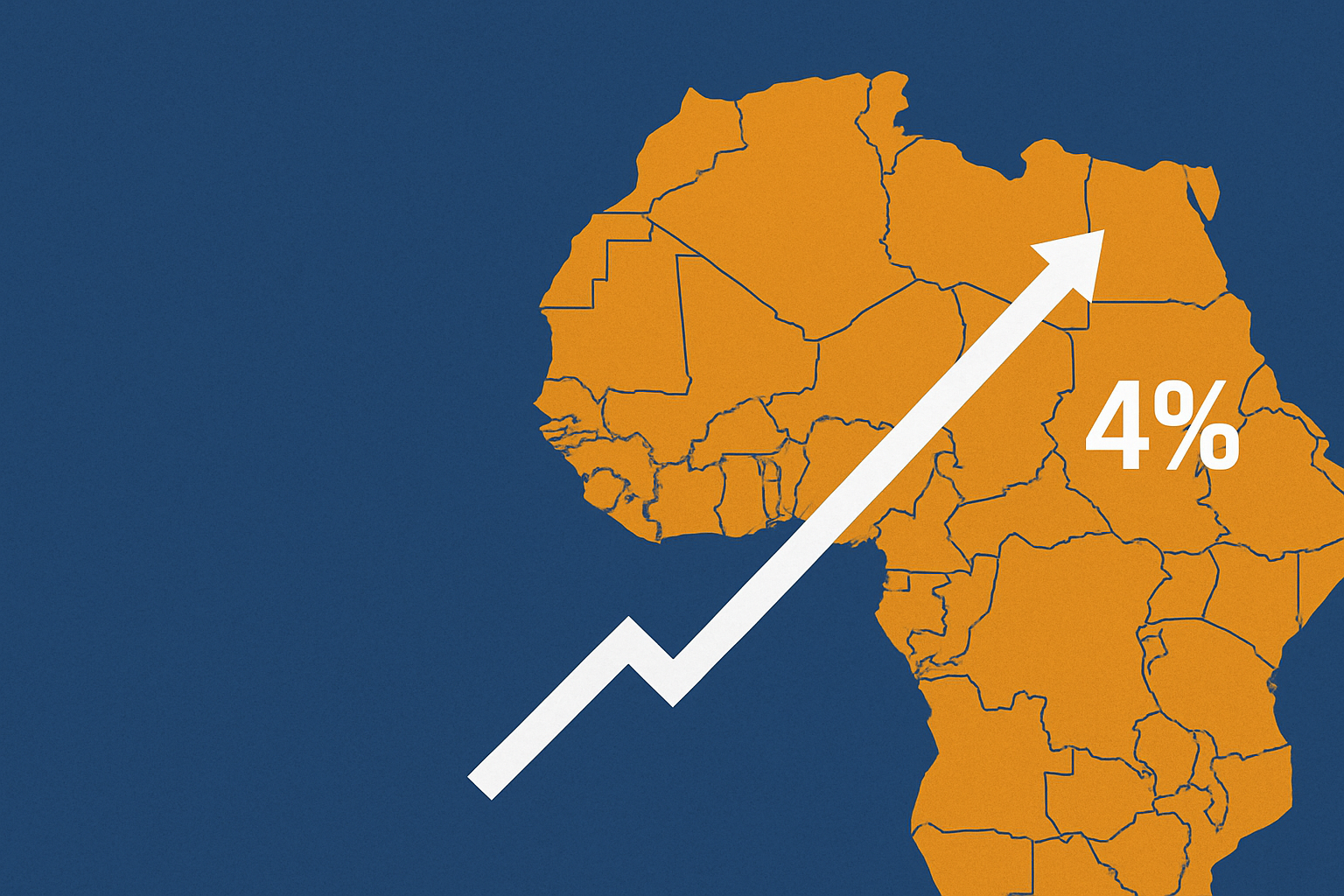
North Africa comprising Egypt, Morocco, Tunisia, Algeria, Mauritania, and Libya enters 2025 standing at a pivotal economic inflection point. After enduring a decade of turbulence marked by the aftershocks of the Arab Spring, the COVID-19 pandemic, inflationary shocks from global energy crises, and the ripple effects of geopolitical conflicts in Europe, the region is now regaining momentum. The International Monetary Fund projects a 4% collective GDP growth for North Africa in 2025, a figure that surpasses both Middle Eastern and sub-Saharan averages. This rebound signals not just cyclical recovery but the maturation of a long-term structural shift built upon persistent economic reform, trade diversification, and fiscal modernization efforts carried out since the mid-2010s.
Behind these numbers lies an ambitious vision. North Africa is evolving from a set of commodity-reliant economies into a complex, interconnected bloc anchored in logistics, finance, renewable energy, and technology. Governments are no longer content with managing short-term macroeconomic stability they are seeking to redefine their global economic identities. Regional leaders are consciously positioning their nations as cross-continental bridges linking Africa’s resource base, Europe’s capital and technology, and Asia’s expanding industrial and digital ecosystems. This transformation is underpinned by massive investments in ports, railways, digital infrastructure, and renewable energy corridors signaling the dawn of what many economists describe as a North African Renaissance.
The region’s dual cultural and economic heritage deeply Arab and African, yet integrally connected to Europe gives it a unique advantage. As the global economy decentralizes, multinational corporations are looking for production and investment hubs closer to both European and African markets. North Africa’s time zone alignment, multilingual talent pool, and expanding logistics capacity position it as a natural choice for this new era of regionalized globalization.
Egypt and Morocco: The Pillars of North African Growth
At the heart of this revival stand Egypt and Morocco, two economies that have demonstrated resilience, reform commitment, and a capacity to attract sustained foreign direct investment even during periods of regional uncertainty.
In Egypt, the government’s long-term reform drive has transformed both the fiscal and physical landscape. Over the past decade, the state has embarked on a sweeping modernization campaign constructing new cities, expanding energy capacity, and revitalizing its industrial zones. The creation of the New Administrative Capital, designed to decongest Cairo and symbolize a new era of governance, stands as one of the largest urban projects in the Middle East. Simultaneously, the expansion of the Suez Canal Economic Zone (SCZone) has positioned Egypt as a global logistics and manufacturing hub linking Asia, Europe, and Africa. These projects are more than infrastructure symbols; they are deliberate attempts to recast Egypt as a platform economy, capable of attracting multinational manufacturing, renewable energy investment, and technology startups.
The Egyptian government’s privatization roadmap and macroeconomic stabilization measures including IMF-supported fiscal discipline, currency floatation, and subsidy reforms have been challenging but transformative. Inflation and currency pressures persist, yet the country’s ability to attract record foreign remittances and maintain large-scale public investments has kept the economy afloat. New partnerships in renewable energy, AI-driven digital platforms, and financial inclusion are emerging as strategic priorities, suggesting that Egypt’s growth story in 2025 will hinge not on consumption, but on diversification and innovation.
In contrast, Morocco’s success has been characterized by steady governance, policy coherence, and a pragmatic approach to globalization. The Casablanca Finance City (CFC) has matured into one of Africa’s most credible financial ecosystems, hosting global banks, insurance firms, and technology startups. Meanwhile, Tanger Med Port, one of the world’s top logistics hubs, has become a central artery for global trade between Europe and Africa. Morocco’s industrial evolution from textiles to automotive, aerospace, and renewable energy production reflects two decades of long-range planning.
What sets Morocco apart is its foresight in sustainability and technology. The kingdom’s investments in green hydrogen, solar power, and AI-integrated logistics networks represent a shift toward the industries of the future. As Europe moves toward decarbonization, Morocco’s role as a clean-energy exporter could redefine its geopolitical influence. The country’s continued inflows of investment from the European Union, Gulf states, and Asia highlight confidence in its institutional maturity and stability making Morocco a model of policy continuity and economic reinvention on the continent.
Reform Momentum and Investment Confidence
Across the wider region, reform momentum is spreading though at different speeds and depths. Tunisia and Algeria, historically reliant on centralized, state-dominated models, are undergoing slow but visible transformations. Tunisia’s educated workforce and proximity to Europe have helped foster a budding startup ecosystem that is beginning to attract attention from venture capital firms in Paris, Dubai, and Cairo. The government’s push toward digital administration and e-governance aims to modernize the public sector, reduce corruption, and make small and medium enterprises more competitive. Its exports in electronics, textiles, and pharmaceuticals continue to diversify, while its tech sector especially in fintech and e-commerce is emerging as a promising growth engine.
Algeria, blessed with vast hydrocarbon reserves, is confronting the long-term challenge of economic diversification. Recognizing the volatility of oil and gas dependence, Algiers has rolled out an investment code reform designed to attract foreign investors and expand the role of private enterprise. Ambitious plans in renewable energy, manufacturing, and agritech reflect an understanding that resource wealth alone cannot sustain growth. The country’s vast domestic market and rising youth population give it untapped potential, yet bureaucracy and policy rigidity remain hurdles. Still, its gradual openness and renewed diplomatic engagement with Asia and the Gulf suggest a deliberate pivot toward greater integration with the global economy.
Smaller economies such as Mauritania and Libya are also showing signs of cautious optimism. Mauritania, with its emerging green hydrogen projects and natural resource base, is positioning itself as an energy bridge between North and West Africa. Libya, recovering from a decade of political turmoil, is refocusing on rebuilding its financial systems, energy infrastructure, and governance frameworks. Oil production restoration remains its primary goal, but its longer-term priority is reestablishing trust with international investors and rejoining regional trade networks.
The cumulative effect of these shifts is growing investor confidence. North Africa offers a rare combination of modern infrastructure, educated labor, and geographic advantage. Through frameworks like the African Continental Free Trade Area (AfCFTA) and bilateral trade partnerships with India, China, and the EU, the region is increasingly positioned as an integrated economic zone. For multinational corporations seeking cost-efficient bases with access to both Africa and Europe, North Africa is becoming an investment destination of strategic value not merely a frontier market.
Challenges Behind the Optimism
Yet, beneath the optimism lies a set of persistent structural challenges that will define whether the growth momentum can truly be sustained. Currency volatility continues to unsettle markets, particularly in Egypt and Tunisia, where exchange rate liberalization has been both necessary and painful. Inflation, driven by import dependency and global supply-chain disruptions, has reduced household purchasing power, testing social tolerance for economic reform. Fiscal deficits, although narrowing, still constrain governments’ ability to invest in social programs and innovation initiatives.
Equally pressing is the challenge of youth unemployment. North Africa’s demographic profile is both a blessing and a burden: a young, literate, and increasingly connected population meets an economy that cannot yet absorb their skills. The disconnect between educational curricula and industry needs has created a talent bottleneck that limits productivity and social mobility. Without comprehensive labor-market reform and stronger investment in technical education, the region risks missing the demographic dividend that could fuel its long-term competitiveness.
The political dimension cannot be ignored either. Governance transitions and intermittent instability particularly in Libya and parts of Algeria tend to delay policy implementation and deter long-term investors. Furthermore, climate stress is emerging as a critical constraint. North Africa’s reliance on agriculture makes it especially vulnerable to drought and desertification. Water scarcity, especially in Morocco and Tunisia, is pushing governments toward large-scale desalination and irrigation innovation programs. The success of these initiatives will determine the sustainability of rural economies and food security, both of which underpin social stability.
The Emerging Storyline: From Stability to Strategy
What distinguishes the current moment is a shift from survival to strategy. North African governments are no longer content with maintaining stability; they are charting deliberate paths toward competitiveness in a digitized, sustainable global economy.
In Egypt, central bank reform and improved monetary policy coordination are aimed at restoring market confidence. By enhancing the transparency of currency management and strengthening remittance channels, Cairo hopes to reinforce foreign exchange liquidity and attract diaspora capital. The state’s privatization plan involving the sale of stakes in public enterprises is designed to create space for private innovation and stimulate competition, moving Egypt closer to a mixed economic model that balances government direction with entrepreneurial dynamism.
In Morocco, economic transformation is guided by a clear sustainability framework. The government’s Vision 2030 and New Development Model explicitly integrate digital transformation, green finance, and social inclusion. Investments in AI, fintech, and digital identity systems aim to streamline governance and enhance productivity. The country’s green hydrogen and solar initiatives could make it one of the leading renewable exporters to Europe, reshaping trade balances and technological capability simultaneously.
Tunisia’s transformation, though constrained by fiscal stress, is being driven by a young entrepreneurial ecosystem. Fintech, software development, and the creative industries are areas where Tunisian talent is rapidly scaling regionally. Meanwhile, Algeria’s bid to join BRICS+ represents not only a foreign policy recalibration but also a statement of intent to diversify global alliances and secure new trade and investment routes independent of traditional Western dependence.
Collectively, these shifts underscore a powerful narrative: North Africa is transitioning from reactive reform to proactive strategy, with technology, sustainability, and financial openness at its core.
A Continent’s Gateway to the Future
From a global perspective, North Africa’s strategic significance has never been greater. As Europe grapples with stagnation and sub-Saharan Africa faces debt distress, the region’s relative stability and infrastructure readiness stand out. Its ports particularly Tanger Med, Port Said, and Algiers serve as gateways for global supply chains that connect continents. Expanding rail corridors and logistics zones are integrating inland economies with maritime routes, while digital backbones fiber-optic networks, data centers, and fintech systems are linking cities from Casablanca to Cairo into a coherent economic grid.
Moreover, North Africa’s geographic and diplomatic balance enables it to attract investment from multiple poles simultaneously. European firms, seeking nearshoring options to reduce dependence on Asia, are investing in manufacturing and automotive assembly in Morocco and Tunisia. Gulf sovereign funds are channeling billions into logistics, tourism, and green energy. India is deepening trade and technology partnerships across the Maghreb, while China continues to fund infrastructure through its Belt and Road framework. This multipolar engagement provides North Africa with leverage the ability to negotiate, diversify, and strategically integrate into global commerce while maintaining economic sovereignty.
As these forces converge, North Africa is emerging as the continent’s next growth engine, not just for its GDP figures but for its potential to shape trans-Mediterranean trade, energy security, and digital innovation.
The Promise of Transformation
The IMF’s 4% growth projection for 2025 symbolizes more than recovery it signals the beginning of a structural renaissance. North Africa’s blend of reformist intent, youthful energy, and geographic centrality positions it to become one of the world’s most dynamic emerging regions over the next decade.
The true test will lie in converting this growth into inclusion. For the region to achieve lasting prosperity, it must turn its macroeconomic gains into microeconomic impact empowering entrepreneurs, modernizing education, and building social safety nets that foster stability and innovation in tandem. The next phase of transformation depends on political will, institutional resilience, and the ability to sustain reform momentum even when global conditions tighten.
If these ingredients align, North Africa could redefine its global role not as a periphery tethered to external powers, but as an epicenter of Arab-African innovation, trade, and strategic influence. For investors, policymakers, and analysts, the lesson is clear: the story of North Africa is no longer one of recovery; it is one of reinvention a region reclaiming its historical identity as the crossroads of civilizations and transforming it into a blueprint for sustainable modern growth.
Related Blogs: https://arabworldleaders.com/