
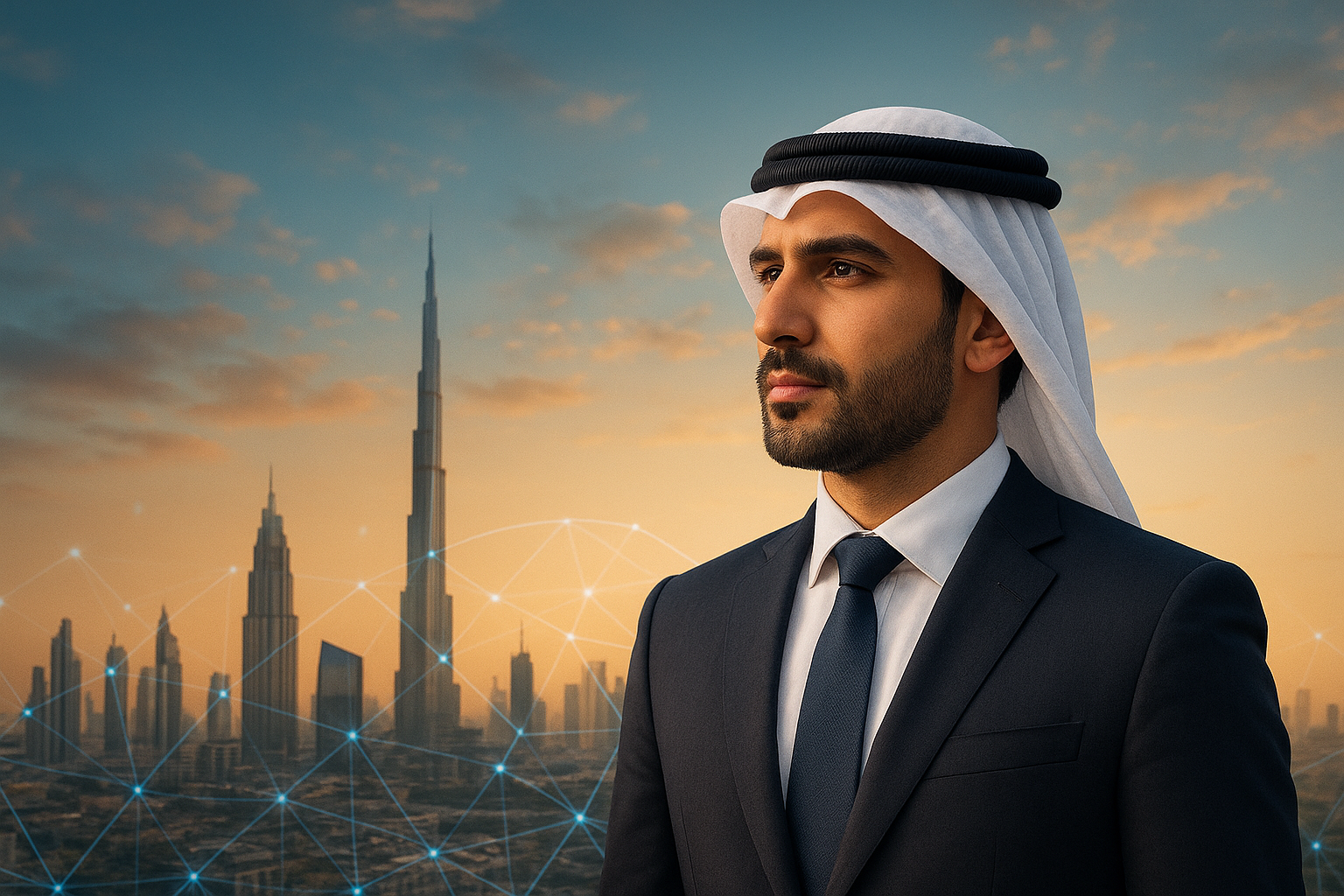
The Rise of Visionary Leadership in the Gulf
The Gulf region has entered a new epoch of transformation, one that transcends mere economic diversification and signals the emergence of a visionary leadership culture. For decades, Gulf nations defined success through rapid industrialization, oil wealth, and infrastructure expansion. But in 2025 and beyond, the region’s identity is increasingly rooted in innovation, digital transformation, and global competitiveness.
This generational shift is being driven by a cadre of Gulf Vision Leaders executives, policymakers, and entrepreneurs who blend long-term national vision with operational execution. They are not just corporate leaders; they are architects of national identity and global repositioning.
In Riyadh, Abu Dhabi, Doha, Manama, Muscat, and Kuwait City, leadership has evolved from managing industries to engineering ecosystems ecosystems that integrate digital technology, sustainability, capital mobility, and global partnerships.
These visionaries are redefining the contours of leadership through data-driven governance, AI adoption, climate-conscious investment, and talent-first growth. In doing so, they are positioning the Gulf not as a peripheral energy exporter, but as a core player in shaping the new global economic order one powered by knowledge, connectivity, and innovation.
From Energy Exports to Knowledge Economies
The transformation of the Gulf from an oil-based economy to a knowledge-driven power center marks one of the most ambitious socio-economic transitions in modern history. Since the 1970s, the GCC’s prosperity has been built on hydrocarbons, but the coming decades will hinge on how effectively Gulf economies pivot toward innovation, sustainability, and human capital. This is not just a diversification effort it’s a complete structural reimagination of economic architecture.
Saudi Arabia’s Vision 2030 is perhaps the most visible embodiment of this new trajectory. Through megaprojects like NEOM, Qiddiya, and Diriyah Gate, the Kingdom is creating future-ready cities powered by renewable energy, AI, and smart infrastructure. NEOM, for example, is envisioned as a living laboratory for technological experimentation a prototype for carbon-neutral urban life.
Meanwhile, the United Arab Emirates’ Economic Vision 2031 aims to double the contribution of knowledge industries to national GDP, positioning the country as a global hub for artificial intelligence, fintech, biotechnology, and digital trade. Qatar’s National Vision 2030 and Oman’s Vision 2040 emphasize sustainability, innovation, and advanced education, transforming these states into laboratories for renewable energy and environmental design. Bahrain’s initiatives in open banking, fintech regulation, and digital asset governance highlight how even smaller Gulf economies are leveraging agility to achieve outsized influence. These national visions are underpinned by a unified regional ethos: to transform natural wealth into intellectual capital. The Gulf’s greatest export of the 21st century will not be oil it will be knowledge, innovation, and human expertise.
Ecosystem Builders and Strategic Orchestrators
Modern Gulf leaders have evolved from administrators into ecosystem orchestrators. Their success lies not in managing organizations, but in engineering complex systems where technology, policy, and investment converge to create sustained innovation. In this model, leadership extends beyond boardrooms into policy design, startup incubation, digital governance, and infrastructure planning. Gulf leaders are cultivating collaborative ecosystems where public institutions, private enterprises, academia, and investors co-create value.
Projects like Saudi Arabia’s King Abdullah Financial District, UAE’s Masdar City, and Qatar Science & Technology Park are shining examples of this mindset integrated ecosystems blending innovation, academia, and industry. In Bahrain, the Economic Development Board (EDB) acts as a dynamic connector, facilitating partnerships between venture capital firms, startups, and global tech companies. Oman’s Duqm Special Economic Zone illustrates how industrial policy and logistics integration can become magnets for international collaboration.
These ecosystems are not just economic tools they are instruments of soft power, enhancing the Gulf’s influence in global technology, climate diplomacy, and digital governance. The region’s leaders understand that in a multipolar world, influence is earned through collaboration, not control.
Governance, Inclusion, and Resilience: The New Leadership DNA
The 21st-century Gulf leader operates in a space defined by transparency, inclusion, and adaptability a dramatic evolution from the top-down models of the past. Governance frameworks are now being rewritten to prioritize digital accountability, gender inclusion, and environmental ethics. Across the GCC, leadership is embracing a new equilibrium between vision and responsibility.
Women’s empowerment is central to this paradigm. The UAE’s Gender Balance Council and Saudi Arabia’s increased female workforce participation (which has nearly doubled since 2016) illustrate how leadership diversity is reshaping institutional behavior. Similarly, Qatar Foundation’s focus on female STEM education and Oman’s inclusion policies are setting benchmarks for human-centered modernization.
At the same time, Gulf leaders are embedding digital governance into statecraft. Governments are deploying AI-driven regulatory frameworks, blockchain-enabled trade systems, and smart contract compliance mechanisms that enhance efficiency and transparency. These innovations are transforming governance from bureaucratic to predictive where data analytics informs decisions in real time.
Resilience, too, has become a defining leadership attribute. The COVID-19 pandemic and global supply chain shocks underscored the need for strategic autonomy and economic self-reliance. In response, Gulf leaders are localizing production capacity in healthcare, food, and manufacturing, while securing digital sovereignty through national data strategies.
Human Capital: The Core of Gulf Competitiveness
If innovation is the goal, human capital is the vehicle. Gulf Vision Leaders are redefining what national competitiveness means by investing heavily in education, lifelong learning, and entrepreneurship.
Saudi Arabia’s Human Capability Development Program aims to prepare citizens for a global digital economy through STEM education, leadership training, and future-skills frameworks. The UAE’s Nafis program incentivizes private-sector employment for nationals, fostering cross-industry skill mobility. Corporate giants like ADNOC, Aramco, Mubadala, and QatarEnergy have established innovation academies and AI research divisions, reflecting how enterprise leadership complements national goals. Universities like KAUST, HBKU, and Khalifa University are now global research nodes, integrating academia with industrial innovation.
This human capital revolution is reinforced by a broader cultural reorientation. Leadership in the Gulf is shifting from authority to empathy, from control to empowerment. Emotional intelligence, cross-cultural agility, and digital fluency are being recognized as strategic assets, not soft skills. This shift ensures that the next generation of Gulf leaders will not only manage technology but humanize it.
Sustainability and the Green Ambition
No conversation on Gulf leadership is complete without addressing the climate and sustainability dimension. Once perceived as high-carbon economies, Gulf nations are now leading a paradigm shift in sustainable development. Saudi Arabia’s Middle East Green Initiative and the Circular Carbon Economy framework are redefining how oil economies transition toward carbon neutrality. The UAE’s hosting of COP28 reinforced its position as a global climate convenor, driving investments in green hydrogen, solar energy, and carbon capture.
Qatar is integrating sustainability across urban planning, evidenced in its Qatar National Vision 2030 and sustainable city projects. Similarly, Oman’s focus on green hydrogen and Bahrain’s efforts in blue economy innovation are emblematic of a shared regional commitment to environmental leadership. For Gulf Visionaries, sustainability is not an afterthought it is an instrument of economic power and international credibility. By embedding ESG principles into governance, they are redefining what it means to lead in an era where economic and environmental destinies are intertwined.
The Future of Leadership in the Gulf
The next decade will test the Gulf’s ability to sustain this leadership momentum. The challenge is not only technological adoption but also cultural evolution ensuring that leadership models remain agile, inclusive, and globally engaged.
Gulf leaders must continue to balance rapid modernization with societal continuity, ensuring that economic transformation does not dilute cultural authenticity. The true measure of Gulf leadership will not lie in monumental projects or GDP growth, but in how effectively leaders cultivate social trust, institutional integrity, and generational empowerment.
As the global economy pivots toward AI-driven, sustainable, and decentralized models, the Gulf’s Vision Leaders are poised to define what modern leadership looks like visionary yet pragmatic, national yet global, ambitious yet humane. The Gulf’s new identity will not merely be that of a region that adapts to change, but one that leads it confidently, strategically, and with purpose.
Related Blogs : https://arabworldleaders.com/category/articles/