
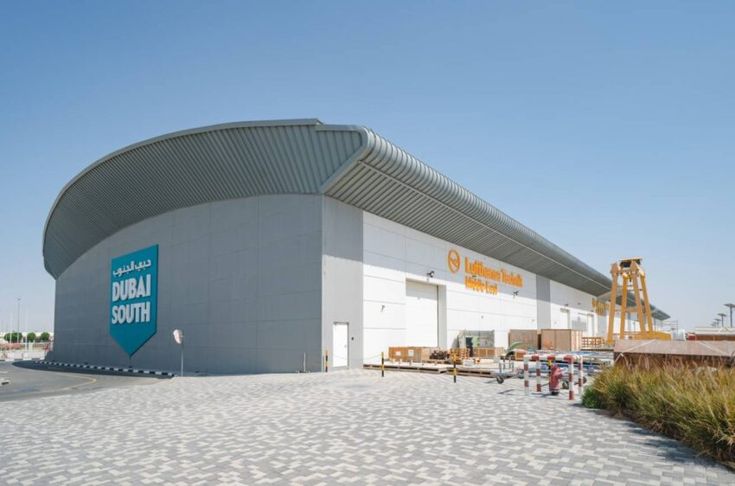
The Gulf aviation landscape is undergoing a profound transformation one that extends far beyond passenger volumes, airport infrastructure, or fleet expansions. Today, the region is aggressively establishing itself as a global center for aviation engineering, aircraft maintenance, and aerospace innovation. At the heart of this shift stands Tim Aerospace’s newly inaugurated MRO (Maintenance, Repair and Overhaul) megafacility in Dubai South’s Mohammed bin Rashid Aerospace Hub (MBRAH). This venture is more than a new industrial complex; it is a resounding statement of intent. It demonstrates the Gulf’s ambition to move up the aviation value chain, transitioning from being a hub for air travel and logistics into a powerhouse of high-value engineering capabilities. Its strategic relevance extends beyond the Middle East, positioning the region as a critical node in the global aviation ecosystem.
The facility itself is not only an operational milestone but also a symbol of the UAE’s next stage of aviation maturity. This stage is defined by a commitment to technological advancements, engineering precision, sustainable aviation practices, and the capability to influence future international aerospace standards. With passenger traffic increasing rapidly across the Middle East, Africa, and South Asia and with global airlines facing unprecedented maintenance bottlenecks the availability of robust, advanced, and centralized MRO capacity becomes crucial. Tim Aerospace’s expansion is therefore not simply an infrastructure enhancement; it represents a transformative investment in the backbone of global aviation reliability, safety, and operational continuity.
A Region Shifting Toward High-Value Aviation Engineering
For decades, the Gulf region earned global recognition for creating some of the world’s most iconic airlines, record-setting airports, and ambitious aviation investments. Yet, despite its dominance in aviation operations, the region historically relied extensively on external maintenance providers for heavy and specialized aircraft servicing. Complex MRO operations even for Gulf-based airlines were often outsourced to established hubs in Europe, Southeast Asia, or Turkey, resulting in longer turnaround times and increased operational costs.
This paradigm is now undergoing a dramatic shift. The UAE, Saudi Arabia, Qatar, and Bahrain are aggressively pursuing strategies that elevate their role in the global aerospace supply chain. They are actively investing in aviation manufacturing, aircraft component production, pilot and technician training, and end-to-end maintenance ecosystems. The inauguration of large-scale MRO hubs like Tim Aerospace’s megafacility signals a new era one in which the Middle East becomes a birthplace of advanced aviation engineering rather than a consumer of imported services.
The UAE’s ambitions are closely aligned with overarching national strategies such as the Dubai Economic Agenda (D33), which aims to double the size of the emirate’s economy, and the UAE Industry 4.0 initiative, which integrates automation, robotics, and AI into manufacturing and engineering sectors. Additionally, national Emiratization programs seek to cultivate highly skilled technical talent, ensuring the aviation sector becomes a sustainable contributor to long-term workforce development. These initiatives collectively reflect the Gulf’s determination to build an aviation sector that is technologically advanced, self-reliant, and globally competitive.
The Facility: Engineering Depth, Technological Strength, and Operational Capacity
Tim Aerospace’s new MRO complex is one of the largest and most technologically advanced independent facilities in the region. Designed with long-term scalability in mind, the hangar can simultaneously accommodate 12 narrow-body aircraft or 5 wide-body aircraft, offering unmatched capacity for operational flexibility. In a global market where maintenance bottlenecks are increasingly common, having such a facility in a geographically strategic location like Dubai provides airlines with a game-changing advantage.
The engineering depth inside the hangar reflects global best practices and the newest technological standards adopted by leading MRO centers worldwide. The facility houses advanced workshops capable of handling heavy maintenance checks including C-checks and provisions for D-check support making it one of the few centers in the region capable of executing full aircraft overhaul programs. Composite repair capabilities ensure support for next-generation aircraft like the Boeing 787 and Airbus A350, both of which rely heavily on carbon-fiber structures.
Furthermore, the complex includes specialist units for avionics testing, cabin modernization, structural repairs, engine support, landing gear maintenance, and corrosion control. These advanced capabilities allow airlines to complete an entire maintenance cycle within Dubai South, reducing downtime, minimizing positioning costs, and improving operational continuity. The integration of AI-driven predictive maintenance tools and digital twin analytics positions the facility at the forefront of the aviation’s digital transformation, enabling faster diagnostics, real-time monitoring, and data-driven engineering precision.
Global MRO Demand at a Critical Juncture
Tim Aerospace’s expansion comes at a time when the global MRO sector is experiencing unprecedented operational stress. Several macro factors are pushing global airlines to seek new maintenance destinations that offer reliability, capacity, and speed.
1. Fleet Growth and Aircraft Delivery Backlogs
Demand for new aircraft has surged post-pandemic, but manufacturers like Boeing and Airbus continue to face production delays caused by supply chain shortages and labor constraints. As a result, airlines are holding onto older aircraft longer, increasing maintenance requirements.
2. A Global Shortage of Skilled Technicians
The aviation industry faces an anticipated shortage of over 80,000 certified aircraft technicians by 2030. This talent deficit is forcing airlines to rely on regions that have strong training ecosystems an area where the UAE and Saudi Arabia are investing heavily.
3. Rising Aircraft Age and Maintenance Needs
Many airlines are flying aircraft well beyond their originally planned lifecycle, leading to increased demand for structural checks, engine overhauls, and component repairs.
4. Supply Chain Disruptions
From avionics equipment to landing gear components, global supply chains remain under pressure. MRO hubs with integrated logistics like those in Dubai South offer a competitive advantage by ensuring faster parts availability.
5. Next-Generation Aircraft Requirements
Modern aircraft demand specialized composite repair technologies, advanced materials expertise, and AI-backed maintenance diagnostics capabilities housed within Tim Aerospace’s new facility. In this environment of rising demand and limited global capacity, the Gulf’s emergence as a major MRO hub offers the aviation industry badly needed relief.
Dubai South: The Aerospace Supercluster of the Future
Dubai South is quickly transforming into one of the world’s most integrated and efficient aerospace clusters. Anchored by the future mega–Al Maktoum International Airport, the district is designed to accommodate next-generation aviation needs for decades to come. It serves as a magnet for global aerospace manufacturers, training academies, leasing companies, and cargo operators.
The Mohammed bin Rashid Aerospace Hub (MBRAH) within Dubai South is now positioned as the region’s premier center for aviation and aerospace excellence. Its ecosystem is built on seamless connectivity, robust infrastructure, advanced logistics, and investor-friendly free-zone policies.
Business aviation has surged significantly in Dubai South, with 15% year-on-year increases in private jet movements. This growth amplifies demand for specialized MRO services—especially those tailored to VIP aircraft and corporate fleets. The presence of a fully equipped, large-capacity MRO facility strengthens MBRAH’s ability to offer end-to-end aviation solutions, making Dubai a globally preferred destination for aircraft maintenance, operations, and logistics.
Economic and Workforce Impact: The High-Value Engine of Aviation
The MRO industry is one of aviation’s most economically rewarding segments due to its ability to generate long-term recurring revenue. Unlike passenger services which are subject to market fluctuations maintenance demand remains stable and often countercyclical. Tim Aerospace’s expansion creates hundreds of skilled engineering jobs, including roles for licensed technicians, structural engineers, cabin specialists, and digital maintenance analysts.
Additionally, the facility strengthens ties with regional aviation academies, offering hands-on training opportunities and helping groom the next generation of aerospace professionals. This is crucial for long-term national development as the UAE and wider Gulf aim to build robust, high-technology economies powered by knowledge industries rather than oil.
The ripple effects extend further into supply chain partners, OEMs, tooling companies, and aviation logistics providers creating a multi-layered industrial ecosystem that contributes to economic diversification and long-term stability.
Regional Competition: A New Battle for MRO Market Leadership
The Middle East has become a highly competitive market for aviation services. Saudi Arabia’s Vision 2030 is fueling unprecedented aviation investment, including new airports, airlines, and MRO infrastructure. Qatar continues to expand its aerospace capabilities through strategic partnerships, while Oman and Bahrain develop niche specializations for regional carriers. Turkey and Malta, long-standing European MRO destinations, compete aggressively for wide-body maintenance contracts.
Tim Aerospace’s Dubai South facility strategically positions the UAE at the forefront of this competitive landscape. With unmatched capacity, world-class engineering capabilities, and superior geographic connectivity, Dubai has an opportunity to establish itself as the Middle East’s uncontested MRO capital.
Sustainability and Future Technologies at the Core
The future of aviation will be defined by sustainability, and MRO hubs must evolve accordingly. Tim Aerospace’s facility integrates environmentally efficient hangar systems, energy optimization technologies, and waste-reduction programs designed to minimize emissions. The facility is also engineered to support the next wave of aviation technologies including electric aircraft, hybrid propulsion systems, hydrogen-powered engines, and modern composite materials. These capabilities ensure the Gulf is not only catching up with global standards but actively shaping the aviation technologies of tomorrow.
Strategic Implications: Strengthening the Gulf’s Aviation Future
The strategic implications of Tim Aerospace’s expansion are profound:
1. Enhanced Aviation Resilience
Local MRO capacity reduces reliance on international facilities, ensuring airlines have faster turnaround times and greater operational control.
2. Support for Fleet Expansion
As Gulf carriers grow aggressively, having immediate access to advanced maintenance infrastructure is essential.
3. Economic Diversification
Aerospace engineering stimulates innovation-driven, non-oil economic growth.
4. Global MRO Hub Potential
With rising global demand, the Gulf can capture a significant share of the multi-billion-dollar MRO industry.
5. Increased Global Influence
The UAE’s growing technical expertise strengthens its authority in international aviation policymaking and standards-setting.
Conclusion: A Transformative Leap for Gulf Aviation Engineering
Tim Aerospace’s mega MRO expansion is more than a new hangar it is a defining moment in the Gulf’s aviation evolution. It embodies the region’s ambition to lead in aerospace engineering, technological innovation, sustainability, and global aviation strategy. As air traffic surges and global maintenance capacity remains strained, the Gulf’s emergence as a major MRO hub will reshape the aviation landscape for decades to come.
With its advanced capabilities, ideal location, and integration into Dubai South’s rapidly expanding aerospace ecosystem, Tim Aerospace’s facility is set to become a cornerstone of the region’s aviation future. The Gulf is not merely participating in global aviation it is engineering its next chapter.
Related Blogs: https://arabworldleaders.com/category/articles/