
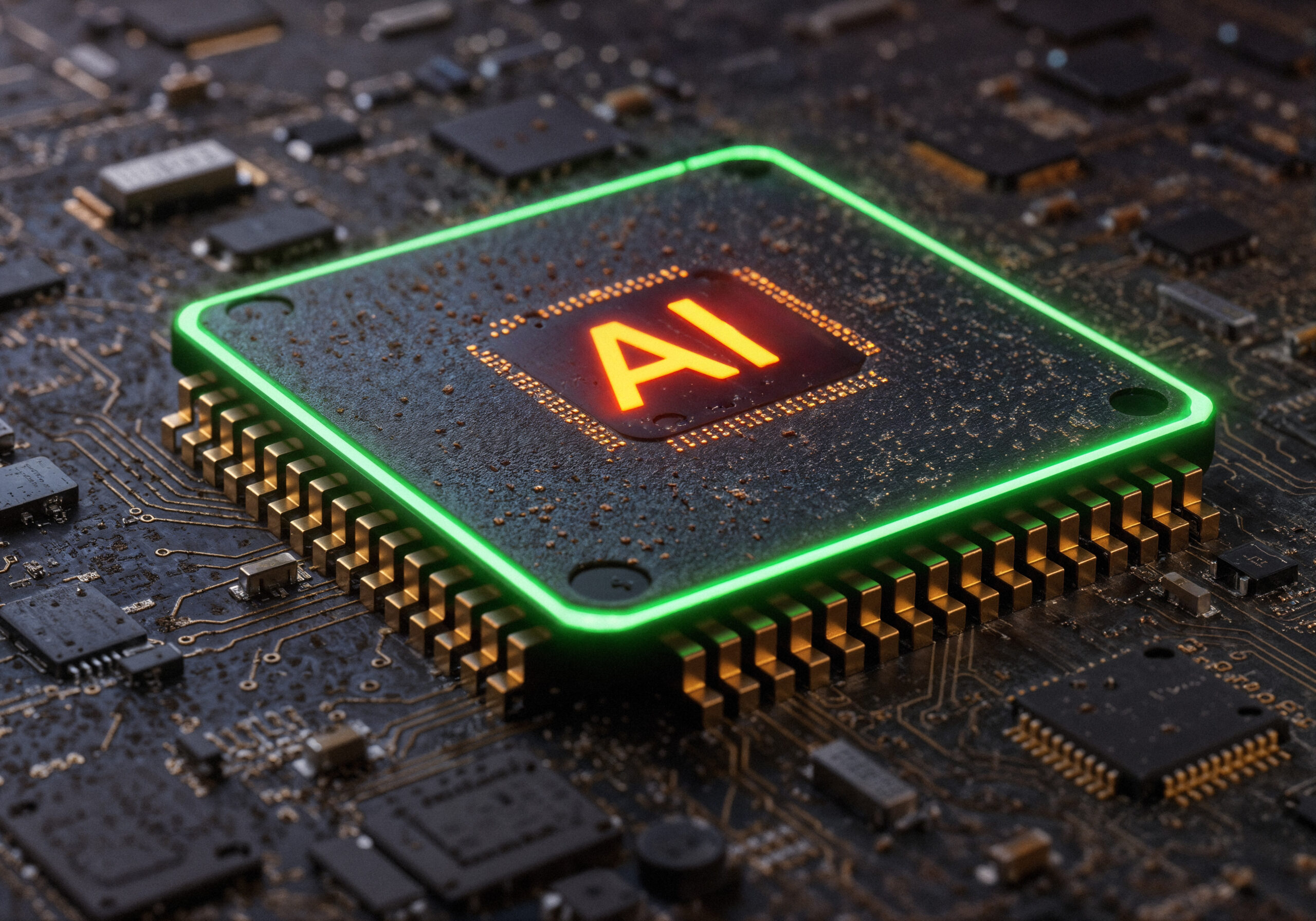
The global technology landscape is entering one of its most consequential phases since the dawn of the digital age. At the center of this transformation lies a powerful convergence: semiconductors and artificial intelligence. These are no longer just components of innovation; they are the infrastructure upon which modern economies are built. Control over these layers increasingly defines not only corporate competitiveness but also national sovereignty. In this context, the emergence of Rimal Semiconductors is far more than the rise of a regional startup it is a signal that the Middle East and North Africa (MENA), particularly the Gulf economies, are stepping into a new industrial identity.
For decades, the region’s role in the global economy was defined by energy exports, capital flows, and strategic geography. While these remain critical, they are no longer sufficient in a world where value creation is shifting toward digital intelligence and computational capability. The rise of a Saudi-based semiconductor design company reflects a deeper realization: economic resilience in the 21st century will depend on ownership of technological foundations, not just participation in downstream markets.
This shift is also unfolding against a backdrop of global supply chain disruptions, geopolitical fragmentation, and intensifying competition for technological leadership. Nations across the world are reassessing their dependencies particularly in semiconductors, which power everything from smartphones to defense systems. Within this environment, MENA’s move toward chip design and AI infrastructure represents both a defensive strategy and an offensive opportunity: to reduce vulnerability while capturing new layers of economic value.
The Fabless Model: Strategic, Scalable, and Geopolitically Relevant
At the heart of Rimal Semiconductors’ strategy lies the fabless model, a structure that has come to define modern semiconductor innovation. Unlike traditional integrated device manufacturers that design and fabricate chips in-house, fabless companies focus exclusively on design, outsourcing production to specialized foundries. This approach fundamentally reshapes the economics of the industry, lowering barriers to entry while enabling faster innovation cycles.
For a region like MENA, this model is particularly transformative. Building semiconductor fabrication plants requires immense capital investment often exceeding $10–20 billion per facility along with access to highly specialized equipment and supply chains. By contrast, the fabless approach allows companies to participate in the highest-value segment of the industry design and intellectual property without incurring these prohibitive costs.
However, the significance of the fabless model extends beyond economics. It aligns closely with the geopolitical realities of today’s technology landscape. Semiconductor manufacturing is concentrated in a handful of global hubs, notably Taiwan, South Korea, and parts of the United States. By forming partnerships across these regions, companies like Rimal Semiconductors can integrate into existing ecosystems while maintaining flexibility in sourcing and production.
This flexibility is crucial in an era marked by export controls, trade restrictions, and supply chain volatility. The ability to diversify manufacturing partners reduces exposure to geopolitical risk, ensuring continuity in production and access to advanced process nodes. In this sense, the fabless model becomes not just a business strategy, but a mechanism for navigating a fragmented global order.
Moreover, the model enables rapid specialization. As AI workloads evolve, demand is shifting toward custom-designed chips optimized for specific functions whether it be machine learning training, inference, or edge computing. Fabless companies are uniquely positioned to respond to these demands, iterating quickly and tailoring designs to emerging use cases. This agility is a critical advantage in a market defined by constant technological acceleration.
AI Infrastructure: The New Oil of the Digital Economy
Artificial intelligence has moved from the periphery of technological innovation to its very core. Today, AI is not merely a tool it is an infrastructure layer that underpins economic activity, shapes competitive dynamics, and influences geopolitical power. From predictive analytics in finance to personalized healthcare and autonomous logistics, AI systems are redefining how value is created and distributed.
At the center of this transformation is compute power. The ability to process vast datasets, train complex models, and deliver real-time insights depends fundamentally on semiconductor performance. Advanced chips particularly GPUs, TPUs, and specialized AI accelerators are the engines that drive this new economy.
For the MENA region, the implications are profound. Historically, the region has been a consumer of advanced technologies developed elsewhere. While this has enabled rapid digital adoption, it has also created dependencies particularly in critical sectors such as energy, defense, and finance. By investing in semiconductor design and AI infrastructure, the region is seeking to shift from consumption to creation, building the capacity to develop and control its own technological ecosystems.
This shift toward “sovereign AI” is becoming a defining trend globally. Governments are increasingly recognizing that data, compute, and algorithms are strategic assets. Ensuring that these assets can be developed and managed within national or regional boundaries is essential for security, resilience, and economic independence.
In this context, semiconductor design becomes a cornerstone capability. Without access to optimized chips, AI systems cannot achieve the performance, efficiency, or scalability required for large-scale deployment. By building expertise in this domain, MENA is laying the groundwork for a self-sustaining AI ecosystem one that can support everything from smart cities and digital finance to advanced manufacturing and climate technologies.
From Oil to Algorithms: The Gulf’s Strategic Diversification
The rise of semiconductor and AI investments in the Gulf is inseparable from the broader narrative of economic diversification. For decades, the region’s prosperity was closely tied to hydrocarbons. While this model generated immense wealth, it also exposed economies to volatility in global energy markets and limited their participation in high-growth technology sectors.
In recent years, countries such as Saudi Arabia and the UAE have embarked on ambitious transformation agendas aimed at building knowledge-based economies. These strategies, often encapsulated in national visions and long-term development plans, emphasize innovation, entrepreneurship, and technological leadership.
What distinguishes the current phase of diversification is its focus on deep technology. Earlier initiatives often centered on services, infrastructure, and real estate important sectors, but ones that did not fundamentally alter the region’s position in the global value chain. Semiconductor design and AI infrastructure, by contrast, operate at the very foundation of the digital economy.
By investing in these areas, Gulf economies are not merely diversifying they are repositioning themselves. They are moving from being consumers of technology to producers of intellectual property, from participants in global markets to shapers of technological trajectories.
This transition also has significant geopolitical implications. As technological capability becomes a key determinant of global influence, countries that control critical infrastructure such as semiconductors and AI systems gain strategic leverage. For the Gulf, developing these capabilities enhances not only economic resilience but also international standing.
The Rise of a Multi-Sector Innovation Ecosystem
The emergence of semiconductor startups like Rimal Semiconductors is part of a broader ecosystem transformation that spans multiple industries. This ecosystem is characterized by interdependence, where advancements in one sector drive innovation in others, creating a virtuous cycle of growth and technological progress.
In the domain of mobility technology, the region is witnessing rapid advancements in autonomous vehicles, smart transportation systems, and logistics optimization platforms. These innovations rely heavily on real-time data processing and decision-making, capabilities that are enabled by advanced semiconductor architectures. As cities invest in intelligent infrastructure, the demand for specialized chips tailored to local conditions and use cases is expected to increase significantly.
The proptech sector is undergoing a similarly profound transformation. Large-scale urban development projects, particularly in the Gulf, are incorporating digital technologies at an unprecedented scale. Smart buildings equipped with IoT sensors, AI-driven energy management systems, and digital twin simulations are redefining how urban environments are designed and operated. These systems require robust computing capabilities at both centralized and distributed levels, further reinforcing the importance of semiconductor innovation.
At the same time, investments in AI infrastructure platforms are accelerating. Governments and enterprises are building sovereign cloud environments, hyperscale data centers, and AI deployment frameworks to support the growing demand for computational resources. These platforms serve as the backbone of the digital economy, enabling organizations to develop, train, and deploy AI models at scale.
The interplay between these sectors creates a dynamic ecosystem in which semiconductors serve as the foundational layer. Without advancements in chip design, the performance and scalability of mobility systems, smart cities, and AI platforms would be significantly constrained. Conversely, the growth of these sectors drives demand for more advanced semiconductor solutions, creating a feedback loop that fuels innovation.
Global Partnerships: Integration, Not Isolation
A defining feature of MENA’s approach to semiconductor development is its emphasis on global collaboration. Rather than attempting to build a fully localized supply chain a daunting challenge even for the world’s most advanced economies the region is pursuing a strategy of integration.
Companies like Rimal Semiconductors are establishing partnerships with international foundries, research institutions, and technology firms. These collaborations provide access to cutting-edge manufacturing processes, design tools, and technical expertise, enabling regional players to compete on a global stage.
This approach reflects a pragmatic understanding of the semiconductor industry’s complexity. The value chain spans multiple geographies, each specializing in different aspects of production, from design and fabrication to packaging and testing. Attempting to replicate this ecosystem within a single region would require enormous investment and time.
By integrating into existing global networks, MENA companies can leverage the strengths of established players while focusing on their own areas of expertise. This not only accelerates innovation but also facilitates knowledge transfer, helping to build local capabilities over time.
Furthermore, global partnerships enhance resilience. By diversifying relationships across multiple regions, companies can mitigate risks associated with geopolitical tensions or supply chain disruptions. In a world where technology is increasingly intertwined with politics, this flexibility is a critical advantage.
Challenges on the Horizon
Despite the strong momentum, the journey toward semiconductor and AI leadership in MENA is fraught with challenges. One of the most significant is the development of human capital. Semiconductor design and AI hardware engineering require highly specialized skills that are currently in limited supply within the region. Building this talent base will require sustained investment in education, research institutions, and international collaboration.
Financial constraints also present a challenge. While the fabless model reduces the need for capital-intensive manufacturing facilities, it does not eliminate the high costs associated with research and development. Designing cutting-edge chips, particularly for AI applications, requires significant investment in tools, talent, and testing.
Geopolitical dynamics add another layer of complexity. As semiconductors become central to national security and economic strategy, they are subject to increasing regulation. Export controls, trade restrictions, and shifting alliances can impact access to critical technologies and markets. Navigating this landscape will require careful strategic planning and alignment with global regulatory frameworks.
Finally, there is the challenge of ecosystem maturity. Building a successful semiconductor industry requires more than individual companies; it demands a supportive ecosystem that includes suppliers, research institutions, venture capital, and regulatory frameworks. Developing this ecosystem will take time, coordination, and sustained commitment.
A Defining Moment for MENA’s Tech Future
The developments unfolding in the MENA region represent more than a cyclical surge in investment they mark the beginning of a structural transformation. The convergence of semiconductor innovation, AI infrastructure development, and cross-sector digitalization is reshaping the region’s economic foundations.
The emergence of companies like Rimal Semiconductors highlights a critical shift: MENA is moving from technology adoption to technological authorship. This transition is essential in a world where value creation is increasingly concentrated at the infrastructure level.
As these capabilities mature, the region has the potential to become a key player in the global technology ecosystem. By combining financial resources with strategic vision and global partnerships, MENA can position itself as a hub for innovation, contributing not only capital but also intellectual property and technological expertise.
Closing Perspective
The rise of semiconductor and AI infrastructure startups in the Gulf represents a pivotal moment in the region’s evolution. It reflects a growing recognition that the future of economic power will be defined by the ability to design, control, and scale digital intelligence.
If current trends continue, MENA could transition from being a consumer of global technologies to a co-creator of the systems that underpin them. In doing so, it would not only secure its own economic future but also play a defining role in shaping the next era of global technological development.
This is not merely an industrial shift it is the foundation of a new economic paradigm, one where algorithms rival oil in strategic importance, and where regions that invest in intelligence infrastructure today will define the balance of power tomorrow.
Related Blogs : https://arabworldleaders.com/category/business-news/