
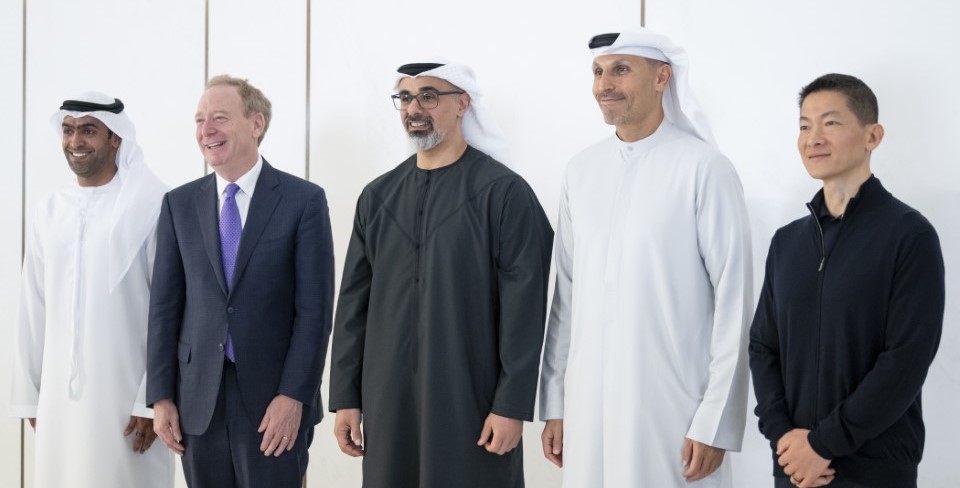
Microsoft’s announcement of a US $15.2 billion multi-year investment in the United Arab Emirates represents far more than a major financial commitment from a global technology leader. It signals a reshaping of the regional and global digital landscape. This initiative is not a simple expansion of cloud services or infrastructure; it is a transformational blueprint designed to reposition the UAE as one of the most advanced AI and digital-power hubs in the world. By bringing together compute capacity, sovereign cloud protections, regulatory alignment, frontier research, and large-scale workforce development, Microsoft is helping the UAE evolve from a fast adopter of digital technologies into a producer and exporter of next-generation AI solutions. The scale and structure of the initiative reflect a profound vote of confidence, both in the UAE’s digital governance model and in its long-term national ambition to build an economy rooted in innovation, autonomy and global competitiveness.
Infrastructure & Cloud Expansion
A major portion of Microsoft’s investment focuses on creating one of the world’s densest and most advanced AI-compute infrastructures directly in the UAE. This includes the development of hyperscale data centres designed to support extremely demanding AI workloads such as foundation-model training, large-scale inference, and real-time industry-specific optimisation engines. Rather than upgrading existing capacity, Microsoft is constructing entirely new facilities built from the ground up for high-power AI processing. With over US $10 billion going into physical infrastructure, the UAE will gain more than 200 megawatts of new power dedicated to AI-focused compute clusters, equipped with the world’s most advanced GPU architectures.
What makes this expansion especially distinctive is its alignment with UAE regulatory frameworks focused on data protection, national sovereignty and responsible digital transformation. The new facilities will support fully sovereign cloud environments, allowing government institutions, financial regulators, defence organisations and critical industries to run highly sensitive workloads without any data leaving UAE borders. Microsoft’s ability to secure U.S. export approvals for the latest Nvidia chips further illustrates the strategic trust placed in the UAE’s governance and compliance infrastructure. With AI demand rising across all sectors from predictive energy modelling and aviation analytics to health diagnostics and smart-city platforms Microsoft’s infrastructure expansion eliminates one of the region’s biggest bottlenecks: limited access to high-performance compute. This development positions the UAE as a central AI infrastructure hub not just for the Gulf, but for the broader Middle East, Africa and South Asia.
Talent Development & Ecosystem Building
Beyond physical infrastructure, Microsoft is investing deeply in the UAE’s human capital, recognising that long-term AI leadership requires a tech-savvy workforce capable of building, deploying and scaling advanced digital solutions. The company’s commitment to training one million people across the UAE by 2027 is one of the most ambitious talent-development programmes anywhere in the world. Unlike traditional training schemes, this initiative spans the entire learning and employment value chain from school classrooms and universities to government departments and large enterprises.
In education, Microsoft is working with authorities including ADEK and KHDA to integrate AI literacy and digital skills into early learning systems. This ensures that students grow up understanding core concepts of AI, coding, cybersecurity and responsible technology use. At the university level, Microsoft is supporting the development of specialised programmes in machine learning, cloud engineering and digital research, helping young professionals gain job-ready expertise. Meanwhile, government employees are being trained to manage and deploy AI systems that align with national priorities. A crucial pillar of this ecosystem approach is the establishment of Microsoft’s Global Engineering Development Center in Abu Dhabi. This centre will bring world-class researchers, engineers and product specialists into the UAE, accelerating frontier research in multilingual AI models, responsible AI frameworks, and region-specific digital innovations. By building local talent pipelines and fostering a culture of innovation that begins in schools and extends into advanced R&D, Microsoft is helping the UAE create a self-sustaining ecosystem that reduces dependence on global talent imports.
Trust, Governance & Strategic Partnership
One of the most defining characteristics of the Microsoft–UAE partnership is its emphasis on trust, governance and responsible AI deployment. As AI becomes embedded in critical sectors such as government, healthcare, defence and finance, the need for strong digital governance frameworks becomes increasingly urgent. Microsoft and UAE entities have co-developed comprehensive assurance systems that govern data residency, cybersecurity protections, responsible AI guidelines and regulatory compliance. These frameworks ensure that AI systems are deployed in controlled, transparent and ethically sound environments.
This governance-first approach reflects the UAE’s broader digital strategy, which prioritises safety and transparency alongside innovation. It positions the country as a global role model, especially among emerging markets that are rapidly adopting AI but often lack robust regulatory structures. For Microsoft, having a partner capable of implementing responsible AI governance strengthens its foothold in the region and reduces long-term risks. For the UAE, this governance infrastructure is a foundational element that allows the country to scale AI adoption across sensitive and high-impact domains without compromising national sovereignty or public trust. As digital economies become more interconnected and data-driven, the UAE’s approach demonstrates how countries can accelerate technological growth while maintaining strict oversight and international compliance.
Sectoral Impacts & Use-Cases
Microsoft’s investment is already shaping transformational change across the UAE’s key industries, each of which stands to benefit significantly from increased compute capacity and sovereign AI infrastructure. In the energy sector, major players including ADNOC are leveraging AI to optimise production efficiency, automate complex operational workflows and support long-term sustainability objectives. High-performance compute enables real-time modelling of subsurface environments, predictive maintenance for critical equipment, and intelligent energy distribution systems that minimise carbon emissions.
In financial services, the availability of localised sovereign cloud environments is accelerating the deployment of AI tools such as AI-driven risk analytics, automated fraud detection, personalised financial-advisory engines and compliance systems capable of processing massive datasets securely. These solutions enhance transparency, improve customer engagement and strengthen the resilience of financial institutions.
The education sector is undergoing profound modernisation with the integration of AI-enhanced curriculum design, learning-personalisation tools and advanced teacher-training systems. These enable schools and universities to provide students with adaptive learning experiences that match individual strengths, weaknesses and career pathways. Healthcare institutions are also expected to see major benefits through AI-assisted diagnostics, predictive analytics for treatment planning, genomics research and enhanced hospital-management systems powered by high-speed computing.
Startups and early-stage innovators represent another major beneficiary group. The availability of high-performance AI compute, combined with a supportive regulatory environment and an expanding pool of trained specialists, creates an ideal launchpad for building globally competitive AI-native businesses. For the first time, founders in the region can experiment, prototype and scale advanced AI models without the prohibitive cost barriers that previously limited innovation.
Challenges & Considerations
Despite its transformative potential, Microsoft’s initiative comes with several important challenges that must be managed carefully. The scale of the infrastructure expansion requires complex coordination across government regulators, energy utilities, construction partners and international technology providers. Building and operating hyperscale data centres of this magnitude demands significant power resources, stringent environmental controls, and consistent cross-agency collaboration.
Another challenge lies in ensuring that the massive talent-development initiative translates into real economic value. Training one million people is achievable, but creating enough high-value employment opportunities to match this newly skilled workforce will require continuous private-sector expansion and supportive public-sector initiatives. The region also faces the risk of digital imbalance, as the UAE surges ahead at a pace that neighbouring economies may struggle to match. This could widen disparities unless cross-border partnerships, regional AI corridors, and international training programmes are developed in parallel.
Cybersecurity also becomes increasingly critical as more government and enterprise systems rely on AI and cloud infrastructure. As the UAE deploys sophisticated AI systems across critical sectors, threat exposure rises, requiring a robust and adaptive cybersecurity posture. Moreover, the UAE’s growing role in global technology flows will need strategic navigation to balance innovation with international political and regulatory dynamics.
Strategic Implications for Businesses, HR Leaders & the MENA Ecosystem
Microsoft’s investment redefines the business environment across the Gulf and broader MENA region. Companies will increasingly rely on AI-powered tools to enhance productivity, customer experience, compliance and operational resilience. This shift will demand significant adjustment from HR leaders, who must prioritise AI literacy, workforce reskilling and the development of new organisational structures that support data governance, algorithmic accountability and digital ethics.
Businesses will need to broaden their talent strategies, incorporating roles such as AI model trainers, data governance officers, cloud-architecture specialists and machine-learning engineers. As AI becomes deeply embedded in daily operations, the ability to attract and retain specialised digital talent will become a central competitive advantage. Editorial and thought-leadership platforms such as CIOVisionaries will also find extensive opportunities to shape the regional conversation on AI sovereignty, cloud localisation, workforce transformation and cross-sector digital evolution. The scale of Microsoft’s initiative provides fertile ground for thought leadership, analysis, and sector-specific insights that help decision-makers understand the implications of this new digital era.
Outlook & What to Watch
Over the next two years, the first wave of new data centres will begin full-scale operations, unlocking unprecedented compute capacity for both public and private-sector AI projects. By 2027, the results of large-scale talent-training initiatives will become more visible as thousands of newly upskilled professionals enter the market. Between 2027 and 2029, the UAE will face its most defining test: whether it can transition from being primarily an adopter of AI technologies to becoming a global exporter of AI services, solutions and intellectual property.
Key indicators will include the growth rate of compute capacity, the emergence of homegrown AI startups, the expansion of cross-border AI partnerships, and the publication of new regulatory guidelines that shape AI use across the region. The success of this multi-year investment will also depend on how effectively the UAE balances innovation with governance, talent development with job creation, and national competitiveness with international collaboration. If fully realised, Microsoft’s commitment has the potential to position the UAE as one of the world’s most dynamic centres of AI research, infrastructure and innovation influencing regional economies and global digital ecosystems for decades to come.
Related Blogs: https://arabworldleaders.com/category/articles/