
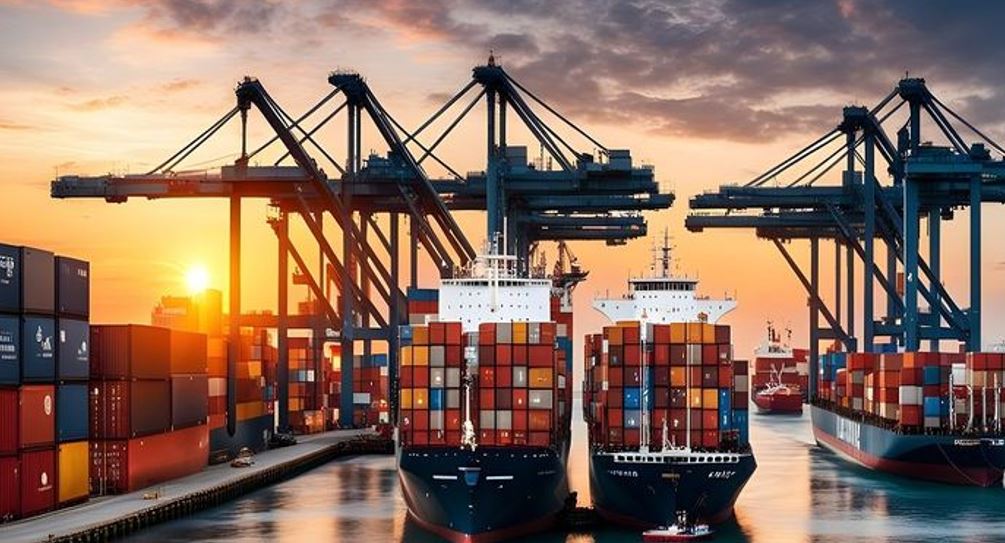
GCC’s Expanding Trade Vision Gains Momentum
The GCC’s accelerated push toward Comprehensive Economic Partnership Agreements (CEPAs) is reshaping the region’s position in the global economy in ways not seen since the early 2000s energy boom. What originated as a strategy to diversify away from hydrocarbons has matured into a sophisticated, multi-layered trade blueprint that intertwines economic diversification, technological transformation, and global influence. Today, Gulf governments are not only expanding market access but also redesigning how their economies participate in global value chains moving from exporters of raw commodities to orchestrators of advanced trade ecosystems spanning logistics, finance, technology, and digital services.
This acceleration comes at a moment when the global economy is undergoing one of the most significant strategic realignments of the century. Geopolitical fragmentation is driving nations to rethink supply-chain dependencies, with the reshoring of manufacturing, diversification away from single-country reliance, and reconstruction of logistics routes becoming essential priorities. In this environment, the GCC is using trade agreements to establish itself as a dependable, strategically located commercial nexus. From the Suez Canal to the Strait of Hormuz, the region controls critical maritime corridors that are indispensable to global trade, and CEPAs amplify its ability to convert geographic leverage into economic influence.
Furthermore, the pace and complexity of new CEPAs reflect growing international confidence in the Gulf’s economic reforms. Structural changes such as labor market modernization, financial regulation upgrades, renewable energy investments, and digital government transformation have made GCC markets more attractive for global investors. These agreements underscore that GCC nations are no longer solely energy-driven economies they are becoming proactive architects of new global trade alliances that support innovation, fintech, AI ecosystems, and sustainable energy solutions. This evolution marks a turning point in the region’s journey toward becoming a globally integrated, knowledge-based economic powerhouse.
Why the GCC Is Doubling Down on CEPAs
The renewed emphasis on CEPAs aligns with a broader strategy focused on building long-term economic resilience, enhancing competitiveness, and strengthening regional autonomy. Unlike traditional free-trade deals that mainly reduce tariffs, modern CEPAs negotiated by the GCC encompass advanced regulatory harmonization, digital trade rules, intellectual property structures, AI governance frameworks, and commitments to environmental cooperation. These areas represent the engines of future global trade, and by building standards early, the Gulf is positioning itself to lead emerging industries rather than merely participate in them.
A major driver behind this wave of agreements is the global geoeconomic realignment. With the US–China rivalry restructuring supply chains and Europe reassessing its reliance on external partners, Gulf countries see an opportunity to anchor themselves as indispensable hubs for energy, digital infrastructure, and cross-border investment flows. CEPAs create predictable and transparent governance structures that appeal to multinationals seeking stability in an increasingly unstable global environment. These frameworks also encourage companies to establish regional headquarters, innovation centers, and manufacturing facilities within the Gulf’s strategic free zones and economic clusters.
In addition, GCC nations are using CEPA networks as tools for strengthening their economic sovereignty. By expanding partnerships across continents from South Asia to Sub-Saharan Africa to Eastern Europe the Gulf reduces dependency on any single trading partner and creates a diversified, multi-directional trade portfolio. This diversification not only protects regional economies from commodity price shocks but also increases the Gulf’s bargaining power in global trade negotiations. The result is a more resilient, self-sufficient, and influential GCC that is better prepared to navigate global disruptions, financial crises, and policy shifts.
Key Regions Where GCC Trade Deals Are Expanding
Asia: Deepening Strategic Corridors
Asia remains the anchor of the GCC’s trade strategy, driven by decades-long energy ties, booming consumer markets, and rising technological collaboration. Agreements with India, China, Indonesia, South Korea, and others are laying the foundation for cross-regional economic corridors that stretch across maritime shipping lanes, digital infrastructure, and advanced manufacturing zones. These partnerships are not limited to energy they increasingly encompass green technologies, digital trade, electric mobility, and AI-driven innovation.
The Gulf’s sovereign wealth funds continue to play an outsized role in shaping these partnerships. Through multi-billion-dollar investments in Asian infrastructure, semiconductor manufacturing, AI startups, and electric vehicle ecosystems, they are building enduring economic interdependencies that extend beyond traditional trade flows. These investments generate dual benefits: they accelerate Asia’s industrial development while providing Gulf economies with strategic access to innovation, supply-chain capabilities, and future technologies.
Additionally, the GCC’s CEPA push aligns closely with its long-term food-security strategy. Many Asian countries form the backbone of Gulf food imports, and recent agreements include provisions for joint agricultural zones, logistics corridors for agri-exports, and co-managed processing facilities to reduce supply-chain vulnerabilities. These initiatives ensure that Gulf nations can weather global food disruptions while contributing to sustainable agricultural ecosystems across Asia.
Africa: The GCC’s Rising Frontier
Africa has emerged as one of the most significant regions in the GCC’s trade and investment roadmap. With one of the world’s youngest populations, rapid urbanization, and expanding industrial sectors, the continent offers enormous potential for long-term partnerships. GCC agreements with nations including Egypt, Kenya, Ethiopia, Morocco, and South Africa are unlocking new opportunities in manufacturing, mining, infrastructure, pharmaceuticals, and renewable energy.
Africa’s strategic geography makes it indispensable for global trade. The Gulf’s investments in African ports, industrial zones, and transportation networks, particularly in the Red Sea, East Africa, and West Africa—enhance regional connectivity and give Gulf economies greater influence over trade corridors linking Europe, Asia, and the Americas. This infrastructure-led engagement positions the GCC as both an economic and logistical gateway between continents.
These agreements also promote Africa’s integration into global supply chains. As companies worldwide seek to diversify their production bases beyond Asia, African markets are gaining momentum as new manufacturing hubs. GCC firms play a pivotal role in this transition by providing capital, technology, and logistical expertise. At the same time, deeper trade ties with Africa enhance the Gulf’s geopolitical influence in regions that are crucial for food security, energy routes, and maritime stability.
Europe: Building Strategic Economic Bridges
Europe continues to be a critical economic partner for the GCC, especially in clean energy, defense technologies, industrial equipment, and digital regulation. Through CEPAs with countries like Georgia and Serbia, the Gulf is securing access to strategic European markets that offer broader entry into EU-aligned supply chains. These agreements facilitate cooperation in renewable energy production, hydrogen export projects, cybersecurity frameworks, and dual-use technologies.
The EU’s accelerating shift toward green energy provides a massive opportunity for the GCC. Europe’s demand for green hydrogen, ammonia, and advanced renewable fuels positions Gulf nations—particularly the UAE, Saudi Arabia, and Oman—as long-term energy suppliers for the continent. These agreements also encourage joint R&D, cross-border technology exchange, and harmonization of environmental standards, allowing Gulf companies to compete in markets with stringent regulatory frameworks.
At the same time, European firms benefit from expanding into Gulf economies, which offer strong infrastructure, investment-friendly policies, low taxation environments, and access to fast-growing markets across MENA, Africa, and South Asia. These partnerships strengthen economic resilience on both sides and support the creation of a shared, forward-looking trade ecosystem.
Impact on Regional Businesses and Investors
For Gulf-based businesses, the growing network of CEPAs is transforming the commercial landscape by reducing trade barriers and widening market access across continents. Manufacturers gain visibility in major consumer markets, allowing them to scale production, diversify exports, and compete internationally. Firms engaged in fintech, consulting, professional services, logistics, and legal advisory gain new opportunities through simplified market-entry rules and harmonized regulations across sectors.
Small and medium enterprises (SMEs), often constrained by export costs and regulatory challenges, are major beneficiaries. Many CEPAs include dedicated SME chapters that offer cross-border financing, digital compliance tools, e-commerce integration, and joint innovation programs. These frameworks will empower regional entrepreneurs to enter global markets with unprecedented ease.
For investors, the expanding CEPA network signals a surge in deal flow across renewable energy, smart manufacturing, health technology, infrastructure, and digital ecosystems. Gulf sovereign wealth funds are expected to leverage CEPA frameworks to execute large-scale investments with reduced risk and improved long-term returns. This creates a more vibrant, dynamic, and globally connected investment environment across the region.
The Road Ahead: Toward a Unified GCC Trade Bloc
Looking ahead, the GCC’s long-term strategy aims to evolve from individual bilateral agreements into a unified, integrated GCC-wide trade architecture. This future model would create one of the world’s largest connected trade blocs linking the Middle East with Asia, Africa, and Europe through advanced economic corridors supported by logistics hubs, digital platforms, and green-energy networks.
Upcoming CEPAs are expected to incorporate cutting-edge provisions for AI governance, cross-border data flows, digital currencies, robotics standards, and green-transition compliance. By establishing rules in emerging sectors early, the GCC positions itself as a global agenda-setter rather than a follower in trade regulation. This gives the region enormous influence in shaping future industries such as AI manufacturing, green hydrogen trade, digital identity systems, and space technology cooperation.
If the current momentum continues, the GCC is on track to become one of the world’s most influential geoeconomic players by 2030—driving innovation, powering future energy transitions, and anchoring new supply chains that span three continents. The next decade will determine how firmly the region secures this role, but the trajectory is clear: the GCC is rapidly transforming into a global economic powerhouse with a trade network that reshapes the architecture of global commerce.
Related Blogs: https://arabworldleaders.com/category/articles/