
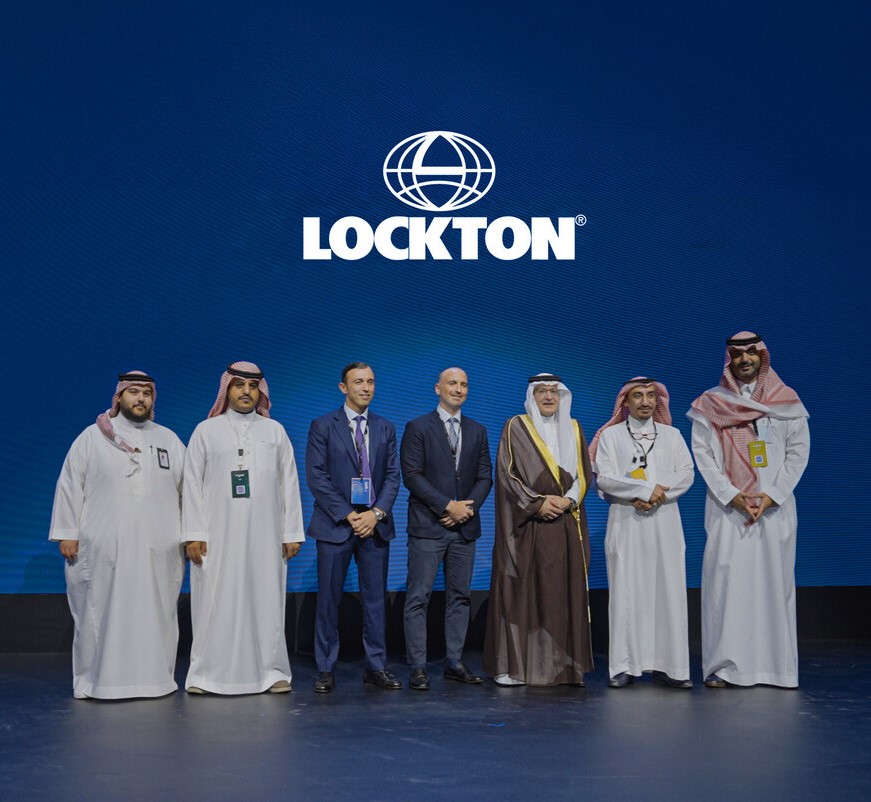
When Lockton, the world’s largest privately held insurance brokerage and risk advisory firm, formally launched operations in Saudi Arabia, it marked more than just another global expansion milestone. It represented a profound vote of confidence in the Kingdom’s transformation into a sophisticated financial and investment hub one that is no longer defined solely by oil wealth but by institutional maturity, technological capacity, and economic diversification.
The move signals how the Middle East, and Saudi Arabia in particular, has evolved from being a market of opportunity to one of strategic necessity for global firms in the insurance and financial services sector. Lockton’s entry represents a bridge between global expertise and local ambition, reinforcing the Kingdom’s position at the heart of a new regional financial order.
The New Strategic Landscape of Risk
In today’s interconnected global economy, risk has become multi-dimensional and increasingly complex. No longer limited to asset protection or accident coverage, risk management now involves anticipating systemic shocks from cybersecurity threats to climate disruptions and embedding mitigation into organizational strategy.
Lockton’s expansion into Saudi Arabia embodies this new paradigm shift from risk transfer to risk intelligence. Rather than treating insurance as an afterthought, the firm aims to help regional clients build resilience through proactive advisory frameworks. These include comprehensive enterprise risk mapping, scenario-based modeling, and real-time data analysis that enables firms to forecast vulnerabilities before they manifest into financial losses.
This approach is particularly timely. With the region undergoing rapid diversification and infrastructure expansion, the need for sophisticated, data-driven advisory support has never been greater. By localizing its presence, Lockton brings the same rigor and analytical precision that has guided multinational corporations in Europe and North America to one of the fastest-transforming economies in the world.
Saudi Arabia’s Financial Evolution: From Oil Capital to Knowledge Capital
Saudi Arabia’s journey from a hydrocarbon-dependent economy to a diversified financial hub is accelerating under the banner of Vision 2030. Within this blueprint, the Financial Sector Development Program (FSDP) aims to deepen market sophistication, broaden access to financial products, and foster innovation across insurance, banking, and capital markets.
In this evolving framework, Lockton’s entry complements national efforts to cultivate a modern financial ecosystem that adheres to global standards. The Saudi Central Bank (SAMA) has progressively introduced risk-based supervision models, updated solvency requirements, and promoted digital transformation across the insurance sector. These initiatives create fertile ground for advanced risk advisory practices.
The Kingdom’s reform momentum has also attracted multinational reinsurers, financial technology innovators, and institutional investors seeking exposure to one of the most dynamic emerging markets. Lockton’s move demonstrates its belief that Saudi Arabia’s financial system now offers both regulatory stability and significant long-term potential — a combination that few emerging economies can boast.
Vision 2030: Building the Infrastructure of Confidence
At its core, Vision 2030 seeks to establish a climate of confidence confidence among investors, entrepreneurs, and global markets that Saudi Arabia is a reliable and resilient destination for capital. Insurance and risk management form the invisible infrastructure underpinning that confidence.
The Kingdom’s giga-projects including NEOM, The Red Sea Project, Diriyah Gate, and Qiddiya are emblematic of this ambition. Each of these multibillion-dollar ventures involves massive logistical networks, international contractors, and intricate environmental and technological dependencies. Such complexity requires sophisticated insurance structures and robust governance mechanisms.
Lockton’s global experience in risk modeling for large-scale urban, infrastructure, and energy developments positions it to provide vital support for these projects. The firm’s advisory services can enhance bankability, ensure compliance with international investor standards, and create a culture of operational accountability that aligns with global financing practices. In this way, Lockton becomes a strategic enabler of Vision 2030’s economic goals, helping Saudi Arabia institutionalize a future-oriented model of national risk management.
Regional Competitiveness: A Gulf-Wide Transformation
While Saudi Arabia leads the charge in regional transformation, the Gulf Cooperation Council (GCC) as a whole is witnessing a parallel evolution. The UAE, Bahrain, and Qatar have built strong insurance markets with robust reinsurance capacity and regulatory frameworks that invite innovation.
Lockton’s expansion into Saudi Arabia therefore elevates regional competitiveness by introducing a new benchmark for sophistication. Its presence challenges other markets to modernize their regulatory systems, digitize operations, and develop specialized insurance segments such as cyber-risk, climate insurance, and supply-chain coverage.
Saudi Arabia’s demographic scale, coupled with its infrastructure and industrial expansion, offers unparalleled potential. As Lockton localizes its expertise, it not only strengthens the Kingdom’s domestic insurance industry but also positions the region as a collective risk management hub for Africa, South Asia, and beyond reinforcing the Gulf’s emergence as a strategic bridge between global capital markets and the developing world.
Human Capital: The Next Frontier of Value Creation
Insurance and risk advisory services are knowledge-intensive disciplines that depend heavily on specialized human capital. Yet, across the Middle East, the shortage of actuaries, risk analysts, data scientists, and compliance professionals remains a structural constraint.
Lockton’s Saudi expansion presents a unique opportunity to cultivate local expertise through professional development initiatives, mentorship programs, and international certification pathways. By investing in national talent, Lockton supports the Kingdom’s Saudization policy, which aims to empower Saudi professionals to lead high-value industries.
Moreover, the firm’s decentralized corporate culture built on entrepreneurial independence and merit-based advancement offers an ideal model for fostering innovation. Saudi employees will gain exposure to international best practices while adapting them to local market realities, creating a generation of professionals who can operate fluently between global and regional risk paradigms. Over time, this talent development could position Saudi Arabia as a regional exporter of insurance expertise, transforming the sector from a cost center into a strategic enabler of sustainable growth.
Technology and the Rise of Digital Risk Advisory
Digital transformation is reshaping the insurance landscape globally, and Saudi Arabia’s tech-driven agenda makes it a natural environment for next-generation risk advisory. Lockton’s entry introduces advanced capabilities that merge artificial intelligence, predictive analytics, and data automation with traditional advisory functions.
Through predictive analytics, the company can help organizations model potential disruptions across their supply chains, infrastructure, or operations. Using IoT-enabled monitoring, clients in energy, logistics, and construction can detect anomalies in real time from equipment performance to environmental conditions thereby minimizing losses before they occur.
Meanwhile, blockchain technology can be applied to policy documentation and claims management, ensuring transparency, traceability, and fraud reduction. Artificial intelligence, when integrated into underwriting and pricing models, allows for more precise risk segmentation, ultimately improving the efficiency and fairness of insurance products.
Saudi Arabia’s National Digital Economy Strategy, which aims to position the Kingdom among the top global digital economies by 2030, creates a synergistic backdrop for these innovations. Lockton’s technological integration not only supports clients but also aligns perfectly with the nation’s ambition to become a leader in data governance and smart financial infrastructure.
Regulatory Collaboration and Market Stability
Effective collaboration between regulators and market participants is critical for sustainable industry growth. Lockton’s global presence across over 125 countries gives it unique experience in navigating complex regulatory environments experience that will now benefit Saudi Arabia’s evolving insurance landscape.
Through dialogue with the Saudi Central Bank (SAMA) and the Council of Cooperative Health Insurance (CCHI), Lockton can contribute to developing frameworks that balance innovation with stability. These partnerships may include advising on risk-based capital requirements, governance structures, and consumer protection standards.
As Saudi Arabia transitions toward IFRS 17 accounting and enhances oversight of insurance solvency and liquidity, firms like Lockton can play an advisory role in ensuring compliance while promoting efficiency. By aligning with international best practices, the Kingdom enhances its reputation for transparency and reliability both essential attributes for attracting global capital.
Sustainability and ESG-Linked Insurance Solutions
One of the most exciting frontiers for risk management in the Middle East is the intersection of sustainability, climate adaptation, and financial innovation. Saudi Arabia’s commitment to achieving Net Zero emissions by 2060 opens vast opportunities for ESG-aligned insurance solutions.
Lockton’s global expertise in green insurance allows it to design products tailored to the Kingdom’s emerging renewable energy and low-carbon sectors. For instance, green construction insurance can cover environmentally responsible building materials, while renewable energy coverage can support wind and solar projects that align with the Saudi Green Initiative.
Additionally, climate liability insurance can protect businesses against the financial risks associated with carbon reduction obligations or emission reporting. Parametric insurance, another innovation, uses pre-agreed data triggers such as temperature changes or rainfall intensity to automatically release payouts for climate-related damages, reducing delays and improving cash flow for affected projects. By integrating ESG principles into insurance structures, Lockton positions itself not only as a service provider but as a partner in sustainability transformation, supporting Saudi Arabia’s broader environmental and economic diversification goals.
Geopolitical Context: Stability Through Institutional Strength
Operating in a region defined by strategic competition and periodic volatility requires a nuanced understanding of geopolitical risk. The Middle East’s political complexity, coupled with fluctuating commodity prices and global supply-chain disruptions, makes institutional resilience a non-negotiable priority.
Lockton’s presence contributes directly to strengthening this resilience. By professionalizing risk assessment and enhancing transparency, it reduces the perception of unpredictability that often deters foreign investors. This, in turn, supports Saudi Arabia’s broader diplomatic and economic strategy: to position itself as a stable, rules-based hub for global commerce connecting Asia, Africa, and Europe.
As major international investors seek clarity on regulatory enforcement, dispute resolution, and long-term risk guarantees, having a firm like Lockton embedded in the market provides a tangible assurance mechanism one that aligns with global expectations of corporate governance and accountability.
The Future Competitive Equation
As Gulf economies move from extraction-based wealth to innovation-based competitiveness, resilience will define leadership. Companies that effectively integrate risk intelligence into their strategic DNA will outperform those that treat it as a back-office function.
Lockton’s philosophy reframes risk not as a threat, but as a strategic differentiator. By embedding predictive analytics, sustainability metrics, and governance frameworks into organizational decision-making, Saudi corporations can enhance their creditworthiness, attract global investors, and gain a competitive edge in international markets.
This shift reflects a new corporate mindset emerging in the Gulf one where boards and CEOs recognize that risk management is not merely a cost, but a capability. The ability to measure, mitigate, and monetize risk now underpins business growth and reputational resilience alike.
The Architecture of a Risk-Intelligent Economy
Lockton’s entry into Saudi Arabia stands as both a symbol and a structural milestone in the Kingdom’s journey toward economic modernization. It symbolizes international trust in Saudi Arabia’s financial transformation, while structurally contributing to the development of a risk-intelligent, globally integrated economy.
The move reinforces the Kingdom’s broader evolution: from a resource-driven model to one that values foresight, data governance, and institutional accountability. In the years ahead, as Vision 2030’s megaprojects mature and the financial system deepens, Lockton’s local presence will serve as both guide and guarantor ensuring that growth is not just ambitious, but sustainable, transparent, and resilient.
Ultimately, the firm’s expansion underscores a deeper truth: that the strength of any modern economy lies not only in its assets but in its ability to anticipate and adapt to risk. By embedding that philosophy into Saudi Arabia’s business fabric, Lockton is helping to architect the next era of confidence, innovation, and global leadership in the Gulf.
Related Blogs: https://arabworldleaders.com/category/articles/