
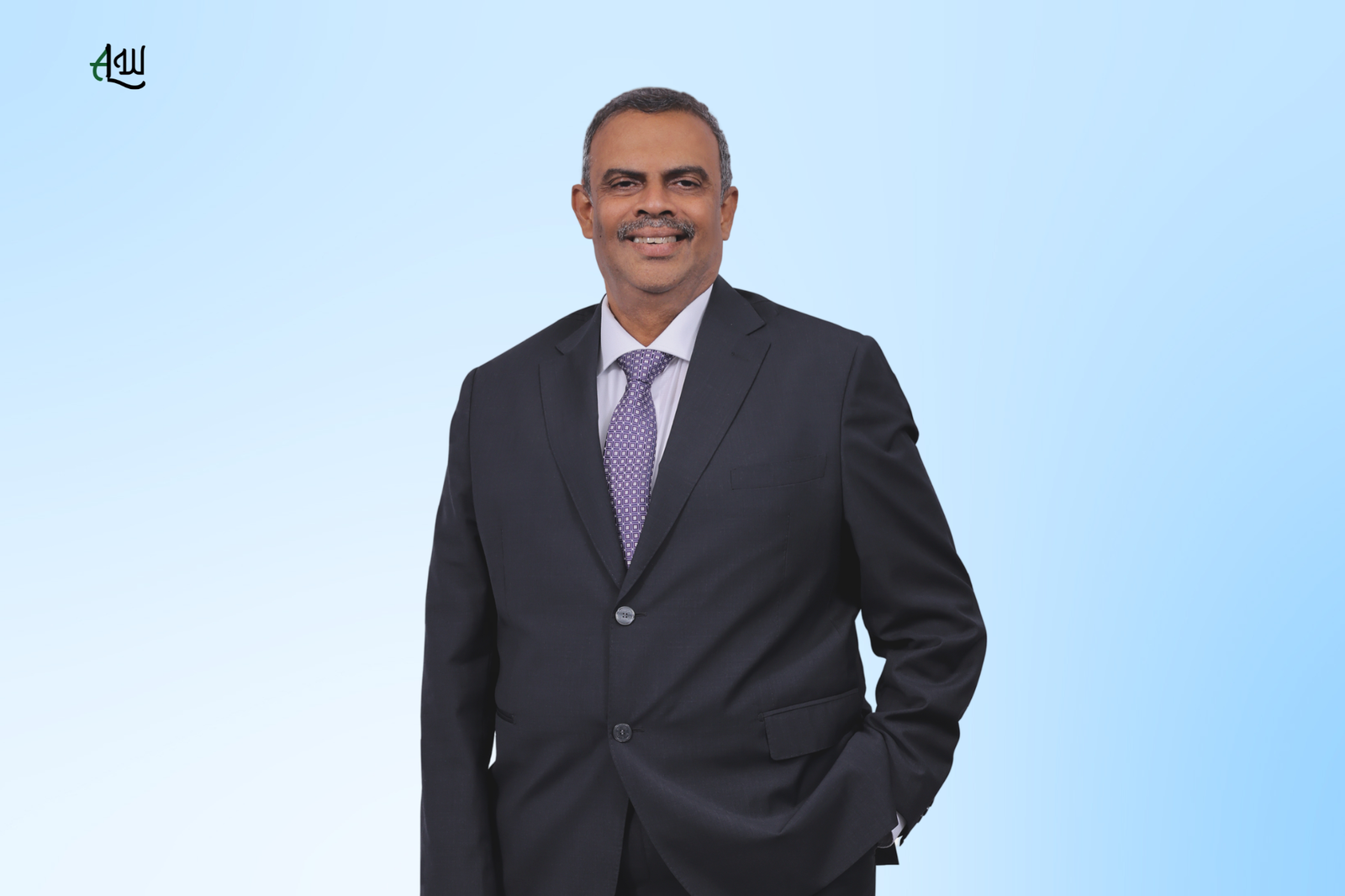
Insurance and reinsurance across the Arab world are entering a period where growth and governance can no longer be treated as separate conversations. As international financial centres compete for capital, and as capital, conduct and climate rules tighten in parallel, the leaders best placed to guide the industry forward are rarely those who have only ever sat on one side of the table. They are the ones who have written the rules, then had to operate under them, and learned to see both sides as the same job.
That description fits Shankar Garigiparthy precisely. Across close to thirty years in insurance, reinsurance and financial regulation, he has moved between building entities from scratch and sitting on the regulator’s side of the table, a back and forth that has shaped how he leads and what he believes good governance actually looks like in practice.
His recognition among the Arab’s Most Influential Insurance Leaders in 2026 reflects a career built less around a single title and more around a pattern: identify what a market needs to function properly, then build it, whether that meant a department, a regulatory framework, or an entire country operation.
A Career Built on Both Sides of the Table
Garigiparthy’s path through insurance was never a straight line. He has worked as a portfolio manager, set up entities and departments from nothing, and helped build markets. He has also served as Senior Regulatory Officer at Lloyd’s and as Director of Insurance Supervision at the QFC Regulatory Authority, before doing the opposite and building Lloyd’s India from the ground up as CEO and Country Manager, growing the reinsurance book from US$300 million to US$390 million written on a cross border basis.
That movement between regulator and operator, he says, is what shaped how he leads. Having enforced the rules and then lived under them, he no longer sees anyone in the system as an adversary. He understands the pressures underwriters face, what keeps a regulator up at night, and what a board actually needs in order to provide direction. For Garigiparthy, leadership is not about sitting at the top of a hierarchy. It is about earning trust by being competent, consistent and clear, and by genuinely listening to and understanding the person across from you.
Lessons From Africa, India and the Middle East
Working across Africa, India and the Middle East taught Garigiparthy a humbling lesson: whatever playbook looks strong on paper needs to be torn up and rebuilt for the market in front of you. A model that works smoothly in a mature market can fall flat in an emerging one, where capital constraints, distribution channels and regulatory maturity look entirely different.
That experience taught him to lead with curiosity before conviction, listening first, understanding local context, then adapting rather than imposing a fixed model. In every one of these markets, he found that business development ultimately came down to relationships. Deals follow trust, never the other way around, and the right to do business is earned long before any contract is signed.
Building Lloyd’s India From Nothing
Building Lloyd’s India, Garigiparthy says, was one of the hardest and most rewarding things he has done. It required keeping two demanding masters satisfied at once, the Lloyd’s framework on one side and Indian regulatory expectations under IRDAI on the other, while the regulatory regime itself was still evolving.
There was no infrastructure, no governance framework and no market confidence to inherit. All of it had to be built. While the premium growth is the number most people notice, the achievement he is genuinely proudest of is the culture the team embedded, one where compliance was treated as something that enabled the business rather than something that got in its way. That mindset, he says, is what allowed the platform to scale without ever cutting corners, and it is the part that outlasts any single financial year.
Why Regulation and Innovation Are Not Enemies
Garigiparthy is keen to put to rest what he calls a myth, that regulation and innovation sit in opposition. In his experience, being fluent in regulation is a competitive edge. Understanding where the regulatory direction of travel is heading, whether that is IFRS 17, risk-based capital, AI governance or climate disclosure, allows an organisation to get ahead of change rather than scramble to catch up.
In practice, that means engaging with regulators early and constructively rather than treating them as a final hurdle. It means designing compliance into products and processes from day one rather than bolting it on afterward, and building governance that grows alongside ambition. The firms that treat regulation as a design constraint, the way an architect treats gravity, tend to build things that stand.
Governance as the Foundation, Not the Cost
For Garigiparthy, compliance, financial oversight and governance are what separate a business that grows from one that actually lasts. Compliance protects the licence to operate. Financial oversight protects solvency and the confidence of everyone depending on the institution. Good governance ties both of those to strategy so they pull in the same direction.
Put together, he says, they create resilience, the ability to absorb a hard market cycle, a sudden regulatory shift or a reputational knock, and stay standing. The organisations that get this right do not treat governance and compliance as costs to be minimised. They treat them as the foundations everything else is built on.
The Discipline of Saying No
Asked about finding opportunity and growing sustainably, Garigiparthy points to focus, and the willingness to say no, as the most valuable discipline he has learned. It is tempting to chase every opportunity that comes through the door, but sustainable growth comes from understanding where an organisation genuinely has a right to win, and putting its energy there.
Optimising resources, in his view, means backing the handful of initiatives with the highest strategic leverage rather than spreading effort thin. Just as importantly, he has learned to build capability, not just capacity. Growing revenue without growing people, systems and governance alongside it means growth eventually outruns the organisation’s ability to control it, and that is when things break.
Trust as the Common Currency
Garigiparthy builds trust the same way with everyone, whether regulator, client, reinsurer or board member: by being reliable, being transparent, and doing what he said he would do. The counterintuitive part, he notes, is that being straight about problems, especially early, before they escalate, builds far stronger relationships than presenting a flawless front. People remember how a difficult moment was handled. Long-term relationships are not built on grand gestures, but on an accumulation of small moments where someone chose to be honest and dependable.
Turning Regional Diversity Into an Advantage
Working across so many cultures convinced Garigiparthy that diversity, handled well, simply produces better decisions. More perspectives in the room means assumptions get stress-tested and blind spots get exposed before they become costly. But diversity does not become an advantage on its own, he cautions. Leaders have to create the conditions for it, through a shared sense of purpose, an environment where people feel safe to speak up, and genuine inclusion rather than a box-ticking exercise. Cross-regional diversity becomes a strategic asset only when it is built into how decisions actually get made, not when it lives in a values statement on the wall.
What’s Shaping the Next Chapter of (Re)Insurance
Garigiparthy sees several forces converging at once. On regulation, he expects continued tightening globally around capital, conduct, AI governance and climate disclosure. On technology, AI and data analytics are set to reshape underwriting, claims and distribution in ways the industry is only beginning to see.
Economically, protection gaps are what keep him most engaged, particularly natural catastrophe and climate exposure across emerging markets. He views this as both a genuine societal challenge and a real commercial opportunity, with parametric structures and inclusive insurance models set to play a central role in closing it. Meanwhile, the rise of international financial centres such as GIFT City, DIFC and ADGM is quietly redrawing the map of where reinsurance capital flows and how it is structured.
The Contributions That Mean the Most
The achievements Garigiparthy values most are the ones with staying power. Building Lloyd’s India as a durable platform, and his regulatory work helping shape supervisory frameworks that will outlast any individual involved, matter to him because they extend beyond his own career. He also cares deeply about work on protection gaps and inclusive insurance, especially for underserved markets and for women in emerging economies, an area he describes as where the industry’s social purpose is at its clearest, and where the most good can be done beyond the balance sheet.
From Oversight to Stewardship
As a Certified Corporate Director and a Fellow of Board Stewardship, Garigiparthy’s thinking about governance has shifted considerably over the years. He used to see governance mainly as oversight, checking that management was doing its job. He now sees it as stewardship, with the board holding the long-term interest of the organisation in trust on behalf of everyone who depends on it.
He has also come to believe that accountability and ethical leadership are not brakes on performance but the preconditions for it, and he has grown to value collective board suitability far more than individual star power. What matters, he says, is the right mix of skills, independence and judgement working together. A board of brilliant individuals who cannot function as a team is not much use to anyone.
The Standard He Wants the Industry to Hold
Looking ahead, Garigiparthy wants to help build a reinsurance industry that is more resilient, more inclusive and better governed, one that takes closing protection gaps seriously and holds itself to a genuinely high standard of stewardship.
His advice for the next generation is straightforward. Build real expertise before chasing authority, because credibility has to come first. Treat integrity as non-negotiable, since it is the one asset that cannot be rebuilt once lost. Stay curious across disciplines and geographies, because the most interesting insights usually come from the edges. And never lose sight of the goal that matters most: to leave every institution you touch a little stronger than you found it.
Related Blogs: https://arabworldleaders.com/category/articles/