
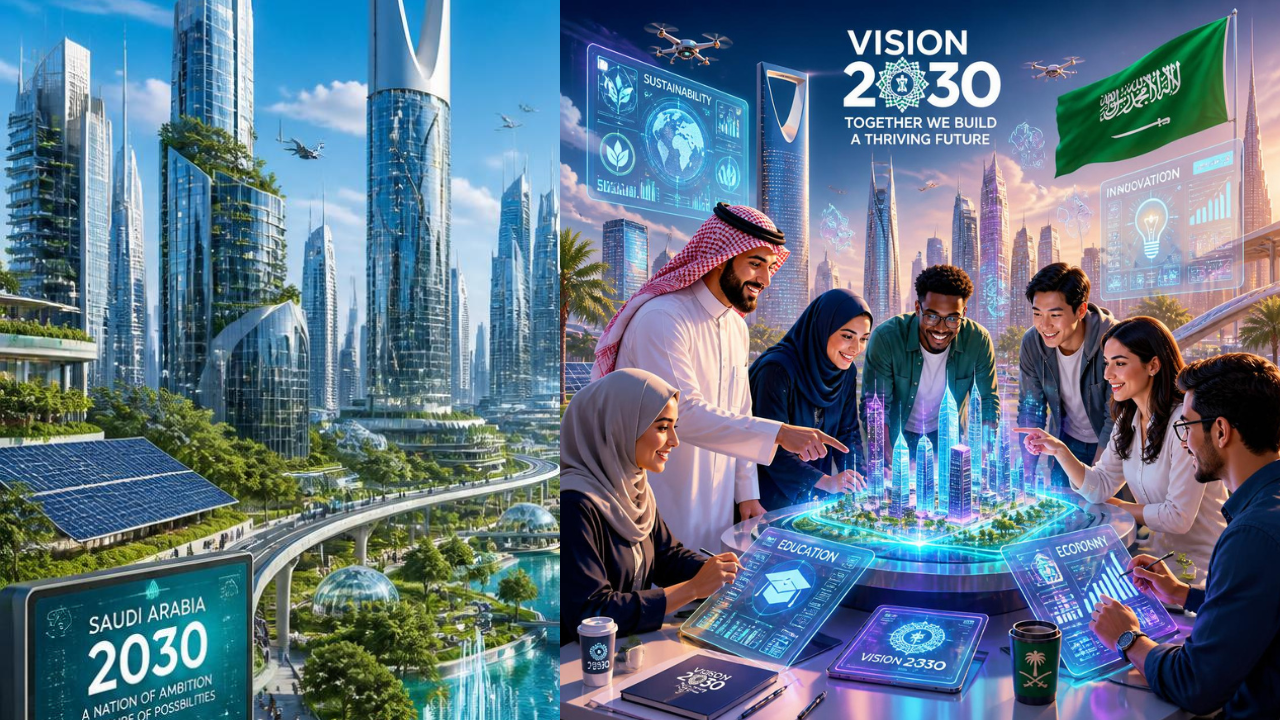
From an Oil Economy to a Technology-Powered Nation
For much of the twentieth and early twenty-first centuries, Saudi Arabia’s economic identity was closely tied to its immense oil wealth. The Kingdom’s vast petroleum reserves transformed it into one of the world’s largest energy producers, enabling decades of rapid infrastructure development, rising living standards, and significant geopolitical influence. Oil revenues financed ambitious public projects, modern transportation networks, healthcare systems, educational institutions, and one of the largest sovereign investment portfolios globally. However, despite these achievements, policymakers increasingly recognized that an economy heavily dependent on hydrocarbons would face growing vulnerabilities in a rapidly changing global landscape. Fluctuating crude oil prices, evolving energy policies, climate commitments, and the accelerating transition toward cleaner energy sources underscored the importance of building a more diversified and resilient economic model.
Today, Saudi Arabia is pursuing one of the world’s most ambitious national transformation strategies through Vision 2030 a comprehensive blueprint that extends far beyond economic reform. Rather than simply reducing oil dependency, Vision 2030 seeks to redefine the Kingdom’s position in the global economy by fostering innovation, strengthening the private sector, encouraging entrepreneurship, developing advanced industries, and positioning Saudi Arabia as a regional leader in technology, artificial intelligence, finance, tourism, manufacturing, and digital infrastructure. The transformation represents a fundamental shift in how the Kingdom generates economic value, emphasizing knowledge, innovation, and productivity as the primary engines of future growth.
Unlike many diversification initiatives implemented elsewhere, Saudi Arabia’s strategy is notable for its scale, speed, and integrated approach. Economic reforms are being introduced alongside regulatory modernization, educational improvements, infrastructure investments, digital transformation, labor market reforms, and international investment initiatives. Rather than focusing on a single industry, policymakers are simultaneously reshaping multiple sectors to create an interconnected ecosystem capable of sustaining long-term economic expansion. This holistic strategy reflects an understanding that successful diversification requires structural change across the entire economy rather than isolated investments in emerging industries.
The Evolution of Vision 2030: More Than an Economic Reform Plan
When Vision 2030 was introduced, it was widely viewed as an ambitious response to declining oil prices and increasing fiscal pressures. However, over time it has evolved into a broader national development framework encompassing economic competitiveness, technological innovation, environmental sustainability, human capital development, and institutional modernization. The initiative recognizes that future prosperity will increasingly depend on intellectual capital, technological capability, entrepreneurial activity, and private sector dynamism rather than natural resource extraction alone.
One of the defining characteristics of Vision 2030 is its emphasis on creating an economy that is both globally competitive and domestically resilient. Instead of relying primarily on government spending to stimulate growth, the strategy encourages greater participation from private enterprises, foreign investors, startups, multinational corporations, and innovation-driven industries. This shift is gradually transforming Saudi Arabia into an investment destination where businesses can access advanced infrastructure, supportive regulatory frameworks, and a rapidly growing consumer market.
The government’s role has also evolved significantly. Rather than acting solely as the primary economic driver, public institutions are increasingly serving as facilitators of private investment and innovation. Regulatory reforms, digital government initiatives, streamlined licensing procedures, and improved business environments are designed to reduce barriers to entrepreneurship while enhancing investor confidence. This transition reflects a broader effort to create a market-oriented economy capable of competing with leading global business hubs.
Building the Foundations of a Digital Economy
At the center of Saudi Arabia’s transformation lies an extensive investment in digital infrastructure. Policymakers recognize that digital connectivity has become as essential to modern economic development as roads, ports, and airports were during earlier industrial eras. Consequently, billions of dollars are being invested in expanding broadband networks, 5G connectivity, hyperscale data centers, cloud computing infrastructure, cybersecurity capabilities, and intelligent digital platforms capable of supporting both public services and private enterprise.
These investments are laying the technological foundation for virtually every aspect of economic diversification. High-speed connectivity enables businesses to adopt cloud-based operations, manufacturers to implement smart factories, hospitals to utilize telemedicine and AI diagnostics, educational institutions to expand digital learning, and financial organizations to deliver advanced digital banking services. Rather than functioning as isolated technology projects, these digital assets are becoming critical infrastructure that supports productivity improvements across the broader economy.
Saudi Arabia’s commitment to digital infrastructure also reflects changing global investment trends. International technology companies increasingly prioritize locations offering reliable digital ecosystems, robust cybersecurity frameworks, advanced cloud services, and skilled technology talent. By investing heavily in these capabilities, the Kingdom aims to attract multinational corporations seeking regional headquarters capable of serving markets across the Middle East, Africa, and South Asia.
Equally important is the government’s commitment to digital public services. Numerous administrative processes that once required extensive paperwork and physical visits are being digitized through integrated government platforms. Businesses can increasingly register companies, obtain licenses, manage regulatory compliance, and access government services electronically, reducing administrative burdens while improving operational efficiency. This digital-first approach strengthens the overall business environment and enhances the Kingdom’s attractiveness to international investors.
Technology Infrastructure as a Catalyst for Economic Growth
Technology infrastructure is no longer viewed merely as an operational necessity; it has become a strategic economic asset capable of generating new industries, attracting investment, and increasing national competitiveness. Saudi Arabia’s approach extends beyond building telecommunications networks to creating an ecosystem that supports advanced digital technologies, artificial intelligence, industrial automation, fintech innovation, and data-driven decision-making across both public and private sectors.
Modern data centers are becoming increasingly important components of this ecosystem. As organizations generate larger volumes of digital information, demand for secure, high-performance computing infrastructure continues to rise. Investments in hyperscale data centers not only improve domestic digital capabilities but also position Saudi Arabia as a regional hub for cloud computing and enterprise technology services. International cloud providers, software companies, and digital platform operators are expanding their presence in the Kingdom to support growing demand from businesses undergoing digital transformation.
Cybersecurity has emerged as another critical priority. As digital adoption accelerates, protecting government systems, financial institutions, healthcare networks, and industrial operations from cyber threats becomes increasingly important. Significant investments in cybersecurity technologies, regulatory frameworks, workforce development, and national cyber resilience initiatives are strengthening confidence in Saudi Arabia’s digital economy while encouraging greater adoption of online services.
Smart infrastructure projects further demonstrate how technology is being integrated into national development. Transportation systems, logistics networks, utilities, and urban planning increasingly utilize sensors, automation, predictive analytics, and real-time monitoring to improve efficiency and sustainability. These technologies not only reduce operational costs but also generate valuable data that supports better decision-making across government and industry.
Digital Transformation Across Every Major Industry
Saudi Arabia’s digital transformation extends well beyond the technology sector itself. Virtually every major industry is adopting digital technologies to improve productivity, reduce operational costs, enhance customer experiences, and strengthen competitiveness. This cross-sector digitalization is creating a multiplier effect that amplifies the economic impact of technology investments.
Healthcare providers are implementing electronic medical records, AI-assisted diagnostics, remote patient monitoring, and digital appointment systems to improve healthcare delivery. Educational institutions are expanding online learning platforms, virtual laboratories, and digital skills training programs that prepare students for technology-driven careers. Retail businesses are adopting omnichannel commerce, advanced logistics systems, digital payments, and AI-powered customer analytics to meet changing consumer expectations.
Industrial companies are introducing automation, robotics, predictive maintenance, and Industrial Internet of Things (IIoT) technologies to improve manufacturing efficiency. Logistics providers are deploying intelligent fleet management systems, warehouse automation, and AI-powered supply chain optimization to strengthen regional trade networks. Financial institutions continue modernizing operations through digital banking platforms, biometric authentication, automated compliance systems, and advanced fraud detection technologies.
This widespread digital adoption creates interconnected economic benefits. As organizations modernize their operations, they generate demand for software developers, cybersecurity specialists, cloud architects, data scientists, AI engineers, and digital consultants. Consequently, technology investments not only improve operational efficiency but also stimulate employment growth in high-value knowledge-based professions.
Developing Human Capital for a Knowledge Economy
No digital transformation can succeed without a skilled workforce capable of developing, implementing, and managing advanced technologies. Recognizing this reality, Saudi Arabia has placed significant emphasis on education, workforce development, and digital skills training as essential components of its diversification strategy.
Universities are expanding programs in artificial intelligence, computer science, cybersecurity, engineering, robotics, data analytics, and digital business management. Technical training institutions are collaborating with industry partners to develop practical skills aligned with labor market demands. Government initiatives also encourage lifelong learning through professional certification programs, online education platforms, and specialized training opportunities for both students and experienced professionals.
International partnerships with global universities, research institutions, and technology companies are strengthening knowledge transfer while exposing Saudi professionals to global best practices. These collaborations contribute to building domestic expertise in emerging technologies while reducing long-term reliance on imported talent.
Equally significant is the increasing participation of young entrepreneurs and professionals in the Kingdom’s technology sector. Saudi Arabia possesses one of the youngest populations in the region, providing a substantial demographic advantage as digital industries continue expanding. Young innovators are launching startups, developing software solutions, participating in accelerator programs, and contributing to research initiatives that support the country’s innovation ecosystem.
Digital Economy Becomes a New Engine of National Prosperity
As digital technologies become deeply integrated across industries, the digital economy itself is emerging as a major contributor to Saudi Arabia’s economic growth. Rather than serving merely as a supporting sector, digital industries are increasingly generating direct economic value through software development, cloud services, digital commerce, fintech, AI applications, cybersecurity solutions, digital media, and technology consulting.
The rapid growth of e-commerce, digital payments, online marketplaces, enterprise software, and cloud-based business services reflects changing consumer behavior as well as corporate modernization efforts. Businesses of all sizes are investing in digital platforms to reach customers more efficiently, optimize operations, and compete in an increasingly connected marketplace.
The digital economy also enhances resilience by reducing dependence on traditional industries that may be more vulnerable to commodity price fluctuations or global market disruptions. Technology-driven businesses often possess scalable business models capable of expanding internationally without requiring extensive physical infrastructure, making them valuable contributors to long-term economic diversification.
Moreover, digital transformation supports broader national objectives, including sustainability, efficiency, transparency, and innovation. Data-driven decision-making enables better resource allocation, smarter urban planning, more efficient energy management, and improved public service delivery. These benefits extend beyond economic growth, contributing to higher quality of life and stronger institutional effectiveness.
As Saudi Arabia continues investing in digital infrastructure, human capital, and technological innovation, the foundations of a knowledge-based economy are becoming increasingly visible. The Kingdom’s transformation demonstrates that economic diversification is not simply about creating new industries it is about building an ecosystem where technology, innovation, entrepreneurship, and human talent work together to generate sustainable prosperity in an increasingly digital world.
Artificial Intelligence, Innovation, Startups, Manufacturing, and Foreign Investment Redefine the Kingdom’s Economic Landscape
While digital infrastructure provides the technological backbone of Saudi Arabia’s transformation, the Kingdom’s long-term ambitions extend much further. The next phase of Vision 2030 focuses on building an innovation-driven economy where artificial intelligence, entrepreneurship, advanced manufacturing, financial technology, and foreign investment collectively create sustainable economic growth. Rather than relying solely on government expenditure or natural resources, Saudi Arabia is nurturing an ecosystem in which private enterprise, research institutions, global corporations, and emerging startups work together to generate new industries capable of competing on an international scale. This strategic shift reflects an understanding that future economic leadership will increasingly depend on technological capability, intellectual property, advanced industrial production, and continuous innovation rather than commodity exports alone.
Unlike previous industrial revolutions that centered on physical infrastructure and manufacturing capacity, today’s global economy is being reshaped by digital technologies, automation, artificial intelligence, cloud computing, and data-driven decision-making. Saudi Arabia has positioned itself to participate actively in this transformation by making technology innovation a national priority. Across government ministries, financial institutions, healthcare providers, industrial companies, educational organizations, and startups, digital technologies are becoming central to operational strategy. This widespread adoption is creating new opportunities for investment, employment, productivity improvement, and economic diversification while strengthening the Kingdom’s competitiveness within both regional and global markets.
Artificial Intelligence Becomes the Foundation of Future Economic Growth
Artificial intelligence has emerged as one of the most important pillars supporting Saudi Arabia’s modernization agenda. Rather than viewing AI simply as another emerging technology, policymakers increasingly recognize it as a transformational capability capable of reshaping nearly every sector of the economy. From improving healthcare diagnostics and optimizing logistics networks to strengthening financial services and enabling smart cities, AI applications are becoming deeply integrated into national development strategies.
The Kingdom’s investments in AI are not limited to software development alone. Significant resources are being allocated toward building comprehensive AI ecosystems that include research institutions, high-performance computing infrastructure, cloud platforms, advanced semiconductor partnerships, talent development initiatives, and regulatory frameworks that encourage responsible innovation. These investments are designed to establish Saudi Arabia as one of the Middle East’s leading artificial intelligence hubs while reducing dependence on imported technological capabilities.
Government agencies are increasingly adopting AI-powered systems to improve public service delivery, automate administrative processes, analyze economic data, and enhance decision-making. Intelligent digital platforms help reduce processing times for business licensing, regulatory approvals, and citizen services while increasing transparency and operational efficiency. These improvements demonstrate how AI can simultaneously improve government performance and create a more attractive business environment for domestic and international investors.
Within the private sector, AI adoption is accelerating across multiple industries. Banks utilize machine learning algorithms to detect financial fraud, improve credit assessments, personalize customer experiences, and automate compliance monitoring. Healthcare providers employ AI-assisted diagnostic tools capable of identifying diseases earlier while improving treatment planning. Manufacturing companies deploy predictive maintenance systems that analyze equipment performance and reduce costly operational disruptions. Retail organizations use intelligent analytics to optimize inventory management, forecast consumer demand, and personalize marketing campaigns. Collectively, these applications illustrate how artificial intelligence is evolving from an experimental technology into a practical driver of productivity and business competitiveness.
Building an Indigenous AI Innovation Ecosystem
A critical component of Saudi Arabia’s AI strategy involves developing domestic innovation capabilities rather than relying exclusively on imported technologies. Universities, research centers, technology companies, and government agencies are increasingly collaborating to develop locally relevant artificial intelligence solutions that address regional economic, linguistic, environmental, and social challenges.
Arabic-language natural language processing represents one particularly significant area of research. As generative AI becomes more widely adopted, demand continues growing for language models capable of understanding Arabic dialects, regional business practices, legal systems, and cultural contexts. Developing these capabilities allows Saudi organizations to create AI solutions tailored specifically to regional markets while reducing dependence on foreign-language platforms that may not adequately address local requirements.
Research partnerships with international technology firms are also strengthening domestic expertise. These collaborations facilitate knowledge transfer, joint research initiatives, and workforce development programs that accelerate the Kingdom’s AI capabilities while encouraging innovation across both public and private sectors. Over time, policymakers envision Saudi Arabia becoming not merely a consumer of artificial intelligence technologies but also a significant developer and exporter of advanced AI solutions.
Entrepreneurship Emerges as a Driver of Economic Transformation
One of the most visible outcomes of Vision 2030 has been the rapid expansion of Saudi Arabia’s entrepreneurial ecosystem. Startups are increasingly viewed as essential contributors to economic diversification because they introduce innovative business models, commercialize emerging technologies, generate high-skilled employment, and stimulate competition across multiple industries.
Government-supported incubators, accelerator programs, venture capital initiatives, entrepreneurship centers, and innovation hubs are helping transform ideas into scalable businesses. Entrepreneurs now benefit from simplified business registration processes, improved access to financing, mentorship opportunities, networking events, and stronger connections with both domestic corporations and international investors.
This supportive ecosystem has encouraged the emergence of startups operating in artificial intelligence, financial technology, logistics, healthcare technology, educational technology, cybersecurity, e-commerce, enterprise software, renewable energy, digital media, and smart mobility. Many of these companies are leveraging advanced technologies to solve practical business problems while addressing growing demand for digital services across the Middle East.
Saudi Arabia’s startup landscape is also becoming increasingly attractive to international entrepreneurs seeking access to one of the region’s largest consumer markets. Foreign founders are establishing regional headquarters within the Kingdom, collaborating with local partners, and participating in innovation programs designed to accelerate business growth. This influx of international expertise strengthens the domestic entrepreneurial ecosystem while encouraging cross-border technology collaboration.
Venture Capital Continues Supporting Innovation
The maturation of Saudi Arabia’s startup ecosystem has been accompanied by significant growth in venture capital activity. Public investment funds, private venture capital firms, corporate investment arms, family offices, and international institutional investors are collectively expanding the availability of growth capital for technology companies.
Unlike earlier investment cycles that emphasized rapid expansion regardless of profitability, today’s investors increasingly prioritize sustainable business models, recurring revenue streams, operational efficiency, and clear pathways toward long-term profitability. This evolution reflects broader global trends in venture capital while encouraging entrepreneurs to build financially resilient companies capable of enduring changing market conditions.
Artificial intelligence remains one of the most attractive investment sectors, followed closely by fintech, digital healthcare, logistics technology, enterprise software, cybersecurity, and climate innovation. These industries align closely with Saudi Arabia’s long-term economic priorities while offering significant opportunities for regional expansion.
The presence of larger investment funds also enables Saudi startups to scale more effectively. Companies that demonstrate strong market traction increasingly gain access to follow-on funding capable of supporting international expansion, advanced product development, talent acquisition, and strategic acquisitions. This availability of growth capital reduces one of the traditional barriers facing emerging technology companies within developing innovation ecosystems.
Manufacturing Localization Strengthens Industrial Independence
Although digital transformation and technology receive considerable attention, manufacturing remains equally important to Saudi Arabia’s diversification strategy. Policymakers recognize that long-term economic resilience requires strong domestic industrial capabilities capable of producing high-value goods while reducing dependence on imported products and global supply chain disruptions.
Manufacturing localization initiatives encourage multinational corporations to establish production facilities within Saudi Arabia while supporting domestic manufacturers through financing programs, industrial infrastructure, regulatory incentives, and workforce development initiatives. Rather than functioning solely as assembly operations, these facilities increasingly incorporate advanced manufacturing technologies, automation systems, robotics, artificial intelligence, and digital quality management platforms.
Priority industries include pharmaceuticals, biotechnology, aerospace components, renewable energy equipment, automotive manufacturing, food processing, electronics, industrial machinery, defense technologies, and construction materials. Each sector contributes not only to domestic production but also to export diversification, technological capability development, and employment generation.
Industrial cities, logistics corridors, and special economic zones provide manufacturers with world-class infrastructure, streamlined regulatory procedures, and improved access to regional and international markets. These integrated industrial ecosystems encourage collaboration between suppliers, manufacturers, research institutions, and logistics providers while improving overall industrial competitiveness.
Industry 4.0 Accelerates Manufacturing Modernization
Saudi Arabia’s industrial transformation extends beyond expanding production capacity. Manufacturers are increasingly embracing Industry 4.0 technologies that integrate automation, artificial intelligence, industrial Internet of Things (IIoT), robotics, predictive analytics, digital twins, and cloud-based manufacturing platforms. Smart factories equipped with interconnected sensors continuously monitor production equipment, analyze operational performance, identify maintenance requirements, and optimize resource utilization in real time. Predictive maintenance technologies reduce unexpected equipment failures while minimizing operational costs and improving production efficiency. Digital twins enable manufacturers to simulate production processes before implementing physical changes, reducing risk while accelerating innovation.
Automation also addresses growing labor productivity challenges by enabling workers to focus on higher-value responsibilities such as engineering, quality management, research, and process optimization rather than repetitive manual tasks. Consequently, industrial modernization contributes not only to increased productivity but also to workforce upskilling and technological capability development. The integration of AI into manufacturing further improves product quality through intelligent inspection systems capable of detecting microscopic defects with greater consistency than traditional manual inspection methods. These technologies strengthen Saudi manufacturers’ ability to compete within increasingly demanding global supply chains.
Foreign Direct Investment Strengthens Economic Diversification
Foreign direct investment has become one of the most important catalysts supporting Saudi Arabia’s economic transformation. Recognizing that international investment brings not only financial resources but also technology, management expertise, global partnerships, and access to international markets, policymakers continue implementing reforms designed to attract multinational corporations across diverse industries. Recent regulatory improvements have simplified investment procedures, enhanced legal protections, expanded foreign ownership opportunities, and increased transparency throughout the business environment. These reforms reduce administrative complexity while strengthening investor confidence in Saudi Arabia’s long-term economic prospects.
Technology companies, financial institutions, pharmaceutical manufacturers, industrial firms, logistics providers, renewable energy developers, and professional service organizations are increasingly establishing operations within the Kingdom. Many multinational corporations now view Saudi Arabia as a strategic regional headquarters capable of serving customers throughout the Gulf, North Africa, and broader Middle East.
Foreign investment also facilitates technology transfer, enabling domestic companies to adopt advanced production techniques, digital technologies, management practices, and research capabilities. Local suppliers benefit through partnerships with global firms, strengthening industrial ecosystems while enhancing domestic competitiveness. Moreover, international collaboration contributes to workforce development by exposing Saudi professionals to global best practices, advanced technical knowledge, and international business standards. These experiences accelerate human capital development while supporting the Kingdom’s transition toward a knowledge-based economy.
Innovation as the New National Competitive Advantage
Perhaps the most important transformation occurring within Saudi Arabia is cultural rather than technological. Innovation is increasingly becoming embedded within national economic strategy, educational systems, corporate planning, government policy, and entrepreneurial activity. Rather than relying primarily on inherited economic advantages, the Kingdom is investing in its ability to continuously generate new ideas, technologies, businesses, and industries.
Research institutions, universities, startups, multinational corporations, venture investors, and public agencies are collectively contributing to an innovation ecosystem designed to sustain long-term economic competitiveness. This collaborative approach reflects an understanding that future prosperity depends not only on adopting existing technologies but also on creating new intellectual property capable of generating global economic value.
As artificial intelligence, advanced manufacturing, entrepreneurship, and international investment continue expanding across the Kingdom, Saudi Arabia is gradually establishing itself as one of the Middle East’s most dynamic innovation economies. The transformation remains ongoing, but its direction is increasingly clear: the future Saudi economy will be defined less by the extraction of natural resources and more by the creation of knowledge, technology, industrial capability, and globally competitive enterprises.
Tourism, Smart Cities, Sustainability, Private Sector Growth, Challenges, and the Road Ahead
As Saudi Arabia advances deeper into its Vision 2030 transformation, the Kingdom’s ambitions extend far beyond technology, artificial intelligence, and industrial development. The third phase of its economic evolution focuses on creating an internationally competitive economy supported by world-class tourism, sustainable urban development, environmental stewardship, private-sector leadership, and global investment partnerships. These initiatives are not isolated projects but interconnected components of a broader strategy designed to redefine Saudi Arabia’s role in the international economy. Together, they represent one of the largest and most comprehensive national development programs currently underway anywhere in the world.
Unlike many countries that diversify by strengthening a single sector, Saudi Arabia is simultaneously investing in tourism, entertainment, renewable energy, logistics, education, healthcare, advanced infrastructure, sports, culture, and digital innovation. This diversified approach reduces economic risk while creating multiple sources of future growth, ensuring that prosperity is supported by a broad economic base rather than dependence on a single commodity.
Tourism Becomes a New Economic Engine
For decades, Saudi Arabia’s tourism industry was largely associated with religious pilgrimages to Makkah and Madinah, welcoming millions of Muslim pilgrims every year. While religious tourism remains one of the country’s most important economic contributors, Vision 2030 has significantly expanded the Kingdom’s tourism ambitions. Today, Saudi Arabia seeks to become a global destination for leisure travel, luxury hospitality, cultural exploration, eco-tourism, adventure tourism, sports tourism, business conferences, and international entertainment events.
This transformation is supported by billions of dollars in investment across airports, transportation networks, hospitality infrastructure, museums, heritage restoration projects, resorts, and entertainment venues. Large-scale developments along the Red Sea coastline, mountain regions, historical sites, and urban centers aim to showcase Saudi Arabia’s natural beauty, archaeological treasures, and cultural heritage to international visitors who previously knew little about the country’s tourism potential.
The expansion of tourism has substantial economic implications. Every increase in visitor numbers stimulates demand across hotels, restaurants, airlines, retail businesses, transportation providers, event management companies, healthcare services, financial institutions, construction firms, and technology providers. Tourism therefore acts as a multiplier industry, generating employment opportunities while encouraging investment throughout the wider economy. Furthermore, growing international tourism enhances Saudi Arabia’s global image by increasing cultural exchange and strengthening international business relationships. Visitors who experience the Kingdom firsthand often gain a more comprehensive understanding of its economic transformation, encouraging future investment and commercial partnerships.
Mega Projects Are Redefining Urban Development
One of the defining features of Saudi Arabia’s modernization strategy is the development of large-scale urban projects designed to serve as models for future cities. These projects combine advanced technology, sustainability, digital infrastructure, smart mobility, renewable energy, and innovative architectural design to create integrated urban environments capable of supporting both economic growth and high quality of life.
Rather than simply expanding existing cities, these developments seek to rethink how urban communities function. Intelligent transportation systems, autonomous mobility, AI-powered public services, energy-efficient buildings, smart utility networks, and digitally connected infrastructure are intended to improve operational efficiency while reducing environmental impact.
These mega projects also serve as living laboratories where emerging technologies can be tested, refined, and commercialized before wider implementation across the country. By integrating artificial intelligence, robotics, Internet of Things (IoT), digital twins, and advanced analytics into urban planning, Saudi Arabia aims to position itself at the forefront of smart city innovation.
From an economic perspective, these developments create enormous demand for architects, engineers, software developers, urban planners, construction companies, technology firms, logistics providers, renewable energy specialists, and professional service organizations. Consequently, urban development contributes not only to infrastructure expansion but also to the growth of numerous knowledge-intensive industries.
NEOM: A Vision for the Future of Cities
Among Saudi Arabia’s most ambitious projects is NEOM, envisioned as a next-generation economic zone where innovation, sustainability, and advanced technologies converge. Rather than replicating traditional metropolitan models, NEOM seeks to demonstrate how cities can be designed around digital intelligence, renewable energy, autonomous transportation, and human-centered urban planning.
The project is expected to attract global technology companies, research institutions, startups, manufacturers, investors, and entrepreneurs working across artificial intelligence, biotechnology, robotics, advanced manufacturing, clean energy, and digital infrastructure. By concentrating innovation within a collaborative ecosystem, NEOM aims to accelerate technological development while creating new industries capable of competing internationally.
Beyond its economic significance, NEOM symbolizes Saudi Arabia’s broader ambition to become a global innovation hub rather than merely an energy exporter. Its long-term success will depend on attracting international talent, encouraging entrepreneurship, fostering research collaboration, and creating regulatory environments that support continuous technological advancement.
Although such projects require substantial financial investment and long implementation timelines, they reflect the Kingdom’s willingness to pursue transformational initiatives designed to generate economic benefits for decades rather than years.
Sustainability Moves to the Center of Economic Policy
As global attention increasingly focuses on climate change, environmental responsibility, and sustainable development, Saudi Arabia is integrating sustainability into its diversification strategy. This represents a notable evolution for one of the world’s largest oil-producing nations. Rather than viewing environmental goals as obstacles to economic growth, policymakers increasingly regard sustainability as an opportunity to create entirely new industries while improving long-term economic resilience.
Investments in renewable energy including solar and wind power—are expanding rapidly. These projects reduce domestic energy consumption from fossil fuels while creating opportunities for manufacturing renewable energy equipment, developing energy storage technologies, and supporting green industrial production.
Sustainable construction practices, water conservation technologies, waste management systems, carbon reduction initiatives, and environmental monitoring programs are also becoming increasingly important components of national development planning. Green buildings equipped with intelligent energy management systems contribute to both environmental objectives and operational cost savings.
Sustainability is likewise influencing corporate strategy. Businesses operating in Saudi Arabia increasingly incorporate environmental, social, and governance (ESG) principles into investment decisions, supply chain management, and operational planning. This alignment with international sustainability standards strengthens the Kingdom’s attractiveness to global investors who increasingly prioritize responsible investment practices.
Renewable Energy Creates New Industrial Opportunities
Saudi Arabia’s renewable energy ambitions extend beyond domestic electricity generation. The Kingdom seeks to become an important participant in the global clean energy economy by developing expertise across renewable technologies, hydrogen production, energy storage, and advanced power infrastructure.
Green hydrogen, in particular, has emerged as a strategic priority due to its potential role in decarbonizing heavy industry, transportation, and international energy markets. Investments in hydrogen production facilities could position Saudi Arabia as a leading exporter of low-carbon energy while leveraging its abundant solar resources and existing energy infrastructure.
These initiatives also stimulate domestic manufacturing by creating demand for solar panels, wind turbines, batteries, electrical equipment, industrial automation systems, and specialized engineering services. Consequently, renewable energy contributes simultaneously to environmental sustainability, industrial diversification, export development, and employment creation.
The Private Sector Assumes a Leadership Role
Perhaps the most fundamental structural transformation underway involves the growing importance of the private sector. Historically, government spending served as the primary engine of economic activity. Vision 2030 seeks to establish a more balanced economic model where private enterprises become leading contributors to investment, employment, innovation, and productivity.
Regulatory reforms have simplified business formation, expanded foreign ownership opportunities, strengthened legal protections, modernized bankruptcy procedures, and improved access to financing. These changes encourage entrepreneurship while making Saudi Arabia increasingly attractive to domestic and international investors.
Private companies are expanding across technology, healthcare, education, manufacturing, logistics, financial services, renewable energy, tourism, entertainment, and professional services. Competition encourages innovation, operational efficiency, customer service improvements, and continuous investment in advanced technologies.
Small and medium-sized enterprises (SMEs) occupy a particularly important position within this transformation. SMEs often serve as suppliers, technology innovators, service providers, and employment generators that strengthen broader industrial ecosystems. Government initiatives supporting SME financing, digital transformation, export development, and workforce training contribute significantly to long-term economic diversification.
Human Capital Remains the Most Valuable Investment
Infrastructure, technology, and financial investment alone cannot sustain long-term economic transformation. Saudi Arabia increasingly recognizes that its greatest competitive advantage ultimately depends on its people. Consequently, education, workforce development, research, and talent attraction remain central priorities throughout Vision 2030.
Universities continue expanding programs in engineering, computer science, artificial intelligence, biotechnology, business management, cybersecurity, renewable energy, and advanced manufacturing. International academic partnerships expose students to global best practices while encouraging collaborative research.
Professional training initiatives help workers acquire new digital skills required within rapidly evolving industries. Upskilling programs ensure that employees remain competitive as automation, artificial intelligence, and advanced technologies reshape labor markets.
At the same time, Saudi Arabia seeks to attract highly skilled international professionals capable of contributing specialized expertise across research, engineering, finance, healthcare, technology, and industrial development. This combination of domestic talent development and international knowledge transfer strengthens the country’s long-term innovation capacity.
Challenges on the Path to Transformation
Despite remarkable progress, Saudi Arabia’s economic transformation also faces significant challenges. Large-scale diversification requires sustained financial investment, careful policy coordination, institutional efficiency, and consistent implementation over many years.
Global economic uncertainty may influence foreign investment flows, while fluctuations in oil revenues can affect government financing capacity during transitional periods. Rapid technological change requires continuous workforce development to prevent emerging skill shortages. Competition among global investment destinations means Saudi Arabia must continually improve its regulatory environment, innovation ecosystem, and business competitiveness.
Additionally, balancing rapid modernization with cultural preservation, environmental sustainability, and inclusive economic participation requires thoughtful policymaking. Successfully managing these complex transitions will determine the long-term effectiveness of Vision 2030.
Nevertheless, many of these challenges are characteristic of ambitious structural reforms rather than indicators of policy failure. Countries undergoing major economic transformation frequently encounter implementation complexities that require adaptive policymaking and long-term commitment.
Saudi Arabia’s Growing Influence in the Global Economy
Saudi Arabia’s diversification strategy increasingly extends beyond domestic economic objectives. As the Kingdom develops advanced technology capabilities, expands manufacturing, attracts multinational corporations, strengthens logistics networks, and invests in renewable energy, its influence within regional and global markets continues to grow.
The country’s geographic position connecting Asia, Europe, and Africa provides significant strategic advantages for international trade, logistics, aviation, and digital connectivity. Investments in ports, transportation infrastructure, industrial zones, and trade corridors strengthen Saudi Arabia’s role as a regional commercial gateway.
International partnerships with technology companies, financial institutions, research organizations, and industrial manufacturers further integrate the Kingdom into global innovation networks. These relationships support knowledge transfer while increasing Saudi Arabia’s participation in high-value international industries.
Looking Toward 2030 and Beyond
As Vision 2030 approaches its final implementation years, Saudi Arabia stands at a pivotal moment in its modern history. The Kingdom is no longer pursuing diversification as a defensive response to oil market volatility; instead, it is proactively building an economy designed to compete within the industries expected to define the twenty-first century.
Artificial intelligence, digital infrastructure, advanced manufacturing, tourism, renewable energy, biotechnology, financial innovation, entrepreneurship, and sustainable urban development are gradually becoming central pillars of national prosperity. Together, these sectors provide multiple engines of economic growth capable of reducing long-term dependence on hydrocarbons while increasing resilience against future global disruptions.
Although the ultimate success of Vision 2030 will be measured over decades rather than years, the transformation already demonstrates how strategic planning, sustained investment, regulatory reform, and technological innovation can reshape an entire national economy.
Conclusion
Saudi Arabia’s diversification journey represents one of the most ambitious economic transformations of the modern era. Rather than abandoning its strengths as a global energy leader, the Kingdom is leveraging its financial resources, strategic location, youthful population, and institutional reforms to build a more balanced, innovative, and sustainable economy.
The convergence of artificial intelligence, advanced manufacturing, smart cities, tourism, renewable energy, fintech, entrepreneurship, and private-sector development is creating a new economic foundation capable of generating long-term prosperity. While challenges remain, the breadth and scale of Vision 2030 illustrate a clear commitment to preparing Saudi Arabia for an increasingly digital, knowledge-based, and interconnected global economy.
If current momentum continues, the Kingdom is likely to emerge not only as a leading energy producer but also as one of the Middle East’s foremost centers for innovation, technology, investment, and sustainable economic development. Its experience may also serve as a valuable model for other resource-rich economies seeking to diversify in an era defined by rapid technological change and shifting global economic priorities.
Related Blogs: https://arabworldleaders.com/category/business-news/