
How Abu Dhabi Is Positioning Itself as a Global Healthcare Manufacturing and Life Sciences Powerhouse
The United Arab Emirates is entering a defining phase in its economic and industrial transformation. Over the last two decades, the country has steadily expanded beyond its traditional identity as an oil-exporting economy and global trade center to emerge as one of the Middle East’s most ambitious innovation-driven nations. Today, sectors such as artificial intelligence, renewable energy, aerospace, advanced manufacturing, biotechnology, and digital healthcare are increasingly shaping the UAE’s long-term national vision. Within this broader transformation, healthcare and pharmaceutical manufacturing are becoming central pillars of economic diversification and strategic development.
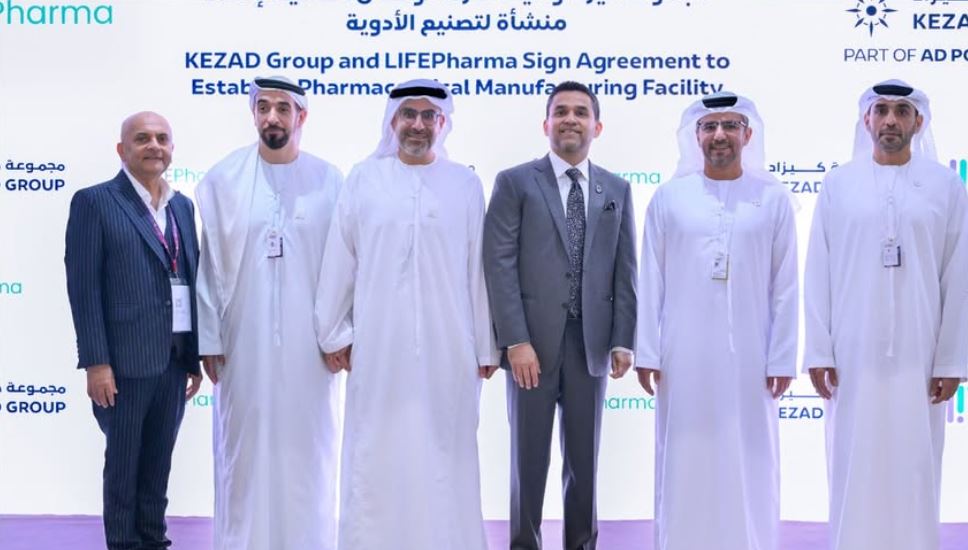
Against this backdrop, LIFEPharma’s newly announced partnership with AD Ports Group to establish a pharmaceutical manufacturing platform worth approximately AED 700 million, or nearly $190 million, represents a landmark moment for the UAE’s healthcare sector. More than a conventional industrial investment, the agreement symbolizes the emergence of a new economic model in which healthcare production, advanced logistics, biotechnology innovation, and global supply-chain infrastructure converge into a single integrated ecosystem.
The project will be developed within Khalifa Economic Zones Abu Dhabi (KEZAD), one of the UAE’s most strategically important industrial and logistics hubs. The manufacturing platform will focus on vaccines, oncology therapies, biologics, and advanced injectable medicines sectors that are not only technologically sophisticated but also among the fastest-growing segments of the global pharmaceutical industry.
This initiative reflects a deeper realization taking place across the Gulf region: healthcare is no longer viewed solely as a public welfare service. Instead, it is increasingly recognized as a strategic economic sector tied directly to national resilience, technological leadership, industrial competitiveness, and geopolitical influence. Countries capable of manufacturing advanced medicines, securing pharmaceutical supply chains, and developing biotechnology ecosystems are likely to hold significant advantages in the next era of global economic development.
The LIFEPharma-AD Ports collaboration therefore represents much more than a healthcare project. It is part of a larger vision for how the UAE intends to position itself within the future global economy one where advanced medicine, artificial intelligence, logistics, scientific research, and industrial innovation become interconnected engines of national growth.
The Global Transformation of Healthcare Supply Chains
The pharmaceutical industry is undergoing one of the most important structural transformations in modern economic history. For decades, pharmaceutical manufacturing was concentrated in a relatively small number of countries and regions, particularly the United States, Europe, India, and China. This highly globalized system was built around efficiency, scale, and cost optimization. However, while globalization created lower production costs and greater international trade integration, it also created significant vulnerabilities.
The COVID-19 pandemic exposed these vulnerabilities dramatically. During the crisis, countries across the world faced shortages of medicines, vaccines, protective equipment, and critical medical technologies. Shipping disruptions, export restrictions, geopolitical tensions, and manufacturing bottlenecks revealed how fragile centralized healthcare supply chains had become.
Governments realized that dependence on external pharmaceutical production could create serious risks during periods of global instability. Healthcare systems that relied heavily on imported medicines suddenly faced uncertainty over access to life-saving treatments and vaccines. This experience triggered a major reassessment of healthcare policy worldwide.
As a result, healthcare sovereignty has emerged as a critical strategic priority for many nations. Governments are increasingly seeking to localize pharmaceutical manufacturing, strengthen domestic healthcare industries, and reduce dependence on foreign supply chains. This shift is not limited to developed economies. Emerging markets and rapidly growing regions such as the Gulf are also aggressively investing in healthcare production infrastructure.
For the UAE, the pandemic accelerated an already ongoing transformation. National leaders recognized that healthcare security would become increasingly tied to economic resilience, technological capability, and geopolitical stability. Rather than relying solely on imported pharmaceutical products, the country began pursuing a strategy focused on domestic production, advanced manufacturing, biotechnology partnerships, and healthcare innovation ecosystems.
The LIFEPharma initiative is therefore part of a larger global trend in which healthcare manufacturing is becoming strategically decentralized. Countries are no longer willing to depend entirely on distant production hubs for critical medicines and medical technologies. Instead, regional healthcare manufacturing ecosystems are emerging around the world, creating new opportunities for countries capable of combining industrial infrastructure, technological sophistication, and global logistics capabilities.
Abu Dhabi’s Industrial Vision and the Role of KEZAD
Abu Dhabi’s transformation into a future-focused industrial economy has been years in the making. While the emirate remains one of the world’s leading energy producers, it has simultaneously invested heavily in sectors designed to drive long-term sustainable growth beyond hydrocarbons.
Institutions such as Mubadala, ADQ, AD Ports Group, Hub71, and KEZAD have become central components of this diversification strategy. Together, they form an interconnected ecosystem supporting advanced manufacturing, trade, artificial intelligence, logistics, clean energy, biotechnology, and scientific research.
KEZAD itself plays a particularly important role in this vision. Unlike traditional industrial zones focused purely on manufacturing, KEZAD is designed as an integrated economic ecosystem where production facilities, logistics infrastructure, ports, free zones, warehousing, and transportation networks operate together in a highly coordinated environment.
For pharmaceutical manufacturing, this integration is essential. Modern medicines particularly vaccines, biologics, and injectable therapies require highly specialized handling systems. Temperature-sensitive products depend on advanced cold-chain logistics, rapid transportation, regulatory compliance, and sophisticated warehousing infrastructure.
The partnership between LIFEPharma and AD Ports creates a powerful strategic advantage because it combines pharmaceutical expertise with one of the region’s most advanced logistics ecosystems. This allows the UAE to potentially become not only a pharmaceutical producer but also a regional healthcare distribution center serving markets across the Middle East, Africa, and Asia.
The geographic positioning of the UAE further strengthens this opportunity. Located at the intersection of major global trade routes, the country can efficiently connect healthcare supply chains between Europe, Asia, and Africa. This strategic location becomes increasingly valuable as pharmaceutical companies seek diversified manufacturing and export hubs capable of reducing geopolitical and logistical risks.
Moreover, Abu Dhabi’s regulatory modernization efforts, investor-friendly business environment, and strong infrastructure quality continue attracting multinational corporations looking for stable and globally connected operating environments. These advantages position the UAE favorably within the increasingly competitive global pharmaceutical landscape.
Vaccine Manufacturing and the New Era of Healthcare Security
One of the most strategically important dimensions of the LIFEPharma platform is its focus on vaccine manufacturing capabilities. The COVID-19 pandemic fundamentally altered how governments perceive vaccines and public health preparedness. Vaccines are no longer viewed merely as healthcare products; they are now recognized as instruments of national security, economic continuity, and geopolitical influence.
During the pandemic, countries with domestic vaccine manufacturing capabilities possessed significant strategic advantages. Many nations that depended entirely on imported vaccines experienced delays, shortages, and limited bargaining power in securing supplies. This created intense global competition and highlighted the risks associated with relying solely on international pharmaceutical supply chains.
The UAE’s investment in vaccine fill-and-finish infrastructure reflects lessons learned from this experience. Fill-and-finish operations involve the final stages of vaccine production, including sterilization, packaging, labeling, and distribution. Although often overlooked publicly, these stages are among the most critical components of vaccine manufacturing because they determine how quickly vaccines can be delivered to populations.
By establishing localized vaccine capabilities, the UAE is enhancing its preparedness for future pandemics and healthcare emergencies. It also strengthens the country’s ability to support regional healthcare initiatives and contribute to global health security efforts.
In addition, vaccine manufacturing can stimulate broader biotechnology ecosystem development. The infrastructure, scientific expertise, regulatory systems, and research partnerships required for vaccine production often create spillover effects that support innovation across multiple healthcare sectors.
This could encourage:
- Biotechnology startups
- Medical research collaborations
- Genomics initiatives
- Clinical trials
- Precision medicine development
- Pharmaceutical R&D investment
Over time, vaccine manufacturing may become one of the foundational pillars supporting Abu Dhabi’s ambitions to become a global life sciences hub.
Oncology Manufacturing and the Growing Burden of Chronic Disease
Another key aspect of the project is its emphasis on oncology manufacturing. Cancer treatment is rapidly becoming one of the largest and most technologically advanced segments of the global pharmaceutical industry.
Worldwide, cancer cases are increasing due to aging populations, urbanization, changing lifestyles, environmental factors, and improved diagnostic systems. The Middle East is experiencing similar trends. Across the Gulf region, healthcare systems are witnessing rising incidences of breast cancer, colorectal cancer, lung cancer, prostate cancer, and other chronic illnesses linked to modern lifestyles.
As populations grow and healthcare systems become more advanced, demand for specialized oncology therapies is expected to increase substantially over the coming decades. However, oncology medicines are among the most complex and expensive pharmaceutical products in the world. Their development requires advanced biotechnology capabilities, highly specialized manufacturing environments, and rigorous regulatory oversight.
By investing in local oncology manufacturing, the UAE is positioning itself within one of the most strategically valuable sectors of modern medicine. This move has both economic and healthcare implications.
Economically, oncology therapies represent high-value pharmaceutical products capable of generating significant export opportunities and attracting international partnerships. From a healthcare perspective, local manufacturing can improve accessibility to advanced treatments while reducing reliance on imported therapies.
The development of oncology production capabilities may also support the UAE’s ambitions to become a leading destination for specialized healthcare and medical tourism. Advanced pharmaceutical infrastructure can complement investments in hospitals, cancer research centers, precision medicine programs, and digital health systems. Over time, this ecosystem could evolve into a broader regional center for oncology innovation, clinical trials, and biotechnology development.
Biologics and Precision Medicine: Entering the Future of Healthcare
Perhaps the most forward-looking element of the LIFEPharma initiative lies in its emphasis on biologics and advanced injectable medicines. The pharmaceutical industry is increasingly shifting away from traditional chemical-based drugs toward biologic therapies derived from living organisms.
Biologics are transforming modern medicine because they enable more targeted and personalized treatment approaches. These therapies are now widely used in cancer care, autoimmune disease treatment, diabetes management, rare disease therapies, and immunology.
Unlike conventional pharmaceuticals, biologics require highly sophisticated production environments involving advanced biotechnology systems, sterile manufacturing facilities, and complex quality-control processes. Developing expertise in this field signals that the UAE is aiming to participate in the future of healthcare innovation rather than competing solely within lower-margin pharmaceutical segments.
The rise of biologics is closely connected to the global expansion of precision medicine. Healthcare systems are increasingly moving toward treatments tailored to individual genetic profiles, disease characteristics, and patient-specific data. Advances in genomics, AI-driven diagnostics, and biotechnology are accelerating this transformation.
By investing in biologics manufacturing today, the UAE is laying the foundation for future participation in precision medicine ecosystems that are expected to define healthcare over the next several decades.
This could create opportunities for partnerships with:
- Global biotech companies
- Research institutions
- AI healthcare firms
- Genomics laboratories
- Precision medicine startups
The combination of biotechnology and artificial intelligence is likely to become one of the most transformative forces shaping the global healthcare economy.
Artificial Intelligence and Smart Pharmaceutical Manufacturing
The future of pharmaceutical manufacturing will not be driven solely by physical infrastructure. Increasingly, advanced healthcare production depends on artificial intelligence, robotics, automation, predictive analytics, and digital industrial systems.
Modern pharmaceutical facilities are evolving into highly intelligent production ecosystems capable of monitoring manufacturing processes in real time, predicting maintenance needs, optimizing supply chains, and improving regulatory compliance through AI-driven analytics.
The UAE’s broader investments in artificial intelligence align closely with this transition. Abu Dhabi and Dubai are already positioning themselves as regional AI hubs through investments in cloud computing, data centers, smart city infrastructure, and digital governance systems.
Integrating AI into pharmaceutical manufacturing can provide substantial advantages:
- Faster production timelines
- Improved product consistency
- Reduced operational costs
- Enhanced safety monitoring
- Better inventory forecasting
- More efficient compliance systems
AI may also accelerate drug discovery, support predictive healthcare models, and improve clinical research capabilities.
As healthcare and technology continue converging, countries capable of integrating biotechnology with digital infrastructure may emerge as global leaders in the next phase of industrial transformation. The UAE appears determined to become one of those countries.
A New Economic Identity for the UAE
Ultimately, the LIFEPharma and AD Ports partnership represents something much larger than a pharmaceutical investment. It reflects the UAE’s evolving vision for its future economic identity.
The country is steadily repositioning itself as:
- A global logistics hub
- A healthcare innovation center
- A biotechnology ecosystem
- An AI-driven industrial economy
- A producer of advanced technologies
- A life sciences investment destination
Healthcare is becoming central to this transformation because it combines economic resilience, long-term demand growth, technological innovation, and strategic influence.
As the global economy moves deeper into the age of biotechnology, precision medicine, AI, and advanced manufacturing, nations capable of building integrated healthcare ecosystems will likely hold significant competitive advantages.
The UAE’s investment in pharmaceutical manufacturing therefore represents not only a response to current healthcare trends but also a long-term strategic bet on the future structure of the global economy. With projects like the LIFEPharma platform, Abu Dhabi is signaling that it intends to play a major role in shaping that future.
Related Blogs : https://arabworldleaders.com/category/business-news/