
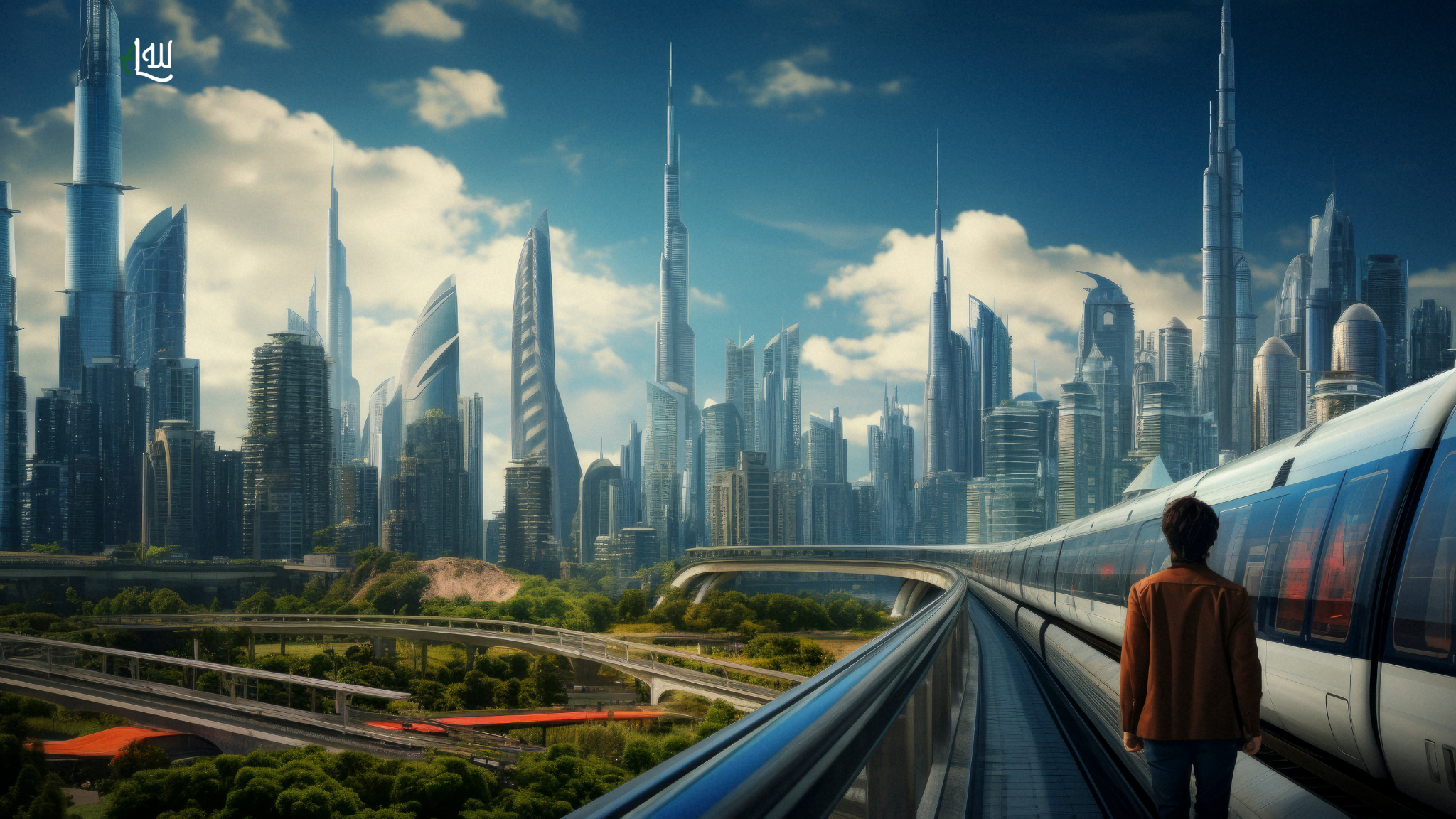
A New Urban Age Is Emerging Across the Arab World
For decades, the world’s most technologically advanced urban centers were associated with cities such as Singapore, Tokyo, London, Seoul, and innovation corridors connected to Silicon Valley in the United States. These cities became symbols of modern infrastructure, digital governance, efficient transportation systems, and advanced economic ecosystems that attracted global talent and investment. Yet in recent years, a dramatic shift has begun to emerge from an unexpected geography. Across the Gulf region and broader Arab world, governments are now investing unprecedented amounts of capital into futuristic urban ecosystems designed around artificial intelligence, autonomous mobility, climate-conscious architecture, renewable energy integration, predictive governance systems, and hyper-connected digital infrastructure. These projects are not merely real estate developments or tourism-driven mega-construction plans. They represent a much larger attempt to redesign the very concept of the modern city itself.
From Saudi Arabia’s futuristic NEOM project rising along the Red Sea coast to the environmentally focused Masdar City in Abu Dhabi and the digitally integrated Lusail City in Qatar, the Arab world is rapidly transforming into one of the planet’s most ambitious laboratories for smart urban experimentation. What makes these projects especially significant is that they are being developed during a historical moment when artificial intelligence, robotics, cloud computing, Internet of Things infrastructure, autonomous systems, advanced telecommunications, and climate technologies are all converging simultaneously. For the first time in modern history, governments have the ability to construct cities where physical infrastructure and digital intelligence are deeply integrated from the beginning rather than added decades later through costly retrofitting.
The race to build the world’s smartest urban ecosystems is about much more than futuristic architecture or headline-grabbing megaprojects. It is deeply connected to long-term economic survival, geopolitical positioning, sustainability planning, investment attraction, tourism development, talent competition, and post-oil economic diversification. Gulf governments increasingly recognize that the future global economy will reward nations capable of building innovation ecosystems rather than merely exporting natural resources. In this emerging reality, cities themselves become strategic assets. Urban environments are no longer simply places where populations live and work. They are becoming engines for data generation, technological innovation, advanced manufacturing, digital commerce, artificial intelligence deployment, and global financial connectivity.
At the heart of this transformation lies a powerful and revolutionary idea: the city itself is becoming a technological platform. Historically, cities evolved organically through trade routes, industrial growth, migration, and cultural development over centuries. Infrastructure was built incrementally, often creating fragmented systems that struggled to adapt to modern demands. Future smart cities, however, are being designed more like integrated digital ecosystems. Transportation systems, energy grids, healthcare services, security infrastructure, communications networks, public administration, and commercial activity are increasingly connected through real-time data exchange. Roads become intelligent traffic-management networks. Buildings become responsive environments capable of optimizing energy usage automatically. Utilities become predictive systems powered by analytics and machine learning. Governments become digitally enhanced service providers operating through algorithmic efficiency and automated decision-making tools.
The Gulf region possesses several unique advantages that make it particularly suited for this urban transformation. Unlike older cities in Europe or North America that must contend with aging infrastructure, regulatory fragmentation, and historical preservation constraints, many Gulf smart city projects are being built from scratch. This allows planners to embed advanced technologies directly into the foundation of urban design. Fiber-optic connectivity, AI-driven transportation systems, sensor networks, renewable energy integration, autonomous logistics systems, and predictive infrastructure management can be incorporated during construction rather than retrofitted later at enormous expense. This “blank slate” advantage provides Gulf cities with the ability to leapfrog many of the limitations faced by older urban centers around the world.
Another major advantage is financial capability. Gulf sovereign wealth funds, state-backed development programs, and national transformation agendas provide enormous pools of capital capable of supporting long-term experimentation. Saudi Arabia’s Vision 2030, the UAE’s innovation and sustainability strategies, and Qatar National Vision 2030 all place digital infrastructure and advanced urbanization at the center of economic transformation. These projects are therefore not isolated construction initiatives but components of broader national strategies designed to reposition Gulf economies for a future where oil revenues alone may no longer guarantee prosperity.
However, alongside the optimism surrounding these futuristic urban projects lies a growing set of difficult ethical, political, and social questions. How much surveillance becomes acceptable in a hyper-connected city where sensors and cameras monitor nearly every aspect of urban life? Who owns the enormous amounts of data generated by residents moving through digitally integrated environments? Can AI-driven governance systems remain transparent, accountable, and free from bias? Will smart cities reduce inequality through efficiency and improved services, or could they deepen social divisions by prioritizing affluent populations and technologically connected elites? Can sustainability ambitions realistically survive the immense energy demands created by artificial intelligence systems, cloud infrastructure, massive data centers, and autonomous mobility networks?
These questions matter not only for the future of the Middle East but also for the future of global urban civilization itself. The technologies and governance models currently being tested in Gulf smart cities may eventually influence how cities worldwide operate in the coming decades. In many ways, the deserts of the Arabian Peninsula are becoming one of the most important testing grounds for humanity’s urban future.
The Gulf’s Urban Reinvention Strategy
The rapid rise of smart city development across the Arab world cannot be understood without examining the region’s broader economic transformation away from hydrocarbon dependence. For much of the twentieth century, Gulf economies were fundamentally shaped by oil and gas exports. Hydrocarbon wealth financed extraordinary modernization programs that transformed small desert societies into globally connected financial centers with world-class airports, highways, ports, and skylines. Cities such as Dubai, Abu Dhabi, Doha, and Riyadh became symbols of rapid urbanization and ambitious economic development.
Yet despite these achievements, Gulf leaders increasingly understand that the global economy is entering a period of structural change. The long-term future of fossil fuels faces uncertainty due to renewable energy expansion, climate policies, electric vehicle adoption, and evolving global investment priorities. Population growth, youth employment demands, technological disruption, and intensifying international competition are also forcing governments to rethink economic models built primarily around energy exports.
As a result, cities have become central to national reinvention strategies. Modern urban ecosystems are now viewed as platforms for attracting global capital, advanced industries, highly skilled workers, multinational corporations, research institutions, entrepreneurs, and digital startups. Smart cities are expected to function as economic accelerators capable of generating innovation-driven growth in sectors such as artificial intelligence, fintech, robotics, biotechnology, cybersecurity, renewable energy, tourism, logistics, and advanced manufacturing.
Saudi Arabia’s NEOM project represents perhaps the most ambitious expression of this vision anywhere in the world. Planned as a massive cognitive city powered by AI, renewable energy, and autonomous infrastructure, NEOM is intended to become a fully integrated technological ecosystem where digital intelligence shapes nearly every aspect of urban life. Rather than simply constructing another large city, Saudi Arabia is attempting to build an entirely new urban model designed around automation, predictive systems, and sustainability.
NEOM’s vision extends beyond architecture into economic transformation. The project aims to attract global investors, technology firms, researchers, entrepreneurs, and high-skilled international talent. Saudi policymakers increasingly view projects like NEOM as instruments for repositioning the Kingdom as a future hub for innovation and advanced industry rather than solely an oil superpower. The scale of this ambition is enormous because it seeks not merely to diversify the economy but to redefine the country’s global identity.
Meanwhile, the UAE’s Masdar City represents a different but equally significant urban experiment. Originally conceived as one of the world’s first zero-carbon cities, Masdar evolved into a broader innovation ecosystem focused on renewable energy, sustainability research, climate technologies, and green business incubation. Instead of emphasizing sheer scale, Masdar focused heavily on demonstrating how advanced urban design could reduce environmental impact while fostering technological innovation in harsh desert conditions.
Qatar’s Lusail City reflects another dimension of Gulf urban strategy. Initially developed in connection with infrastructure expansion surrounding the FIFA World Cup, Lusail has evolved into a digitally integrated smart district emphasizing intelligent transportation, IoT-enabled infrastructure, real-time urban management systems, and mixed-use development. The project illustrates how Gulf governments increasingly view smart urbanization as part of broader efforts to build globally competitive economies capable of attracting tourism, investment, and international business activity.
Collectively, these projects demonstrate how the Arab world is attempting to leapfrog traditional urban development pathways. Rather than gradually modernizing over many decades, Gulf states are trying to move directly into an era of AI-enabled urbanism where digital intelligence is embedded into the DNA of the city itself.
AI-Powered Governance and the Rise of Algorithmic Cities
One of the most revolutionary dimensions of future Arab smart cities is the integration of artificial intelligence directly into governance itself. Historically, governments functioned through bureaucratic systems dependent on paperwork, administrative hierarchies, fragmented departments, and slow decision-making structures. Public services often required physical interaction with government offices, long approval processes, and reactive problem-solving methods that addressed urban challenges only after they became visible crises. Smart cities across the Gulf are attempting to fundamentally redesign this governance model by embedding artificial intelligence into the operational core of urban administration.
In the emerging smart city model, governments are no longer envisioned merely as regulatory authorities or service providers. Instead, they are becoming dynamic digital platforms capable of continuously analyzing data, predicting trends, automating services, and optimizing urban operations in real time. This represents a profound transformation in how states interact with citizens, businesses, infrastructure, and economic systems. Artificial intelligence allows governments to process enormous quantities of urban information at speeds impossible through traditional human administration. Traffic flows, energy consumption, healthcare usage, environmental conditions, utility demand, security alerts, transportation patterns, and economic activity can all be monitored simultaneously through interconnected digital systems.
For Gulf governments, AI-powered governance offers an opportunity to dramatically improve efficiency while supporting rapidly expanding urban populations. Many Arab cities have experienced extraordinary growth over the past several decades, placing increasing pressure on infrastructure, housing, transportation, water systems, and public services. Traditional governance structures often struggle to keep pace with this rapid urbanization. AI systems promise a new level of responsiveness by allowing governments to anticipate problems before they escalate into major disruptions.
For example, predictive analytics systems can identify potential traffic congestion before it occurs and automatically reroute transportation flows in real time. Smart utility networks can detect abnormal electricity consumption patterns and optimize energy distribution during peak demand periods. AI-powered environmental monitoring systems can track air quality, heat levels, and water usage across entire districts, enabling more efficient resource management. Predictive maintenance systems can identify infrastructure weaknesses in roads, pipelines, bridges, or electrical grids before failures occur, reducing operational costs while improving reliability.
Healthcare represents another area where algorithmic governance could transform urban life. In future smart cities, AI systems may continuously analyze healthcare demand, predict disease outbreaks, optimize hospital staffing, and personalize medical services based on real-time population data. Telemedicine, wearable health monitoring devices, AI diagnostics, and connected healthcare platforms could eventually become deeply integrated into the broader urban operating system. Governments increasingly view healthcare digitization not simply as a technological upgrade but as a critical component of future economic productivity and population resilience.
The United Arab Emirates has already positioned artificial intelligence as a cornerstone of national strategy. The country became one of the first in the world to appoint a Minister of Artificial Intelligence, signaling the importance Gulf governments place on AI-driven transformation. Across the UAE, digital government initiatives increasingly rely on automation, smart services, biometric identification systems, and AI-assisted administration. Dubai, in particular, has aggressively pursued the vision of becoming one of the world’s smartest cities through initiatives involving blockchain governance, autonomous mobility, digital payments, and paperless government operations.
Saudi Arabia is pursuing an even more expansive vision through projects such as NEOM, where AI is expected to function as the invisible operating system behind the entire urban environment. In this model, artificial intelligence would continuously optimize transportation systems, energy networks, logistics operations, environmental management, security infrastructure, and public services. Rather than reacting to problems after they occur, the city itself would function predictively, constantly adjusting to maximize efficiency and sustainability.
This concept introduces the idea of the “cognitive city,” where infrastructure is not static but adaptive. Roads become intelligent mobility corridors capable of communicating with autonomous vehicles. Buildings respond dynamically to occupancy levels and climate conditions. Energy systems self-adjust based on real-time demand patterns. Water distribution networks identify waste and optimize consumption automatically. Urban governance evolves from periodic decision-making into continuous algorithmic optimization.
However, the rise of AI-powered governance also introduces serious concerns regarding accountability, transparency, and democratic oversight. Algorithms increasingly influence decisions that directly affect citizens’ lives, yet many AI systems operate as opaque “black boxes” whose internal logic may not be fully understandable even to the institutions deploying them. This creates risks surrounding bias, discrimination, and unequal access to services.
For instance, predictive policing algorithms used in security systems could unintentionally reinforce social inequalities if trained on biased historical data. AI-driven financial or housing systems could favor certain demographics over others. Automated decision-making in healthcare, education, or employment services could create new forms of exclusion if oversight mechanisms remain weak. As governments rely more heavily on algorithmic systems, questions surrounding fairness and ethical governance become increasingly important.
Data governance is another critical issue. Smart cities generate enormous amounts of information through cameras, sensors, biometric systems, connected devices, mobile applications, and digital transactions. Every movement, transaction, commute, utility interaction, and online service request potentially contributes to the urban data ecosystem. This data possesses immense economic and strategic value, making questions of ownership and privacy increasingly complex.
Who controls the data generated by millions of residents living inside hyper-connected cities? Can citizens meaningfully consent to data collection when surveillance infrastructure is deeply embedded into public environments? Will governments establish independent regulatory frameworks to ensure transparency and accountability in AI deployment? These debates are likely to intensify as Gulf smart cities become more technologically sophisticated.
Cybersecurity also becomes a central concern in AI-driven urban environments. The more interconnected a city becomes, the more vulnerable it may become to digital attacks. Smart grids, transportation systems, healthcare infrastructure, water networks, financial systems, and government databases all represent potential targets for cybercriminals or hostile state actors. In highly digitized cities, a successful cyberattack could disrupt daily life on a massive scale.
As a result, future smart cities will require not only advanced technological infrastructure but also highly sophisticated cybersecurity architectures capable of protecting interconnected systems from constantly evolving threats. Cyber resilience may eventually become as strategically important to national security as physical defense infrastructure.
Despite these challenges, Gulf governments remain deeply committed to AI-powered urban transformation because they see it as essential for long-term competitiveness. The future global economy is increasingly shaped by data, automation, predictive analytics, and digital infrastructure. Countries capable of integrating these technologies effectively into urban environments may gain substantial economic advantages in productivity, investment attraction, and innovation capacity.
The broader significance of this transformation extends beyond the Arab world. Many governments globally are closely watching Gulf smart city experiments because they offer insight into how future urban governance might evolve during the age of artificial intelligence. The systems currently being tested in cities like NEOM, Dubai, Masdar, and Lusail may influence urban policy frameworks far beyond the Middle East.
Ultimately, the rise of algorithmic cities forces humanity to confront a fundamental question: what happens when governance itself becomes increasingly automated? The answer may shape not only the future of Gulf cities but also the future relationship between technology, power, citizenship, and urban civilization in the twenty-first century.
Digital Twins: Building Virtual Replicas of Entire Urban Civilizations
Among the most transformative technologies shaping the future of smart cities is the emergence of digital twins sophisticated virtual replicas of physical environments that continuously update through real-time data streams. While the concept originally emerged in industrial manufacturing and aerospace engineering, digital twin technology is now rapidly evolving into one of the foundational pillars of future urban management. In the Gulf region, where entire futuristic cities are being designed from the ground up, digital twins are becoming central to the vision of intelligent urban ecosystems.
A digital twin is far more than a three-dimensional visual model or simulation. It is a living digital representation of a physical environment connected to real-world data through sensors, cameras, IoT devices, satellites, drones, and advanced monitoring systems. Every movement, infrastructure change, energy fluctuation, transportation pattern, environmental shift, and operational process within the physical city can be reflected dynamically inside its digital counterpart.
This creates an entirely new way of understanding and managing urban systems. Traditionally, city planning relied heavily on static models, historical data, periodic surveys, and long-term forecasting methods that often struggled to adapt to rapidly changing conditions. Digital twins fundamentally alter this paradigm by enabling cities to function as continuously monitored and continuously optimized systems.
In practical terms, a digital twin allows governments and urban planners to simulate the impact of decisions before implementing them in the physical world. Authorities can model how new transportation routes may influence congestion patterns, how rising temperatures might affect electricity demand, or how population growth could impact water consumption. Emergency response scenarios, disaster management strategies, infrastructure maintenance schedules, and sustainability initiatives can all be tested virtually before deployment.
For Gulf smart cities facing extreme climate conditions, digital twins offer particularly valuable capabilities. The region experiences intense heat, water scarcity, and high energy consumption levels due to cooling demands. Managing these pressures efficiently is essential for long-term sustainability. Through digital twin systems, cities can monitor environmental conditions in real time and optimize resource usage dynamically.
For example, AI-driven climate models integrated into digital twins could automatically adjust cooling systems across districts based on occupancy levels, weather conditions, and energy availability. Water networks could identify leaks instantly and redistribute resources more efficiently. Renewable energy systems could balance electricity generation and storage based on fluctuating demand patterns. Transportation systems could optimize mobility flows to reduce emissions and congestion simultaneously.
Saudi Arabia’s NEOM project is expected to rely heavily on digital twin infrastructure as part of its broader cognitive city vision. Because NEOM is being constructed largely from scratch, planners have the opportunity to integrate digital intelligence into the city’s foundation from the beginning. This means the physical and virtual city can evolve together simultaneously rather than separately.
In such a model, urban governance increasingly resembles managing a complex digital ecosystem rather than merely overseeing physical infrastructure. City administrators could eventually monitor real-time conditions across every layer of urban life through centralized AI platforms powered by predictive analytics and digital simulations.
Digital twins also carry enormous economic implications. As cities become more complex and interconnected, operational efficiency becomes increasingly important. Predictive infrastructure management can reduce maintenance costs significantly by identifying problems before failures occur. Real-time logistics optimization can improve commercial productivity. Intelligent energy management can lower operational expenses while supporting sustainability targets.
Private companies are also likely to play a major role in the digital twin economy. Technology firms specializing in AI, cloud computing, data analytics, cybersecurity, mapping, and infrastructure software are increasingly positioning themselves as critical partners in future smart city development. This creates new business ecosystems centered around urban intelligence platforms, predictive systems, and data-driven services.
However, the rise of digital twins also intensifies concerns surrounding surveillance, privacy, and centralized control. A city capable of generating real-time digital replicas of urban life inevitably collects extraordinary amounts of data about its residents. Transportation behavior, movement patterns, utility usage, communication flows, biometric information, and commercial activity may all become part of the urban data ecosystem.
This raises difficult ethical questions. Can cities maintain privacy rights in environments where continuous monitoring is embedded into infrastructure itself? How should governments regulate the use of predictive analytics and behavioral data? Could digital twins eventually enable forms of social monitoring that become excessively intrusive or authoritarian?
There are also concerns regarding technological dependence. Digital twin systems require immense computational infrastructure, including advanced cloud platforms, AI processing capabilities, high-speed connectivity networks, and massive data centers. This creates potential vulnerabilities related to cyberattacks, technical failures, software malfunctions, and geopolitical dependence on foreign technology providers.
Despite these risks, digital twins are increasingly viewed as one of the most important technologies shaping the future of urban civilization. As cities become larger, more complex, and more environmentally stressed, governments will likely require increasingly sophisticated tools to manage infrastructure, sustainability, transportation, healthcare, energy systems, and public services effectively.
The Gulf region’s embrace of digital twin technology therefore represents more than technological experimentation. It signals a broader shift toward data-driven urban civilization where physical and digital realities become deeply interconnected. Future cities may no longer exist solely as physical spaces of concrete, steel, and glass. They may also exist as continuously evolving virtual systems capable of simulating, predicting, and optimizing urban life in real time.
Related Blogs: https://arabworldleaders.com/category/articles/