
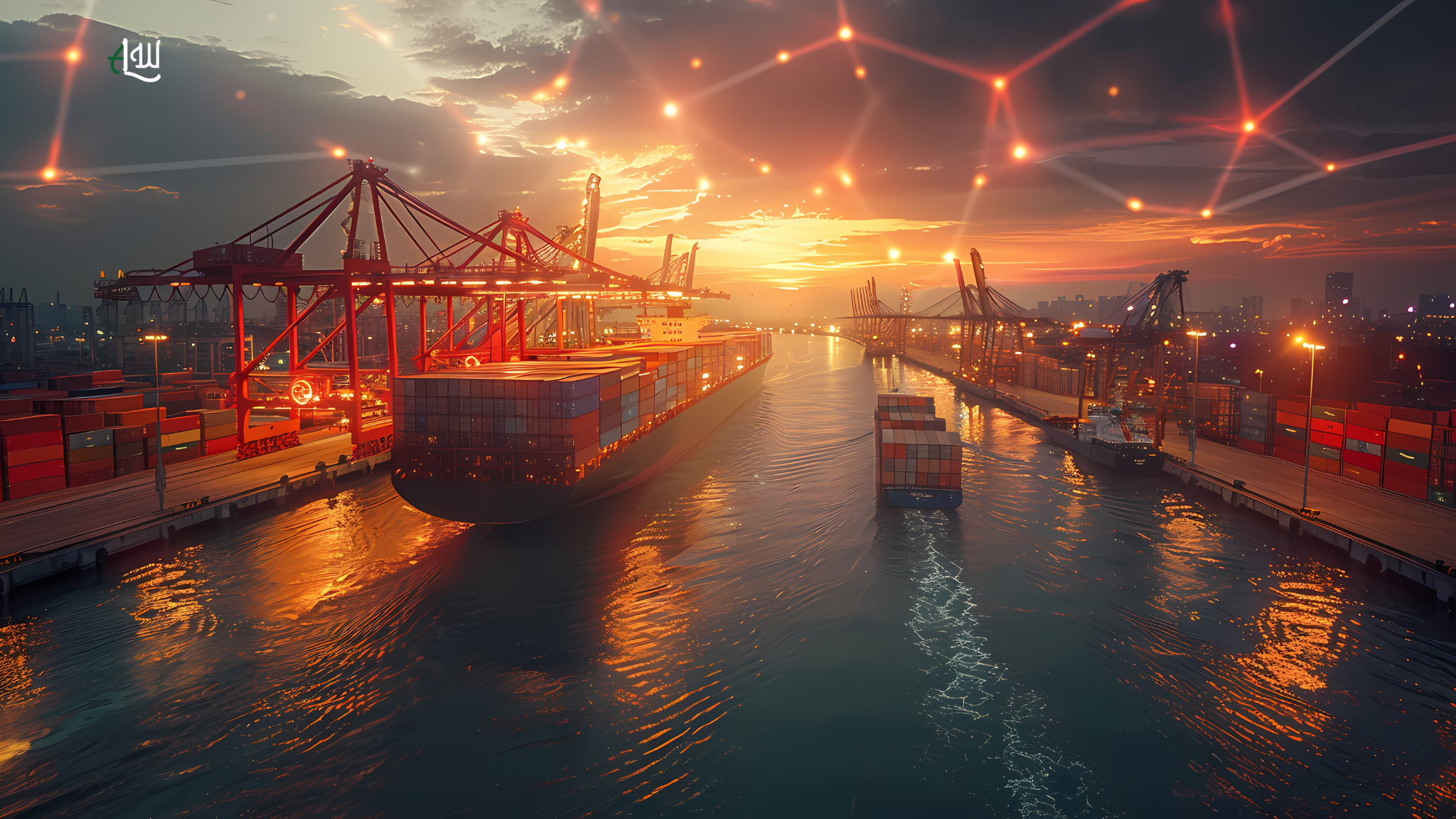
The Geography of Power Is Shifting Back to the Middle East
For centuries, the Middle East occupied one of the most strategically important positions in the global economy. Long before modern globalization emerged, the region functioned as the connective bridge between civilizations, empires, and trading systems stretching across Asia, Africa, and Europe. Ancient merchants crossed the Arabian Peninsula carrying spices from India, silk from China, gold from Africa, and manufactured goods from Mediterranean cities. Maritime routes through the Red Sea and Arabian Gulf linked the Indian Ocean economy with European markets centuries before the rise of modern industrial trade. Cities such as Basra, Muscat, Jeddah, Aden, and later Dubai became essential commercial gateways where traders, financiers, and political powers converged.
The region’s influence was never solely about geography. It was about control over movement. Whoever controlled the trade routes crossing the Middle East often held extraordinary economic and geopolitical leverage. The Ottoman Empire, Persian dynasties, and Arab trading powers all understood that commerce created influence far beyond military strength alone. Trade routes brought wealth, but they also brought information, technology, cultural exchange, and political alliances. The Middle East became a civilizational crossroads where economics and power became deeply interconnected.
However, the global balance of trade gradually shifted during the industrial era. European colonial expansion redirected maritime dominance toward Atlantic powers, while industrial manufacturing hubs emerged elsewhere. In the twentieth century, globalization increasingly revolved around trans-Pacific trade between East Asian factories and Western consumer markets. During this period, the Middle East remained critically important because of oil and gas exports, yet much of its economic identity became tied primarily to hydrocarbons rather than broader trade infrastructure. That historical cycle is now changing once again.
A profound restructuring of global supply chains, energy systems, geopolitical alliances, and trade routes is returning the Middle East to the center of global commerce. But this time, the transformation is not driven solely by geography or energy resources. It is being driven by massive infrastructure investments, advanced logistics technologies, digital trade systems, strategic economic diversification plans, and growing geopolitical competition among global powers.
The modern Middle East is no longer content with simply exporting oil. Governments across the Gulf increasingly view logistics, shipping, industrial manufacturing, and digital connectivity as the foundations of long-term economic influence. Ports are expanding at unprecedented speed. Railway corridors are being constructed across deserts. Smart logistics platforms powered by artificial intelligence are emerging. Special economic zones are attracting multinational corporations. Maritime infrastructure is becoming intertwined with energy transition projects, green hydrogen ambitions, and data connectivity systems.
The shift is occurring at a moment when the global economy itself is undergoing enormous structural stress. The COVID-19 pandemic exposed how vulnerable international supply chains had become after decades of hyper-efficiency and just-in-time manufacturing. Semiconductor shortages disrupted industrial production worldwide. Shipping bottlenecks created inflationary pressure across global markets. Geopolitical tensions between major powers forced governments and corporations to rethink their dependence on concentrated manufacturing hubs and fragile trade chokepoints.
Then came renewed instability across critical maritime routes such as the Red Sea and the Strait of Hormuz. Attacks on commercial shipping, geopolitical rivalries, and security threats demonstrated that global commerce remains extraordinarily dependent on a handful of vulnerable maritime corridors. The result has been a major strategic reassessment among governments, investors, and multinational corporations. Resilience is now becoming as important as efficiency. Redundancy is becoming as valuable as speed. Diversified logistics corridors are increasingly viewed as national security priorities rather than merely commercial infrastructure.
This environment has created an extraordinary opportunity for the Middle East. The region sits directly between the world’s major manufacturing centers in Asia, consumer markets in Europe, and rapidly growing economies across Africa. No other region possesses the same geographic advantage combined with comparable financial resources for infrastructure investment. Gulf states are leveraging sovereign wealth, strategic planning, and technological modernization to position themselves as indispensable nodes in the future global economy.
The implications extend far beyond shipping alone. Modern trade routes shape geopolitical alliances, energy flows, industrial policy, technological development, and even military strategy. Countries that control critical logistics infrastructure increasingly gain influence over global economic systems. Ports, railways, shipping lanes, and digital trade corridors are becoming instruments of geopolitical power comparable to traditional energy resources.
This is why the modern competition unfolding across the Middle East is not merely about ports or transport facilities. It is about defining the architecture of twenty-first-century globalization itself.
The next era of global commerce may not revolve around a single dominant superpower or one centralized trade route. Instead, it may depend on interconnected logistics ecosystems linking continents through multimodal infrastructure, digital platforms, and resilient supply chains. And at the center of that transformation stands the Middle East.
The UAE’s Rise as the Logistics Capital of the Modern World
No country illustrates this transformation more clearly than the United Arab Emirates. Over the past two decades, the UAE has evolved from a regional trading economy into one of the world’s most sophisticated logistics and connectivity hubs. This transformation did not happen by accident. It was the result of long-term strategic planning that recognized early how global trade patterns were changing and how logistics could become a central pillar of economic diversification.
The UAE’s leadership understood something critical long before many other nations fully appreciated it: in the modern global economy, controlling the movement of goods, capital, and data can generate influence comparable to controlling natural resources. Rather than relying exclusively on hydrocarbons, the country aggressively invested in ports, airports, free zones, aviation infrastructure, warehousing systems, customs modernization, and digital commerce platforms. Dubai became the centerpiece of this strategy.
What once functioned primarily as a regional trading city gradually transformed into one of the most connected commercial ecosystems in the world. Jebel Ali Port emerged as one of the largest and most strategically important container ports globally, serving as a gateway linking Asian manufacturing centers with markets across the Middle East, Africa, and Europe. The port’s integration with Jebel Ali Free Zone created a powerful industrial and logistics ecosystem capable of attracting multinational corporations seeking regional distribution capabilities.
The success of Jebel Ali reflects a broader shift in how ports operate in the modern economy. Traditional ports were primarily locations where cargo was loaded and unloaded. Modern ports increasingly function as integrated economic ecosystems combining manufacturing, warehousing, customs services, digital commerce, transportation management, financial services, and industrial production. The UAE invested heavily in this integrated model, creating logistics environments designed not only for shipping efficiency but also for broader economic value creation.
Fujairah also became strategically important because of its location outside the Strait of Hormuz. As geopolitical tensions increased in the Gulf, Fujairah emerged as a critical energy and shipping hub capable of supporting maritime trade even during periods of regional instability. Its importance reflects how modern logistics strategy increasingly revolves around resilience and redundancy rather than efficiency alone.
The UAE’s logistics ambitions extend beyond maritime trade. Dubai International Airport and Al Maktoum International Airport have become major global cargo hubs linking air freight with maritime logistics systems. This multimodal integration allows goods to move rapidly between shipping, aviation, and land transport networks. In a world where e-commerce and time-sensitive supply chains are growing rapidly, this flexibility creates enormous competitive advantages.
Technology has become central to the UAE’s logistics model. The country has invested heavily in digital customs systems, blockchain-enabled trade documentation, AI-powered cargo management, predictive logistics analytics, and automated port operations. These technologies reduce delays, improve efficiency, and allow supply chains to operate with greater transparency and resilience.
Artificial intelligence is particularly transformative. AI systems can optimize shipping schedules, predict congestion, identify maintenance needs, forecast demand patterns, and dynamically reroute cargo in response to disruptions. In highly interconnected supply chains where delays can create cascading economic consequences, predictive intelligence becomes an essential strategic capability.
The UAE is also leveraging logistics to expand geopolitical influence. Emirati port operators and logistics companies have invested in infrastructure projects across Africa, South Asia, and Europe. This international expansion strategy allows the UAE to shape trade flows far beyond its own borders while strengthening economic partnerships across emerging markets.
Importantly, the UAE’s logistics dominance aligns closely with broader economic diversification goals. As global energy transition policies gradually reshape hydrocarbon markets, Gulf economies recognize the need to build sustainable non-oil revenue streams. Logistics, trade services, financial technology, industrial manufacturing, and digital commerce are increasingly viewed as pillars of the post-oil economy.
The country’s geographic location amplifies these advantages. Within an eight-hour flight radius from Dubai lies access to a majority of the global population and many of the world’s fastest-growing economies. This positioning allows the UAE to function simultaneously as an East-West trade bridge, a gateway into Africa, and a regional headquarters hub for multinational corporations.
In many ways, the UAE is attempting to become not just a logistics hub but the operational nerve center of global trade networks connecting multiple continents simultaneously.
Saudi Arabia’s Port Expansion and the Vision Behind It
While the UAE established itself as an early logistics leader, Saudi Arabia is now undertaking one of the most ambitious infrastructure and trade transformation programs in the modern world. Under Vision 2030, the Kingdom is attempting to fundamentally reshape its economic model by reducing dependence on oil revenues and building diversified industries capable of generating long-term sustainable growth.
Logistics infrastructure stands at the heart of this strategy.
Saudi Arabia possesses enormous geographic advantages that historically remained underutilized. The Kingdom sits between two of the world’s most strategically important maritime systems: the Red Sea and the Arabian Gulf. This position gives Saudi Arabia direct access to trade routes linking Asia, Europe, and Africa. For decades, however, much of this potential remained secondary to the country’s role as an energy exporter. That is changing rapidly.
Riyadh increasingly sees logistics, manufacturing, transportation, and industrial infrastructure as essential tools for transforming Saudi Arabia into a global economic power. Massive investments are flowing into ports, railways, industrial zones, logistics parks, and smart transport systems designed to integrate the Kingdom into future global supply chains.
Jeddah Islamic Port has become central to these ambitions. Located on the Red Sea, it serves as one of the primary gateways connecting Middle Eastern markets with Europe and Africa through the Suez Canal corridor. Saudi Arabia is investing heavily in expanding cargo capacity, modernizing port operations, and improving integration with inland transportation networks.
Similarly, King Abdulaziz Port in Dammam plays a critical role in connecting Gulf shipping networks with industrial and commercial centers inside the Kingdom. Saudi planners increasingly envision a national logistics system where eastern and western maritime gateways are connected through advanced rail infrastructure and industrial corridors crossing the country.
One of the most significant components of this transformation is the Saudi Landbridge Project, designed to connect Red Sea ports with Gulf ports through freight rail systems. Such projects reflect a broader global trend toward multimodal logistics networks where rail, shipping, road transport, and digital systems operate together rather than independently.
This integration matters enormously because the future of global trade will depend increasingly on resilience and flexibility. Businesses no longer want supply chains dependent entirely on single maritime chokepoints. Hybrid logistics systems capable of rerouting cargo quickly during crises are becoming strategically valuable.
Saudi Arabia’s infrastructure investments are also closely tied to industrial policy. Vision 2030 aims to develop domestic manufacturing sectors including automotive production, pharmaceuticals, renewable energy technologies, defense industries, and advanced industrial materials. Efficient logistics infrastructure is essential for supporting these ambitions.
The NEOM megaproject symbolizes this broader vision. While initially presented largely as a futuristic smart city, NEOM is increasingly evolving into a strategic industrial and logistics platform. Its Oxagon industrial zone and smart port systems are designed to support automated manufacturing, AI-driven logistics, green energy production, and advanced maritime operations.
Saudi Arabia is also investing heavily in digital transformation across its logistics sector. Automated cargo systems, AI-powered customs processing, smart warehousing, and predictive analytics are becoming central to the Kingdom’s modernization efforts. These technologies improve efficiency while reducing operational costs and delays.
Geopolitics is another major driver behind Saudi logistics expansion. Regional instability has highlighted the risks associated with overdependence on narrow maritime chokepoints. By expanding inland logistics corridors, pipelines, and rail freight systems, Saudi Arabia hopes to reduce vulnerability while increasing strategic flexibility.
The Kingdom’s growing cooperation with neighboring Gulf states also reflects a broader regional shift toward integrated trade infrastructure. Partnerships with UAE logistics operators and transport companies indicate that the future Gulf economy may operate increasingly as a connected logistics network rather than a collection of isolated national systems.
Saudi Arabia is no longer simply trying to modernize ports. It is attempting to redesign its entire economic geography around trade, connectivity, industrialization, and strategic logistics power.
The India-Middle East-Europe Corridor and the Reinvention of Twenty-First Century Trade
Among the most consequential developments in the evolving global trade landscape is the emergence of the India-Middle East-Europe Corridor, widely known as IMEC. While still in development, the corridor has already become one of the most strategically discussed infrastructure initiatives in international economics and geopolitics. It represents not merely a transportation project, but a broader attempt to redesign the architecture of global commerce for an era increasingly defined by geopolitical competition, supply chain diversification, and economic realignment.
For decades, global trade routes were heavily concentrated around a relatively small number of maritime systems dominated by East-West shipping flows. China’s manufacturing rise transformed the Pacific and Indian Ocean trade ecosystem, while Europe remained a major consumer and industrial market. However, the vulnerabilities exposed by pandemic-era disruptions, rising geopolitical tensions between major powers, and instability in critical shipping chokepoints have pushed governments to rethink the structure of global connectivity.
IMEC emerged directly from this changing environment.
The corridor aims to establish a multimodal network linking India to Europe through the Middle East using a combination of ports, railways, logistics hubs, energy infrastructure, and digital connectivity systems. The project concept includes shipping routes connecting Indian ports to Gulf logistics hubs, rail corridors crossing the Arabian Peninsula, and onward maritime links into Europe through the Eastern Mediterranean.
At first glance, the initiative may appear to be simply another infrastructure proposal in a world already filled with mega-project announcements. Yet IMEC is fundamentally different because of the broader geopolitical and economic forces driving it.
India’s role is especially important.
India is rapidly becoming one of the world’s most influential economic powers. With its growing manufacturing sector, expanding technology ecosystem, demographic scale, and strategic ambitions, India increasingly seeks trade routes that provide faster and more secure access to European and Middle Eastern markets. The country also wants to reduce logistical dependence on routes vulnerable to geopolitical pressure or maritime instability.
The Middle East benefits enormously from this vision because the corridor positions Gulf economies not merely as transit points but as active economic platforms within future supply chains. Ports in the UAE and Saudi Arabia could become central nodes connecting Indian manufacturing exports with European markets. Industrial zones across the Gulf could attract assembly operations, logistics investments, warehousing facilities, and advanced manufacturing ecosystems built around the corridor.
Europe, meanwhile, sees strategic value in diversifying trade routes and strengthening economic partnerships with both India and the Gulf. European policymakers increasingly recognize the importance of resilient supply chains that reduce overdependence on any single country or route. IMEC offers the possibility of strengthening connectivity with emerging markets while enhancing economic security.
The corridor also reflects the growing global emphasis on multimodal logistics.
Historically, maritime shipping dominated long-distance trade because it remained the cheapest transport method for bulk goods. However, the future of global logistics is becoming increasingly hybridized. Companies and governments now seek integrated systems combining maritime transport, rail freight, highways, pipelines, air cargo, and digital infrastructure into unified trade ecosystems.
This approach improves resilience because cargo can be rerouted more efficiently during disruptions. If one maritime route becomes unstable, goods can shift partially to rail systems or alternative shipping networks. The ability to adapt dynamically is becoming one of the most valuable capabilities in modern logistics.
IMEC’s design reflects this strategic thinking. Instead of relying solely on one continuous maritime route, the corridor combines sea and land transport systems to create greater flexibility. Rail networks across Saudi Arabia and neighboring Gulf states could significantly reduce transportation times between Asian and European markets while bypassing some traditional chokepoints.
Energy transition dynamics also play an important role in the corridor’s long-term vision.
Future trade infrastructure will not transport only manufactured goods. It will increasingly move electricity, hydrogen, digital data, and renewable energy technologies. IMEC discussions have included plans for undersea cables, electricity interconnections, and green hydrogen transport systems linking the Middle East with Europe and South Asia.
This reflects a profound transformation in the global economy.
The infrastructure of the future will combine physical trade with digital and energy connectivity. Countries that control these integrated networks may gain extraordinary strategic influence in coming decades.
However, IMEC faces substantial challenges.
Political tensions remain one of the largest obstacles. The corridor depends heavily on regional cooperation among countries with complex diplomatic relationships and historical rivalries. Conflicts across the Middle East can quickly disrupt infrastructure planning and investor confidence. The Israel-Gaza conflict, for example, complicated many assumptions about long-term regional integration and normalization.
Financing requirements also remain enormous. Building large-scale rail systems, modern logistics hubs, digital infrastructure, and cross-border connectivity projects requires hundreds of billions of dollars over extended periods. Coordinating regulatory standards, customs systems, security arrangements, and infrastructure management across multiple sovereign states adds additional complexity.
Yet even if the final form of IMEC evolves significantly over time, the strategic direction remains unmistakable.
The world is moving toward diversified and regionally integrated trade systems where the Middle East serves as a central connective platform between major economic zones.
That shift alone has enormous implications for global commerce.
Red Sea Geopolitics and the New Age of Maritime Vulnerability
The recent instability in the Red Sea has reminded the world of a reality often overlooked during decades of globalization: global trade depends on a surprisingly fragile network of maritime chokepoints.
Modern consumers rarely think about how goods move across oceans before reaching factories, warehouses, retail stores, or digital commerce platforms. Yet the global economy remains deeply dependent on uninterrupted maritime shipping. Around 80 to 90 percent of global trade volume travels by sea, meaning disruptions in a handful of narrow waterways can affect economies worldwide.
Few regions illustrate this vulnerability more clearly than the Middle East. The Red Sea, Bab el-Mandeb Strait, Strait of Hormuz, and Suez Canal collectively form one of the most strategically important trade systems on Earth. These routes connect Asian manufacturing centers with European consumer markets while also transporting critical energy supplies from Gulf producers to the global economy.
When instability emerges in these corridors, the consequences extend far beyond regional politics. Recent attacks on commercial vessels in the Red Sea forced major shipping companies to reconsider transit routes through the Suez Canal corridor. Some vessels rerouted around the Cape of Good Hope in southern Africa, dramatically increasing transportation distances, fuel costs, and delivery times. Insurance premiums surged. Freight costs rose sharply. Manufacturing schedules became more uncertain.
The ripple effects spread rapidly across global supply chains. Automotive manufacturers faced component delays. Retailers encountered inventory disruptions. Energy markets reacted to fears of broader regional escalation. Inflationary pressures increased in some sectors as shipping costs climbed. Financial markets closely monitored maritime security developments because even temporary disruptions can generate billions of dollars in economic consequences.
The Red Sea crisis revealed a deeper structural issue within globalization itself.
For decades, global supply chains prioritized maximum efficiency and minimum cost. Companies optimized production systems around just-in-time manufacturing models designed to reduce inventory expenses and improve profitability. While highly efficient under stable conditions, these systems often lacked resilience against geopolitical disruptions or unexpected crises.
The result is a global economy where localized instability can produce worldwide economic shocks.
This reality is now reshaping strategic thinking among governments and corporations alike. Supply chain resilience has become a national security issue rather than merely a commercial concern. Countries increasingly view trade infrastructure, logistics diversification, and maritime security as essential components of economic sovereignty. Middle Eastern governments understand this dynamic extremely well.
Rather than viewing regional instability solely as a threat, Gulf states are increasingly responding by building more diversified and resilient logistics systems. Alternative ports, inland transport corridors, rail freight networks, and multimodal logistics hubs are all part of broader efforts to reduce dependence on single vulnerable routes.
Saudi Arabia’s east-west logistics strategy reflects this thinking. By connecting Red Sea ports with Gulf ports through rail and pipeline infrastructure, the Kingdom hopes to create flexible trade systems capable of adapting during maritime disruptions.
The UAE is pursuing similar resilience strategies through investments in multiple ports, advanced logistics technologies, and international infrastructure partnerships. Oman’s development of Duqm Port similarly reflects the growing importance of alternative maritime gateways outside traditional chokepoints.
At the same time, global naval and security dynamics are becoming increasingly intertwined with commercial shipping. Maritime trade routes are no longer purely economic systems; they are strategic assets influenced by military power, regional alliances, and geopolitical competition.
The United States, China, European powers, India, and regional Middle Eastern countries all recognize the strategic importance of securing maritime corridors. Naval deployments, port investments, and infrastructure partnerships increasingly reflect broader geopolitical competition over influence in future trade systems.
The Red Sea tensions therefore represent more than a temporary regional crisis. They symbolize the arrival of a new era in globalization where trade security, logistics resilience, and geopolitical strategy are becoming inseparable.
This transformation is accelerating investment across the Middle East because governments understand that future economic power may depend less on natural resources alone and more on the ability to maintain secure, intelligent, and adaptable trade networks during periods of global uncertainty.
In that environment, the Middle East is not simply a vulnerable transit zone. It is becoming one of the world’s most strategically important architects of the next generation of global commerce.
Related Blogs: https://arabworldleaders.com/category/articles/