
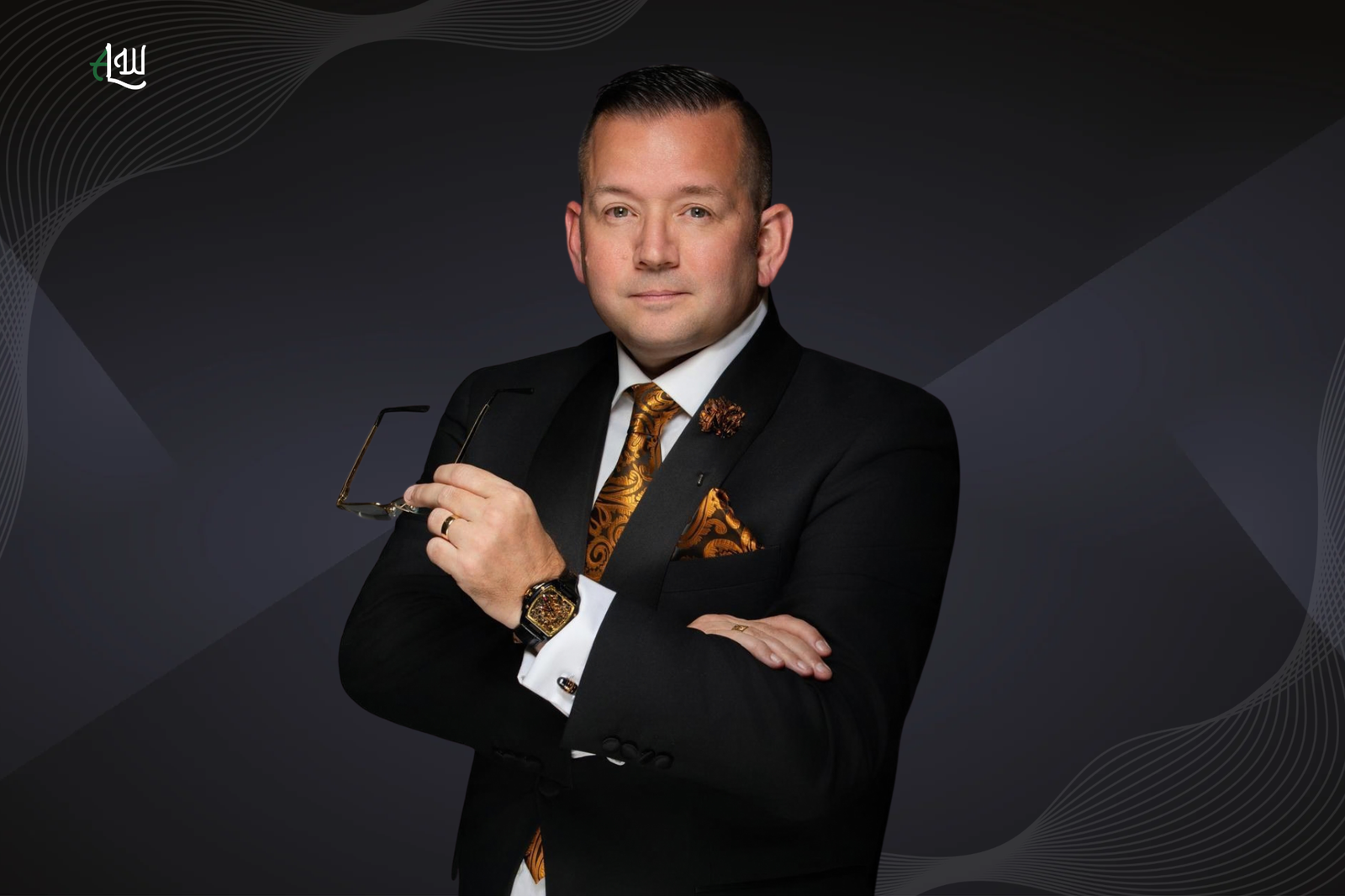
For much of the past decade, the global medical technology story has been shaped by established innovation centers such as Boston, Basel and Singapore. Today, that landscape is changing. Across major medtech gatherings and healthcare investment forums, one market is increasingly appearing at the center of conversations among founders, investors and industry leaders: Saudi Arabia.
The reason is straightforward. The Kingdom is no longer simply buying healthcare technology; it is building the foundations of a healthcare industry.
Under Vision 2030, Saudi Arabia is working to develop domestic capabilities across healthcare, biotechnology, medical technology and advanced manufacturing. Its evolving regulatory environment, localization initiatives and growing healthcare demand are creating new opportunities for international companies prepared to establish a meaningful presence in the market.
For founders with validated technologies, strong intellectual property and proven clinical potential, this combination of demand, regulatory development and policy support presents an opportunity that deserves serious attention.
From Stuck to Scaled
Bingham’s perspective on Saudi Arabia is grounded in a practical challenge facing the global life-sciences sector: many promising companies reach an advanced stage of development but struggle to make the transition from technical validation to commercial scale.
Across Europe and Asia, there are excellent medtech and life-science companies that have already completed some of the most difficult parts of the journey. They may have late-stage clinical data, working devices, strong intellectual property and experienced teams.
Yet this is often where the next challenge begins.
As capital becomes more cautious in established markets, the gap between a validated technology and a commercially scaled business can become increasingly difficult to bridge. Companies that have already proven their science can still find themselves constrained by a lack of growth capital, market access or manufacturing infrastructure.
Bingham sees Saudi Arabia as one potential answer to that problem.
At Taranis Capital, the approach has included efforts to help establish Saudi Arabia’s first biotech incubator, bringing together late-stage companies from Switzerland, India, Germany and other international markets.
The model is built around localization.
Rather than simply introducing foreign companies to Saudi customers, the objective is to help establish research, manufacturing and commercial capabilities within the Kingdom. This gives international companies a pathway to expand while simultaneously contributing technology, expertise and operational capability to Saudi Arabia’s emerging innovation ecosystem.
The distinction is important.
A company that enters a market through distribution alone may gain access to customers. A company that establishes local operations can create something much broader: employment, manufacturing capacity, technical expertise, research capability and long-term economic value.
That is the foundation of the “Made in KSA” opportunity.
For Bingham, successful localization must benefit both sides. International companies gain access to a market with ambitious healthcare and economic objectives, while Saudi Arabia gains technologies and capabilities that can strengthen its domestic ecosystem.
It is not simply a market-entry strategy. It is a model for transferring capability and building something that can endure beyond the initial investment.
Medtech Does Not Live Alone
His investment thesis is also based on a broader idea: medtech cannot be viewed in isolation.
Healthcare technology increasingly intersects with artificial intelligence, data infrastructure, cybersecurity, cloud computing and advanced digital systems. As healthcare becomes more connected, the infrastructure supporting medical technology becomes increasingly important.
Consider an AI-enabled diagnostic platform. Its effectiveness depends not only on the underlying medical technology but also on secure computing, reliable data and appropriate governance.
Connected medical devices create another layer of complexity. Every device can generate valuable clinical information, but that information must be stored, managed, protected and governed appropriately.
Hospitals undergoing digital transformation face similar requirements. Digitized medical records, connected clinical systems and intelligent healthcare platforms all depend on infrastructure capable of supporting large volumes of sensitive information.
This convergence is central to the way Taranis approaches investment.
Rather than treating biotech, data centers and disruptive technology as completely separate categories, the firm sees increasing connections between them.
For a medtech company entering Saudi Arabia, therefore, a distributor may not be enough.
The company may need local data infrastructure, clinical partnerships, regulatory guidance, manufacturing capabilities and patient capital. Each element supports the others.
Investors who understand only one part of this equation may overlook important dependencies. Those who can connect healthcare technology with infrastructure, data and capital may see opportunities that are less visible when each sector is considered independently.
Preparation Over Opportunism
Few markets reward preparation as strongly as Saudi Arabia’s current transformation—and few can expose an unprepared strategy more quickly.
For founders considering the Kingdom, Bingham’s message is clear: market entry requires more than a strong product and an attractive presentation.
A clear localization strategy matters.
Understanding the regulatory environment matters.
Building relationships with local healthcare institutions, investors, partners and decision-makers matters.
Most importantly, companies need to demonstrate that they are prepared to build for the long term.
He believes companies that arrive with a genuine commitment to localization and a willingness to develop relationships in person can create significantly stronger foundations for growth.
The opposite approach is unlikely to produce the same results.
A company that arrives with a slide deck, a short-term market experiment and a return flight already planned may struggle to establish the depth of relationship required in a market undergoing such fundamental transformation.
Saudi Arabia is looking beyond imported products. It is increasingly interested in developing capabilities.
That means international companies need to think beyond selling into the Kingdom and consider how they can build within it.
Industry platforms such as MedTech World can play an important role in that process. By bringing founders, regulators, clinicians and investors together, these forums create opportunities for cross-border conversations and relationships.
But conversations are only the starting point.
The more important step is turning those conversations into companies that manufacture locally, employ talent, develop partnerships and contribute to the Kingdom’s innovation ecosystem.
The GCC’s Emerging Investment Corridors
The broader GCC is also undergoing an important transformation in its relationship with global capital.
The region is increasingly moving beyond the traditional role of receiving international investment and products. It is developing the infrastructure, capital networks and strategic relationships needed to participate more actively in shaping global investment corridors.
For healthcare and medtech, this creates an especially interesting environment.
Sovereign capital, national development strategies, healthcare modernization and digital infrastructure are increasingly intersecting. When those forces move in the same direction, they can create opportunities for companies willing to establish long-term operations in the region.
For international medtech businesses, the opportunity extends beyond selling products into a growing healthcare market.
There is potential to establish manufacturing operations, research partnerships, local teams and regional headquarters while using Saudi Arabia as a platform for broader GCC expansion.
For investors, the opportunity is similarly broader than a single transaction. The development of healthcare infrastructure can create demand across multiple interconnected sectors, from biotechnology and medical devices to data infrastructure and advanced technology.
That interconnectedness is one of the reasons Bingham views the region through a wider investment lens.
Building Rather Than Simply Entering
Saudi Arabia’s healthcare transformation presents an important distinction for international medtech companies.
There is a difference between entering a market and becoming part of its development.
Entering means selling a product.
Building means establishing relationships, investing in local capability, developing talent, understanding regulatory requirements and creating infrastructure that can support sustained growth.
His approach emphasizes the second model.
For companies with proven technologies, Saudi Arabia can potentially provide more than access to a new customer base. It can offer a pathway toward localization and regional expansion at a time when healthcare and technology infrastructure are being developed at scale.
The companies most likely to benefit will be those that recognize this distinction early.
They will need the right technology, but technology alone will not be enough. They will also need the right local partners, regulatory understanding, capital structure and willingness to remain committed as the market develops.
The Window Is Open
For Bingham, Saudi Arabia represents more than another emerging market for medical technology. It represents a meeting point between healthcare, technology, infrastructure and capital.
The Kingdom is building an environment in which international medtech companies can potentially move beyond exporting products and toward establishing local research, manufacturing and commercial capabilities.
That makes the current period particularly significant.
The companies that approach Saudi Arabia with strong technology, credible local partnerships, regulatory discipline and a long-term commitment may find more than a new market.
They may find an opportunity to participate in building an entirely new healthcare ecosystem.
The next chapter of medtech will not be written exclusively in Boston, Basel or Singapore.
Increasingly, it will also be shaped in Riyadh and across the wider Gulf.
And for companies prepared to build rather than simply enter, Saudi Arabia could become one of the defining frontiers of the global medtech landscape.
Related Articles: https://arabworldleaders.com/aaditya-sharma-we-dont-learn-with-time-we-give-time-to-learn/
Related Blogs: https://arabworldleaders.com/category/articles/