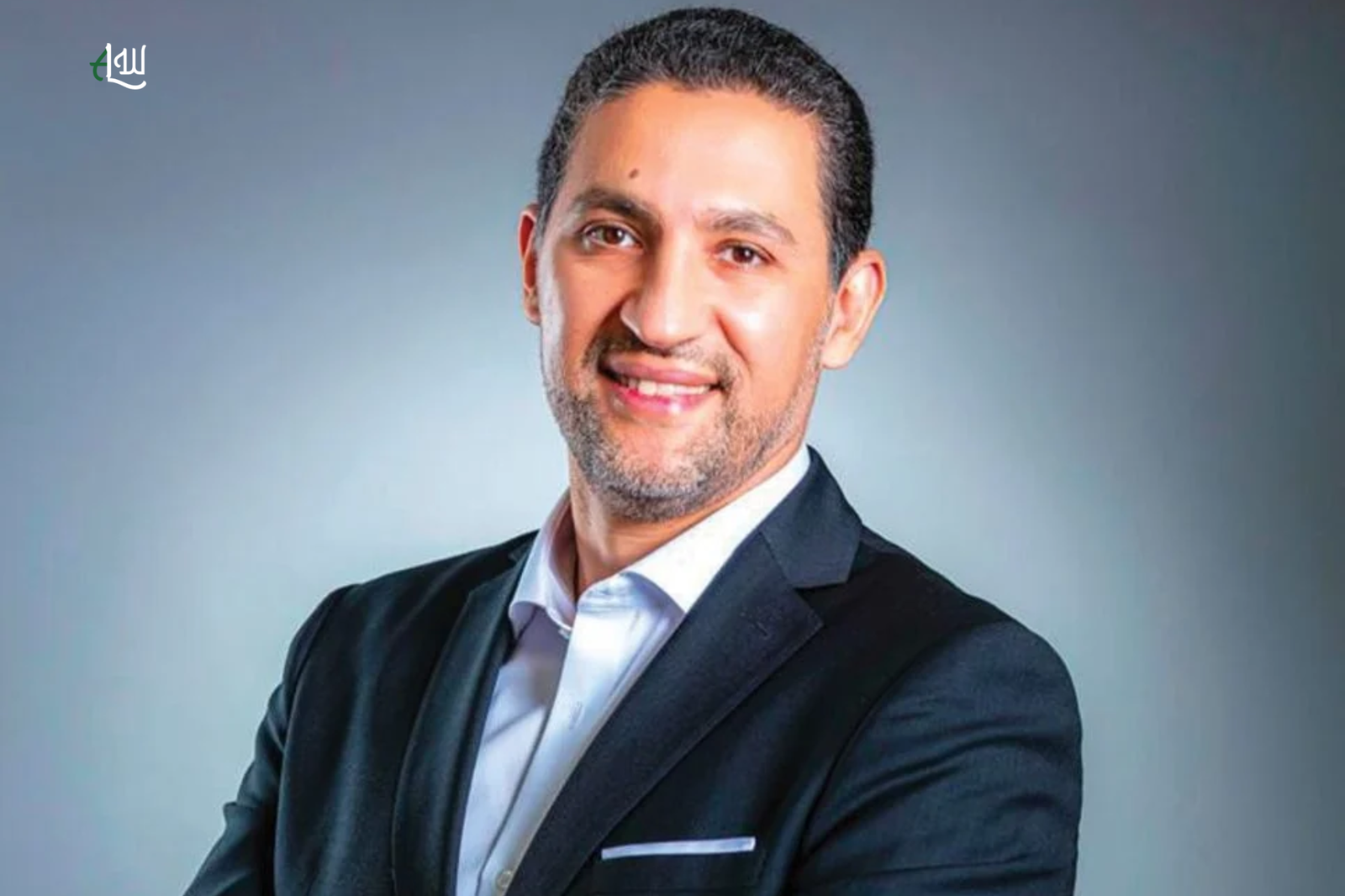
Healthcare innovation is often measured by the technology hospitals adopt, the equipment they invest in and the procedures their specialists can perform. But for Prof. Youness Ahallal, the real measure of progress is more fundamental: whether innovation improves patient outcomes, expands access to advanced medical expertise, and enables healthcare professionals to deliver better care.
A specialist in urology, uro-oncology, robotic surgery and telesurgery, Prof. Youness Ahallal is working at the intersection of clinical excellence and technological transformation. His professional journey has taken him from Morocco to internationally recognized medical institutions, including Memorial Sloan Kettering Cancer Center in New York, followed by further training in Paris and at CHU Nice. In 2024, he returned to Morocco to help lead the development of robotic surgery within Oncorad Group in Casablanca.
His work reflects a broader ambition to establish Morocco not only as a regional centre for advanced surgical care, but also as a contributor to the global evolution of telesurgery and connected surgical education. Through robotic surgery, scientific research, international collaboration and remote surgical initiatives, Prof. Youness Ahallal is helping demonstrate how expertise can reach patients and medical teams regardless of geographical boundaries.
For Prof. Youness Ahallal, the future of surgery is not simply about introducing sophisticated technology. It is about transforming how surgery is delivered, how surgeons are trained, and how specialist knowledge can be shared across borders. The milestones achieved in Morocco represent steps toward a model in which local expertise is strengthened while contributing to international progress.
From International Training to Building Advanced Surgical Capabilities in Morocco
Prof. Youness Ahallal’s professional philosophy developed through a combination of medical training, international exposure and hands-on experience in complex surgical environments.
His time at Memorial Sloan Kettering Cancer Center offered valuable exposure to the relationship between specialized cancer care, research and medical innovation. Further training in Paris and at CHU Nice strengthened his experience in robotic surgery, which became an important part of his clinical practice and teaching activities.
These experiences shaped his understanding of what defines surgical excellence. Technology can improve a surgeon’s capabilities, but outcomes also depend on disciplined training, effective teamwork, objective evaluation, and the willingness to challenge established practices when better approaches become available.
Returning to Morocco in 2024 provided an opportunity to translate this philosophy into a developing robotic surgery program. The first robotic surgery performed in Morocco in May 2024 marked a significant milestone, but for Prof. Youness Ahallal, the objective extended beyond introducing a new platform. The priority was to build clinical, educational, and collaborative foundations that would allow the technology to create lasting value.
That means developing trained teams, evaluating clinical outcomes, establishing educational pathways, and building relationships with international institutions. His approach positions innovation as an ongoing process rather than a single technological achievement, with progress measured by the capabilities that remain and grow after each milestone.
Robotic Surgery Must Be Measured by Patient Outcomes
Robotic surgery has opened new possibilities in technically demanding procedures by offering enhanced three-dimensional visualization, precision, dexterity, and improved ergonomics. In uro-oncology, these capabilities can support complex procedures involving prostate, kidney, and bladder cancers.
However, Prof. Youness Ahallal emphasizes that the robotic platform itself is only one component of successful surgery. The surgeon’s judgment, patient selection, operating team, and overall care pathway remain essential.
This belief is reflected in the clinical evaluation of the robotic program developed in Casablanca. The team published its experience with the first 134 robot-assisted radical prostatectomies performed using the Toumai system between May 2024 and November 2025 in the Journal of Robotic Surgery.
The reported findings included a mean estimated blood loss of approximately 66 millilitres, conversion to open surgery in one patient and an average hospital stay of 1.4 days. Positive surgical margins were reported at 11.1%, while continence and erectile-function recovery improved progressively during follow-up.
These findings provide an important foundation for assessing the program’s clinical experience, although outcomes must always be interpreted in the context of patient characteristics, follow-up duration, and the limitations of an individual clinical series.
For Prof. Youness Ahallal, scientific publication is an essential part of responsible innovation. A successful robotic surgery program should not be evaluated simply by the number of operations performed. It should be judged by what happens to patients afterwards.
Transparent reporting, continuous evaluation, and the willingness to acknowledge limitations help ensure that technological progress remains connected to clinical evidence.
Telesurgery: Expanding the Reach of Surgical Expertise
The development of robotic surgery in Morocco created an opportunity to explore a more ambitious question: could specialized surgical expertise be delivered safely across long distances, and could this capability help reshape collaboration between healthcare institutions?
In November 2024, Prof. Youness Ahallal and his collaborators performed a historic transcontinental robotic radical prostatectomy between Shanghai and Casablanca, spanning approximately 12,000 kilometres. The team described the procedure as breaking the distance world record. The achievement moved Morocco beyond the role of a technology adopter and into the international conversation about what connected surgery could make possible.
The procedure demonstrated the potential of combining robotic technology, telecommunications infrastructure, and trained clinical teams to enable remote surgical collaboration across continents. It also showed that geography need not be an absolute barrier to collaboration when technical systems, clinical teams, and safety protocols are carefully coordinated.
The milestones continued in stages. In May 2025, Prof. Youness Ahallal and his collaborators carried out the first national telesurgery between Tangier and Casablanca, extending the concept from a transcontinental demonstration to a connection between Moroccan cities. In June 2026, a first bidirectional telesurgery between Africa and Europe linked Casablanca with Orsi Academy in Belgium, with procedures connecting the two locations in both directions. During ERUS 2026 in Padua, Prof. Youness Ahallal also performed a live remote robotic radical prostatectomy from Padua on a patient in Casablanca.
Taken together, these milestones trace a progression: the first robotic surgery in Morocco in May 2024; transcontinental telesurgery between Shanghai and Casablanca in November 2024; the first national telesurgery between Tangier and Casablanca in May 2025; bidirectional telesurgery between Africa and Europe in June 2026; and a live telesurgery demonstration during ERUS 2026 in Padua. Their significance lies not only in technical firsts, but in the growing role Morocco can play in shaping the future of connected surgical care.
Telesurgery raises the possibility of bringing specialist expertise closer to patients who might otherwise face geographical barriers to advanced care. It also creates new opportunities for collaboration between hospitals and medical professionals in different countries.
Yet demonstrating technical feasibility is only the first step. The larger challenge is determining how remote surgical approaches can be implemented safely, consistently, and within appropriate clinical and regulatory frameworks.
Building Safety Into Every Layer of Innovation
Remote surgery requires more than a reliable robotic platform and a fast internet connection. It demands a comprehensive safety system designed to anticipate and manage potential failures.
Prof. Youness Ahallal’s approach includes redundant connectivity, backup power, preoperative network testing, real-time audiovisual communication, and clearly defined contingency procedures. Network latency and stability are important, but they must be supported by planning, communication, and operational readiness.
Equally important is the presence of a trained surgical and anaesthetic team alongside the patient. These professionals must be prepared to respond to emergencies and take over when necessary.
This principle reinforces a central distinction between technological experimentation and responsible clinical practice. Telesurgery remains in surgery, with the same fundamental obligations toward patient safety, informed decision-making, and professional accountability.
Cybersecurity, regulation, patient selection, and team training must be considered alongside technical performance. The objective is not merely to prove that a procedure can be performed remotely, but to establish whether the approach can deliver meaningful clinical value under clearly defined safeguards.
Why Telementoring Could Have an Even Broader Impact
While telesurgery attracts attention for its ability to connect surgeons and patients across continents, Prof. Youness Ahallal sees training, telementoring and knowledge transfer as equally important to the long-term value of connected healthcare.
A planned initiative will connect surgical teams in Casablanca and Tangier with Orsi Academy in Belgium. The program is intended to enable local surgeons to perform procedures while receiving real-time guidance from experienced international robotic surgeons.
The model could address a persistent challenge in advanced surgical education: how to support professionals as they transition from formal training to independent clinical practice.
Traditional training often involves travel, observation, and concentrated periods of instruction. Remote mentorship offers the possibility of continuing that learning process after surgeons return to their own hospitals.
Instead of moving patients or requiring specialists to travel repeatedly, healthcare systems could bring expertise directly to local teams.
For Prof. Youness Ahallal, this is a way to strengthen local capability rather than replace it. The objective is to empower surgeons, support their development, and help them progressively achieve independence, with international expertise serving as a bridge to local capability rather than a substitute for it.
His approach combines structured curricula, simulation, observation, mentored procedures, and continuous evaluation. It also recognizes that successful robotic surgery depends on an entire multidisciplinary team, including bedside assistants, nurses, anaesthesiologists and technical specialists.
Ultimately, the greatest achievement will be the development of more professionals capable of delivering advanced surgical care independently.
Creating a Sustainable Healthcare Ecosystem for Africa
Establishing a robotic surgery program requires more than purchasing equipment. Long-term sustainability depends on trained personnel, appropriate patient volumes, structured credentialing, technical support, maintenance, reliable connectivity, and continuous monitoring of clinical outcomes.
Through the work with Oncorad and the development of ORSI Morocco, Prof. Youness Ahallal is helping build an ecosystem intended to connect local surgical training with international expertise and progressive clinical independence. The ambition for ORSI Morocco is not simply to provide training opportunities, but to help establish a sustainable robotic surgery training ecosystem for Morocco and, over time, for Africa. Such an ecosystem can bring together structured education, simulation, mentorship, multidisciplinary team development and continuous assessment so that knowledge is embedded locally and passed on to future generations of surgeons.
The broader opportunity extends beyond Morocco.
Africa should not be viewed solely as a destination for medical technologies developed elsewhere. With appropriate infrastructure, investment, research, and international partnerships, the continent can also contribute to the development of new models of surgical education and connected healthcare.
Such progress requires a realistic understanding of local needs and resources. Advanced technology must be supported by practical training systems, dependable infrastructure, and economic models that can sustain its use.
For Prof. Youness Ahallal, building these foundations is essential to ensuring that innovation extends beyond individual institutions and individual procedures. A legacy would be a network of trained professionals, capable institutions and educational pathways that allow Morocco and other African countries to develop expertise sustainably and contribute to international practice.
The Convergence of Robotics, Artificial Intelligence and Connected Care
Looking ahead, Prof. Youness Ahallal expects the next phase of surgical innovation to emerge from the integration of multiple technologies.
Robotic platforms may increasingly work alongside artificial intelligence, advanced imaging, augmented reality, and real-time data. These capabilities could help surgeons interpret anatomical information, anticipate technically challenging stages, and evaluate surgical performance more objectively.
Connected operating rooms may also make remote collaboration, specialist guidance, and professional education more accessible.
However, the value of these developments will depend on evidence, responsible implementation, and their ability to address practical clinical needs.
Technology should not become the centre of patient experience. Patients should benefit through safer procedures, better cancer control, fewer complications, faster recovery, and improved quality of life.
This patient-first perspective distinguishes meaningful innovation from technological novelty.
A Leadership Philosophy Rooted in Responsibility
Prof. Youness Ahallal’s leadership philosophy centres on clinical responsibility, intellectual humility, and the development of other professionals.
Being the first to perform a procedure has limited value unless the approach can be shown to be safe, reproducible, and beneficial. Likewise, building a successful surgical program means creating opportunities for younger surgeons to develop their skills and assume greater responsibility.
Collaboration is equally important. Robotic surgery and telesurgery require hospitals, clinicians, engineers, telecommunications specialists, training institutions and technology partners to work toward clearly defined clinical objectives.
These partnerships depend on trust, transparent communication, and a shared understanding of individual responsibilities.
For Prof. Youness Ahallal, leadership is not simply about personal achievement. It is about creating the conditions in which expertise can grow, knowledge can be shared, and medical teams can deliver better care together.
Looking Ahead: Making Geography Less Relevant to Excellence
Over the next five to ten years, Prof. Youness Ahallal aims to help establish Morocco as a regional hub for robotic surgery, surgical education and connected healthcare, serving patients locally while supporting the development of expertise across Africa and the wider region.
The planned telementoring initiative linking Casablanca and Tangier with Orsi Academy represents an important step toward this ambition. If successful, the model could be expanded to additional cities and potentially other African countries.
His long-term vision brings together traditional surgery, telementoring and telesurgery into a connected pathway of professional development. Surgeons could train at centres of excellence, return to their home institutions, receive guidance during their learning curve, and eventually mentor other professionals remotely.
The potential impact lies in multiplying the reach of specialized knowledge while strengthening local healthcare capabilities.
For Prof. Youness Ahallal, the future of surgery is ultimately not about robots. It is about people, their ability to learn from one another, and their capacity to deliver high-quality care closer to home.
When technology helps patients access advanced treatment, enables surgeons to develop expertise without geographical limitations and allows medical knowledge to circulate more freely between continents, innovation becomes more than a technical accomplishment. It becomes a means of expanding opportunity and improving healthcare for the communities that need it most.
Related Blogs: https://arabworldleaders.com/category/articles/
Related Article: https://arabworldleaders.com/dr-mohammed-fouad-on-how-intelligence-and-sustainability-are-redefining-the-future-of-cement-manufacturing/