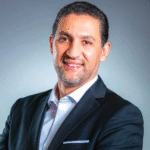

In an era where financial institutions operate across increasingly complex regulatory, technological, and geopolitical landscapes, the role of a General Counsel has evolved far beyond traditional legal oversight. Today, senior legal leaders are expected to understand commercial strategy, anticipate risk, navigate multiple jurisdictions, support innovation, and provide decisive guidance to executive leadership.
Few professionals demonstrate this multidimensional approach as comprehensively as Dr. Ahmed, whose career spans more than two decades across sovereign debt, public international law and global financial architecture, international trade, commercial banking, capital markets, international arbitration, structured finance, and complex cross-border transactions.
His professional foundation combines extensive legal scholarships with practical experience across leading financial institutions, international organizations, and law firms. His academic achievements include a Bachelor of Laws from Cairo University, including Common Law studies in the English Department, a Diploma and Thesis master’s in international Arbitration, a master’s in international Commercial Law, an LL.M. in International and Comparative Law from The American University and Zurich Law University, a Harvard Business Leadership Diploma, and a Ph.D. in International Commercial and Business Law. He has also been recognized through The Legal 500.
This combination of academic depth and practical execution has shaped a distinctive approach to legal leadership. Dr. Ahmed’s experience includes advisory engagements connected with the International Chamber of Commerce and United Nations initiatives, alongside sophisticated legal work involving international financial institutions such as the IMF and World Bank Group entities, including the IFC, MIGA, and IBRD. His expertise extends across sovereign debt restructuring, political risk, structured finance, public international law, and complex contractual frameworks.
From Legal Counsel to Strategic Architect
At the center of Dr. Ahmed’s leadership philosophy is a simple but powerful idea: legal should not function merely as a gatekeeper. It should operate as a strategic partner to the business.
As Head of Wholesale Contracts and Legal Opinions at Kuwait Finance House Bank, Dr. Ahmed oversees the legal architecture supporting wholesale, corporate, and institutional banking operations. His responsibilities span high-value bilateral and syndicated financial facilities, trade finance documentation, project finance structures, asset-backed Islamic finance, structured finance transactions, and authoritative legal opinions that support senior executive decision-making.
This role requires more than technical legal expertise. It demands the ability to understand the commercial objectives behind a transaction, identify potential risks, and structure solutions that allow the business to move forward safely.
For Dr. Ahmed, commercial ambition and legal protection do not need to exist in opposition. Instead, effective legal leadership requires dynamic risk calibration. The objective is not simply to eliminate risk, but to understand it, quantify it, manage it, and structure transactions in a way that supports sustainable commercial execution.
His experience during the transition from LIBOR to SAIBOR and alternative benchmark rates is a strong example of this approach. Through the use of the ISDA/IIFM Tahawwut Master Agreement and tailored Murabaha Amendment Agreements, his teams worked to protect institutional portfolios from benchmark disruption. The initiative illustrates how legal expertise can actively enable business continuity and innovation rather than simply reacting when regulatory or market challenges emerge.
Precision Where It Matters Most
High-value wholesale transactions require a combination of technical legal precision, commercial awareness, and an understanding of global financial architecture. Dr. Ahmed’s experience negotiating syndicated loans, repo transactions, derivative master agreements, infrastructure contracts, and other sophisticated financial documentation has reinforced the importance of preparing for future risks rather than focusing solely on immediate transaction requirements.
Areas such as security perfection, collateral enforcement, credit support annexes, financial covenants, events of default, netting mechanisms, and cross-border jurisdictional enforceability can have significant consequences when market conditions change.
For this reason, Dr. Ahmed approaches complex contracts with a long-term institutional perspective. Every provision should contribute to protecting the organization’s interests while providing sufficient flexibility for commercial execution.
His approach also recognizes the importance of sovereign risk and international immunities, particularly when financial transactions involve multiple jurisdictions and government-related counterparties. In an increasingly interconnected banking environment, enforceability cannot be viewed through the lens of a single legal system.
Understanding the interaction between civil law, common law, and Shari’ah legal principles is therefore essential for institutions operating across international markets.
Dr. Ahmed’s leadership in structuring multi-jurisdictional collateralized liquidity frameworks, using standardized Master Collateralized Agreements and sovereign Sukuk pools, further demonstrates his strategic approach to international legal governance. By developing robust cross-border ring-fencing mechanisms, waiver-of-immunity protections, and clearing-finality structures, he also directed legal teams in safeguarding multi-billion-dollar sovereign and corporate exposures against sudden macroeconomic shocks and transfer risks. This work illustrates how proactive, high-level legal strategy can help protect institutional solvency and market stability rather than merely responding to sovereign debt crises.
Drawing on his distinguished experience in global finance and sovereign risk management, Dr. Ahmed brings an executive perspective grounded in public international law. His background in aligning conventional capital markets, Shari’ah-compliant financial structures, and international immunity frameworks supports institutional resilience, systemic stability, and capital preservation across global markets.
Turning Legal Opinions into Executive Decisions
For senior management and boards, legal advice has value only when it leads to clarity and informed action.
Dr. Ahmed believes that a legal opinion should function as a practical decision-making instrument rather than an academic treatise. His methodology is built around three principles: concise factual framing, explicit risk quantification, and clear operational recommendations.
When assessing novel financial instruments, cross-border jurisdictional issues, or complex netting arrangements, his approach is to identify the governing legal principles, evaluate potential challenge scenarios, assess the likelihood and impact of risks, and translate those findings into practical recommendations.
This reflects a broader transformation taking place within corporate legal departments. The modern General Counsel is increasingly expected to sit at the intersection of law, strategy, risk, finance, and business development.
The most effective legal leaders are not those who simply explain why something may be difficult. They are those who can identify the challenge, develop practical solutions, and provide leadership toward execution.
Navigating a Changing GCC Banking Landscape
Across the GCC and wider Arab region, banking is experiencing rapid structural change. Digital banking, fintech, data privacy, international sanctions, anti-money laundering requirements, sovereign debt restructuring, and ESG compliance are creating new challenges for financial institutions and their legal teams.
At the same time, these changes are creating significant opportunities.
Digital banking regulations and fintech frameworks are enabling new financial models, while sustainable finance is opening opportunities for institutions to participate in emerging capital markets. Dr. Ahmed’s experience advising on sustainable bonds and green Sukuk aligned with United Nations Sustainable Development Goals reflects the growing importance of legal expertise in supporting responsible financial innovation.
His leadership in structuring innovative climate-resilient infrastructure financing and sovereign catastrophe-bond frameworks further demonstrates his strategic approach to international legal governance. By embedding enforceable ESG covenants and green Sukuk structures into multi-creditor facility agreements, he helped channel capital toward vulnerable markets while addressing complex environmental and sovereign-default risks. This work illustrates how proactive, high-level legal strategy can enable sustainable development and risk transfer rather than simply reacting to environmental or market disruptions.
The legal function must therefore understand not only what regulations require, but also how institutions can operate successfully within evolving frameworks.
This is particularly important as financial institutions increasingly participate in cross-border transactions where international sanctions, regulatory expectations, and local legal requirements intersect.
The Sophistication of Islamic Finance
Working within an Islamic financial institution adds a distinctive dimension to legal leadership. Transactions must comply with statutory and secular laws while also adhering to Sharia principles and AAOIFI standards.
For Dr. Ahmed, this dual framework requires exceptional precision in both drafting and transaction design.
Whether structuring Multicurrency Murabaha, Wakala, Mudarabah, Tahawwut, Istisnaa, or Ijarah facilities, the legal documentation must accurately reflect the underlying economic arrangements, asset transfers, risk-sharing principles, and contractual obligations.
The same discipline applies to Sukuk transactions, including sustainability, green, and social Sukuks. Legal opinions must address enforceability under applicable civil or common law frameworks while also ensuring alignment with relevant Sharia Board approvals.
This intersection of financial law and Islamic principles creates a highly specialized environment in which legal professionals must possess both technical knowledge and a deep understanding of how financial products operate.
Technology as a Catalyst for Legal Transformation
Technology is rapidly changing how legal departments operate. Artificial intelligence, automation, digital contracting, and advanced data analytics are creating opportunities to improve efficiency and allow legal professionals to focus more heavily on strategic matters.
Dr. Ahmed believes that mastering traditional legal doctrine is no longer enough. Modern legal professionals must also develop strong digital capabilities.
AI-driven tools can support contract repository analytics, due diligence, regulatory tracking, and workflow management. By automating repetitive activities, legal teams can redirect their time toward complex negotiations, strategic advisory work, and high-value risk management.
Digital contracting is another important area of transformation. Frameworks influenced by the UNCITRAL Model Law on Electronic Transferable Records are helping accelerate transaction execution while reducing operational risks associated with traditional documentation processes.
However, technology should complement professional judgment rather than replace it. The value of technology ultimately depends on how effectively legal leaders integrate it into broader institutional processes.
Collaboration at the Heart of Legal Strategy
Dr. Ahmed’s approach to legal leadership is also defined by collaboration. He believes legal teams must break down functional silos and become involved in strategic initiatives from the earliest stages.
Close collaboration with business originators, treasury desks, risk managers, compliance officers, and senior management enables legal considerations to be incorporated into product development and financing structures before challenges arise.
This proactive model can reduce late-stage revisions, improve transaction efficiency, align deal structures with institutional risk appetite, and provide business teams with greater confidence.
The result is a legal function that is not positioned at the end of the transaction process, but embedded within the decision-making process itself.
Building the Next Generation of Legal Leaders
For Dr. Ahmed, strong legal teams are built through three fundamental pillars: commercial immersion, continuous rigorous training, and operational empowerment.
Legal professionals must understand the banking products they support and develop an appreciation for credit, treasury, market dynamics, and broader commercial objectives. They must also remain committed to professional development as regulations, technologies, and financial structures continue to evolve.
At the same time, legal teams need confidence and autonomy to develop their own commercial judgment. Effective management of external counsel, intellectual rigor, and open discussion can help transform technically strong lawyers into confident business advisors.
This philosophy is particularly important for multicultural organizations, where effective leadership also requires diplomacy, communication, cultural awareness, and the ability to bring diverse perspectives together.
Preparing for the Future of Legal Leadership
Looking ahead, Dr. Ahmed sees the convergence of digital finance, sustainable capital markets, and cross-border regulatory integration as defining the next chapter of legal leadership across Arab banking.
Paperless trade finance, smart contracts, digital assets, central bank digital currencies, cybersecurity, data governance, and digital asset custody will require General Counsels to develop a deeper understanding of technology and its legal implications.
Meanwhile, the growth of green finance, ESG frameworks, and carbon credit financing will create new opportunities and responsibilities for financial institutions.
As regional organizations pursue cross-border mergers, capital markets, transactions, and international expansion, the ability to navigate civil, common, and Shari’ah legal jurisdictions will become increasingly valuable.
For the next generation of legal professionals, Dr. Ahmed offers a philosophy rooted in commercial understanding, precision, adaptability, and lifelong learning.
Legal questions should never be viewed in isolation. Future General Counsels must understand the institution they advise, including its balance sheet, revenue drivers, strategic objectives, and risk appetite. They must combine airtight drafting with persuasive advocacy and use technology to enhance efficiency.
Above all, they must be capable of guiding organizations through uncertainty with confidence.
The evolution of the General Counsel is ultimately an evolution from legal advisor to strategic architect. Dr. Ahmed’s career reflects this transformation. By combining international legal expertise, financial-sector knowledge, Islamic finance experience, regulatory insight, technological adaptability, and multicultural leadership, he demonstrates how the modern legal function can become a powerful contributor to institutional resilience, innovation, and sustainable growth.
In an industry where the ability to anticipate tomorrow’s risks can be as important as solving today’s challenges, Dr. Ahmed represents a model of legal leadership built not only on knowledge, but on vision, precision, and the ability to turn complexity into a clear path forward.
Related Blogs: https://arabworldleaders.com/category/articles/
Related Article: https://arabworldleaders.com/prof-youness-ahallal-redefining-the-future-of-surgery-by-connecting-medical-expertise-across-borders/